So, who had Milwaukee versus Tampa Bay in the series? You could have had this prop for 20-1 odds on Fanduel apparently, despite the fact that Milwaukee ran away with the NL Central and had the best record in the sport, and despite the fact that Tampa was easily the best team in the AL and topped a division with 3 of the 6 highest payrolls in the sport.
For the 6th time in the last decade, the World Series will feature the team with the best regular season records, which sounds like normalcy until you realize that the league went from 1990 to 2006 with this happening exactly once (the juggernaut 1998 New York Yankees team). It was incredibly rare for the best regular season team to even make it to the series thanks to divisional play, multiple playoff rounds, and wild card teams sneaking into the playoffs with 80-something wins but getting hot. In this respect, the trend of the best teams playing the best in October is great for the sport.
All credit to Milwaukee and Tampa Bay as well, building teams primarily through excellent player development and a focus on scouting instead of spending (self own here: i mistakenly referred to these teams as “tankers” in a previous comment; that’s not the case at all; they’re builders).
I find it the height of irony that the Brewers, so long associated with Bud Selig’s penurious leadership, made the playoffs exactly twice in his decades of ownership (he or his family ran the team from 1970 to 2005 and made the playoffs exactly two years in a row in 1981 and 1982), yet the new owners on a similar payroll have now made the playoffs basically a decade straight. I wonder what excuse Selig gives himself for decades of ineptitude, and what excuse other owners now have for their own franchises given what Milwaukee has been able to do. Despite being “good” for a decade, they continue to pull out quality players in the upper rounds of the draft and their roster is filled with home grown players and players acquired in trade; in fact if I’m reading Roster Resource correctly, their entire playoff roster features just one conventional Free Agent.
Tampa Bay’s long been known as one of the most shrewd front offices out there, and this is their 6th playoff appearance in the last 8 years. Their roster construction is less home grown and more based on wheeling and dealing. They have a slew of prospects acquired in trade over the past half decade who have grown into the team they are today. I challenged some semi-serious baseball fans of mine to name a single player on their starting lineup and/or their rotation and they could not. Neither could I. Perhaps their most “famous” player is uber former prospect Junior Caminiero, who was regularly in the top 5 of all minor league prospects up until the May 2024 timeframe when he matriculated. He led Tampa in bWAR this year and is just 22. The rotation is a hodge podge of 30-something veterans who have put together career years, and it’s hard to look at this roster and understand how they possibly won 98 games.
There’s a reason some teams hate trading with Tampa: they always look bad. Washington hasn’t made a trade with them since 2017, and the one relatively non-trivial trade we’ve ever made with them was the weird 3-team Trea Turner deal. We did trade them Nate Karns in 2014 for a couple of eventual fringe starters, and of course who can forget the Elijah Dukes trade, where Tampa dumped their problem child on us for a lefty reliever.
Who do I want to see win the Series? I’m not sure I have a rooting interest this year. Tampa’s never won, so that’d be a great story. Milwaukee certainly deserves it after a decade of success. So there’s that.
What does this mean for the sport, at this critical juncture in player-owner relations? I’m not sure it means anything, because the owners have been pitching their great ideas for months to get the fans on their side, and they’re quite quick to conveniently “forget” whatever news doesn’t agree with their salary cap-led worldview.. The owners want salary structure to manage costs, but now we have two teams in the series who’s combined payroll is only $250M, less than 8 other teams individually this year. I sense some owners will look at these teams and say, “why can’t I do that?” Why am I spending 9 figures on a 30-yr old Free agent when instead I can save that money and do what Milwaukee and Tampa (and Cleveland and the White Sox, both of whom also made the playoffs with the 28th and 29th ranked payrolls), and I just have to wonder … why spend that money if you don’t have to?
Yes, 7 of the top 11 payroll teams made the playoffs this year, which frankly is really the metric we should be looking at. Money doesn’t buy a World Series title, but what it generally does well is guarantee entry to the playoffs (in 2025, 6 of the 7 highest payrolls made the playoffs, and just like in 2026 7 of the top 11 made it as well).
Of course, you cannot just wave a magic wand and have a front office methodology that gets you a pennant winning team for the 28th ranked payroll. Certainly the Nats leadership thought they could repeat the “old” method of bottoming out and building up after the big 2021/2022 selloff. But the game has changed so much since the 2009-2012 timeframe when Rizzo pulled this off the first time; he never really focused on analytics or the international market like he should have,
Tangent kvetching on the state of our IFA department: the last time an IFA even made it to the majors for us was Andry Lara, signed in 2019, and the last “significant” IFA to play for us was either 2017’s Jose Ferrer or 2016’s Luis Garcia. Our DSL team went 14-40 this season, nearly the worst record in the league, and we’re one of the few remaining teams that only field one DSL team right now, a huge missed opportunity when 20+ teams now have two of them down in the DR. The Royals field two teams and they finished 1st and 3rd out of the 51 teams down there this season. You know who else fields two DSL teams? NYY, Tampa, Milwaukee, Cleveland … basically all the “smart” teams.
The looming Collective Bargaining Agreement negotiations (CBA) coming this off-season is entirely driven by the owner’s firm stance that the sport adopt a hard Salary cap. Among other reasons for wanting the cap that are mostly self-serving (cost certainty, saving money at the expense of players, protecting the owners from themselves, and increasing franchise values), the one big thing they continually intone is this:
A salary Cap will lead to better parity in the sport and competitive balance.
Unfortunately for the owners, the 2026 playoffs field doesn’t entirely support this narrative, nor has it really been supported for some time. Here’s the four remaining teams and their 2026 Opening day salary ranks:
Los Angeles Dodgers: $420M, 1st
Milwaukee Brewers: $139M, 22nd
Tampa Bay Rays: $112M, 27th
Cleveland Indians: $88M, 29th
You may say, “well, most of the big payroll clubs made the playoffs” and I’d have to agree: of the 10 biggest spenders this season (9 of whom would be over the proposed salary cap), 7 of them made the playoffs. Of course, most of them were wild cards who barely scraped into the playoffs and were one-and-done: i’m sure Boston (6th highest payroll) and Philly (5th highest payroll) were super happy with their 2-0 wild-card losses for all that money spent, but at least they’re not the Mets ($379M, 2nd highest payroll, last place in the NL East) or Toronto ($322M 4th highest payroll, last in the AL East).
I suppose it all comes down to your definition of “parity.” Is parity defined by having lots of your league advancing into the playoffs, or by the variety of teams WINNING the league? Here’s some quick facts for the four major sports leagues, using some short-term and some longer term numbers:
In the last 5 seasons:
MLB: 26/30 teams have made playoffs (our own Washington Nationals of course is one of those 4 left out)
NFL: 25/32 teams have made the playoffs
NBA: 30/30 have made playoffs
NHL: 32/32 teams have made playoffs.
Number of teams per league who qualify for the playoffs:
MLB:12 of 30
NFL: 14 of 32
NBA: 16 of 30
NHL: 16 of 32
So, despite having the fewest teams qualifying for the playoffs each season, MLB has a higher percentage of their teams making the playoffs as of late, and that’s with the recent wild card expansion rules. The NBA and NHL qualify so many teams tot heir playoffs that you’d have to be grossly incompetent to have missed them year over year. Meanwhile, the NFL’s schedule is purposely designed to drag every team to a .500 record, yet even given that fact there’s still a larger percentage of NFL teams who have not managed to get to the playoffs in the last 5 years, and that’s with a hard cap AND no guaranteed salaries.
Let’s look at a different method of parity measurement; the number of distinct league champions in the last 25 years:
MLB: 16 different World Series winners
NFL: 13 different Super Bowl winners
NBA: 13 different NBA Finals winners
NHL: 14 different Stanley Cup winners
So, MLB already has the most parity amongst its title winners amongst the 4 major sports this century, even given the 3 titles the Dodgers have in the last few seasons.
So, Frankly, I hope the league gets Milwaukee vs Tampa Bay in the World Series, because it’d be the World Series they deserve.
Challenge: can you, right now without looking at Baseball-Reference.com, name me a single player on Tampa’s starting lineup? Can you name me any of their starting rotation? This team won 98 games and I couldn’t have told you a soul on the team before looking them up. Do you know who their highest paid player is? Had to look that up too: Its Yandy Diaz, in the last year of a 3yr/$24M deal that bought out his arb seasons.
At least Milwaukee has some known names … at least known if you’re a prospect watcher, since they’re loaded with 1st rounders and former top-5 prospects in the game after a great stretch of farm development. Chourio, Turang, Mitchell, Frelick, Misiorowski; these are all home grown major IFAs or 1st/2nd rounders. Same with Cleveland; they’re starting upper round picks DeLaughter (from JMU!), Bazzana, Halpin, Kwon, Williams, Messick.
Both these teams did precisely what Houston did; bottom out, get a ton of talent in the draft, and get really good without a ton of payroll. But it takes years to do this, and a lot of losses, and you need a competent, progressive front office. None of that really sells with the owners driving the salary cap discussion.
So, unfortunately we should enjoy good baseball while we have it b/c a lockout is looming, and i’m predicting now game loss in 2027 for the first time since the 1994 season. Because the owners just can’t help themselves, attempting to kill the golden goose.
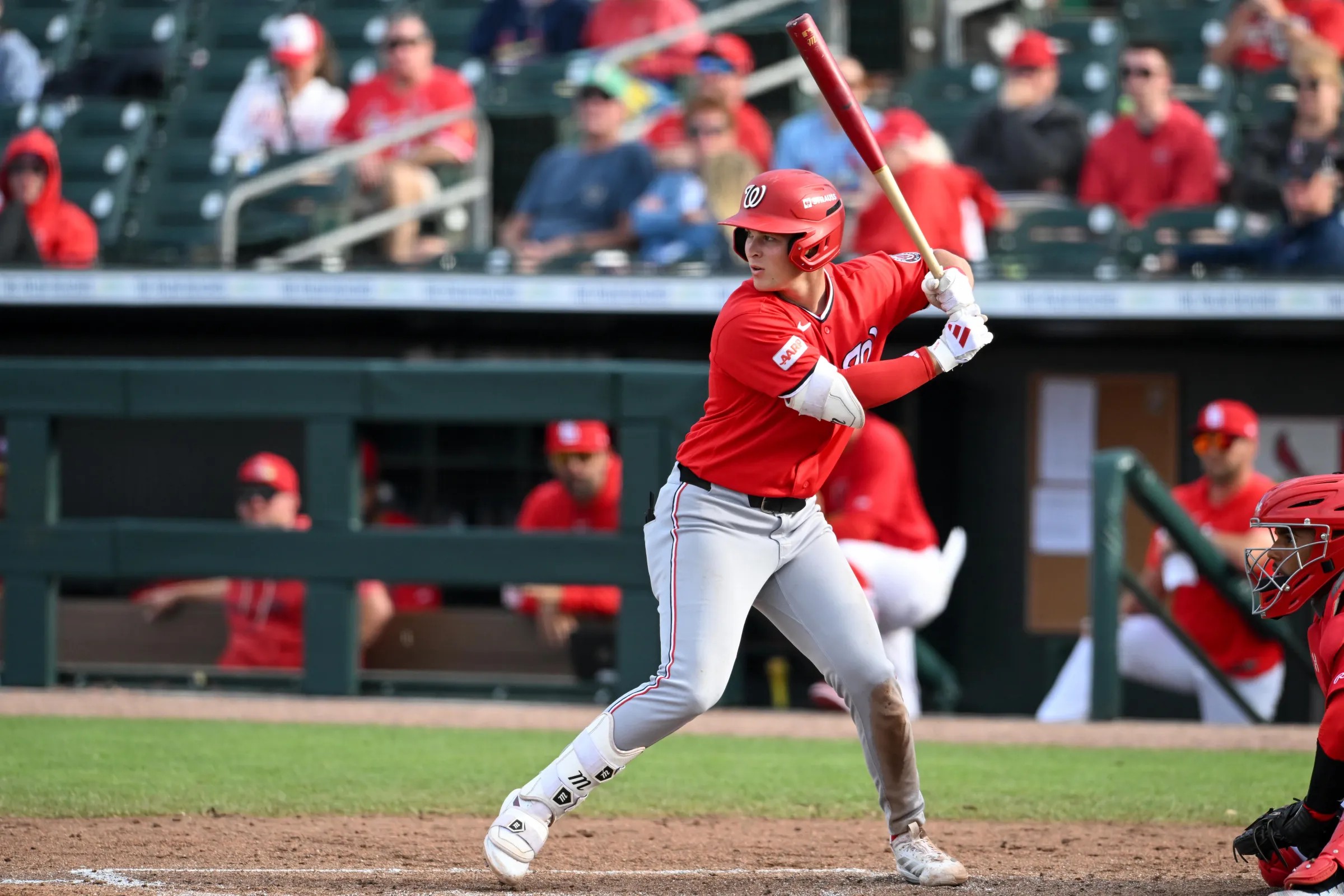
Willits ends the year as our consensus #1 prospect. Photo via Federal Baseball
Instead of doing the last “Prospect check-in” post, I thought we’d just dive right into a macro analysis of our prospects.
As we wrap up the 2026 minor league seasons, I thought it would be a good time to put pen to paper and give a ranking of where our prospects sit at the end of the season. I did this last year too, thinking it was better to do prospect rankings in September than in April, when all the thoughts and analysis of players is a bit fresher. We may add more prospects with trades and another IFA signing class over the winter, and maybe we’ll revisit this at the end of Spring training with the benefit of all the professional ranks.
This is also a good crowd sourcing post for this community to pipe up about someone I have too high, too low, or missing altogether. I definitely “missed” some players in the post-season 2025 ranking, and as I double/triple checked this list I found a couple others that I had missed too. During my typo-review of this post, I probably would have tweaked some ranks as well here and there, but I didn’t want to completely rewrite the thing.
This list includes players who ended the season on the MLB roster but who still have rookie eligibility as still being “prospects” (names like Cornelio, Perales, etc). If a player has exhausted rookie eligibility by PAs or IP, they’re not here. I’ve generally not included any MLFAs we signed in 2026, assuming they’re on one year deals and will leave the org. There are a few 6-year MLFAs to be on this list, and there’s some that may declare MLFA after the end of the season (Holden Powell is the only 2020 or previous year draftee who qualifies here at this point, Andry Lara is the only 2019 IFA that we originally signed who remains, but trade asset Kevin Made also was an 19IFA who I think could declare after the WS ends). If so we’ll remove them in the off-season.
Post publishing update/clarification on rookie status: I generally ignore service time for rookie status versus ABs/IPs, which at least one of the other major shops do as well. This means that a couple of our prospects are in this weird middle ground where they’ve been on a MLB roster for more than 45 days but have not accumulated the 130 ABs or the 50 IP. Harry Ford sits at 106 official ABs as of the end of 2026, came into 2026 with 28 days of MLB service time with Seattle, and has been on the Nats MLB roster since July 17th. That’s now put him FAR above the 45 days, but as a backup catcher he’s still not to the min ABs. Riley Cornelio is another: 36IP this season, and he bounced up and down a ton; my back of the envelope calculations put him at either 43 or 44 service days prior to his Sept 2 callup, then he got another month so he’s well past 45 days too. Jackson Kent is close: he got brought up 8/12, sent down 9/23 so that’s I think 41 days. Interesting timing: did the team do that so he was guaranteed to be rookie eligible in 2027? Probably.
Question: should I eliminate from consideration service time exhausted rookies like this?
Methodology: To compile this list, I went through all prospects who I’d ranked previously, or who have ever appeared on a ranking list as a starting point. I ensured that every starting pitcher on a full season squad was represented, as well as any positional starter who wasn’t a 26MLFA. This included most of our 2026 trade receipts and the top few rounds of prospects from the 2026 draft. This ended up being a bit more than 115 players of the approximately 145 non-40 man players we have in the entire domestic system. I’ve given some thought to just ranking EVERY single farmhand, but I don’t know if there’s value of adding 30 more middle relievers, bench players, and 17yr-old DSL players at the end of the list. Let’s just say that if you’re in the bullpen of Low-A, you’re not a prospect and I’m not bothering to try to rank you unless you make it to AAA.
I then put them into groups of 10 that I’ll end up discussing below. In the end, once you’re outside of the top 40 or so, there’s not a ton of difference between players within a grouping (meaning, the 51st player isn’t appreciably different from the 59th ranked player), but I tried to make sure that a player in the 50s is distinctly more valuable than someone in the 70s.
In the writeups, instead of going player by player, i’m going to write a bit about notables or arguable players in the sections. If there’s a player who i generally diverge from the last few prospect rankings, I’ll talk about why.
Hope you enjoy. Feel free to tell me who I’ve got way too high or way too low and I’ll consider adjustments for next Spring’s list.
1-10:
1 Eli Willits SS 2 Seaver King SS 3 Jarlin Susana RHP (Starter) 4 Travis Sykora RHP (Starter) 5 Miguel Sime Jr. RHP (Starter) 6 Devin Fitz-Gerald SS 7 Gavin Fein SS 8 Chris Hacopian 2B 9 Jackson Kent LHP (Starter) 10 Landon Harmon RHP (Starter)
Comments: For the most part, I don’t think this is too controversial a top 10. I think Eric Longenhagen is being ridiculous with his #30 ranking for King, and based on his 2026 stats he’s clearly our system #2, and most other major shops also agree. Sime up to #5 may be a bit arguable, but I believe his 2026 season merits it, and the struggles of both Fitz-Gerald and Fein pushed them down a little bit in my book. I could see why one may push back on Fitz-Gerald and Fein being this high; maybe they should be after Hacopian and Kent. Splitting hairs perhaps. I’m still not entirely sold on Kent’s future state, worrying that he’s the next iteration of DJ Herz or Mitchell Parker; lefty starters who solved the minors but who just couldn’t cut it in the majors. Harmon at #10 is the classic “prep RHP big bonus kid who could be the next coming of Verlander … or who may never make it out of A-Ball.” I had him exactly at #10 in April, and his 2026 did nothing really to raise or lower him. I really hope he has a healthy, breakout 2027 and he finishes the season in the AA rotation. The few starts he gave us in 2026 were more than promising.
11-20
11 Samil Serrano OF (Corner) 12 Ronny Cruz SS 13 Chase Brunson OF (CF) 14 Harry Ford C 15 Coy James SS 16 Ethan Petry 1B/OF (Corner) 17 Cayden Wallace 2B/3B 18 Jack Cebert RHP (Starter) 19 Yoel Tejeda Jr. RHP (Starter) 20 Marconi German SS
Comments: Yes this is super-high for Serrano, but it’s completely inline with the other ranking shops after he crushed DSL after getting a big Jan 2026 bonus. One may think Cruz belongs wherever Fitz-Gerald is, or perhaps the reverse (FitzGerald should be more like 12-13 instead of where i’ve got him at #6) … but Cruz struggled a bit more upon his promotion, and had further to rise from the beginning of 2026, so just outside of top 10 sounds right. I have no idea how good Brunson is; I’ve just got him ranked roughly where other shops have him. Ford: he’s fallen a long way since being perhaps our #2 prospect, but anyone who thinks he’s too low has to explain why he hit .223 in AAA and is hitting .189 in the majors. I’ve put Wallace way back into play here with his .900 OPS and near 30-homer season. Oh, and he’s batting 3rd for the 90-win AAA team in the playoffs. Cebert and Tejeda together makes sense: Cebert has better numbers, but Tejeda is younger; both in AA after mid-season promotions. German may not be long for SS but has continued to produce moving from DSL->FCL.
20s:
21 Alejandro Rosario RHP (Starter) 22 Luke Williams SS 23 Alex Clemmey LHP (Starter) 24 Davian Garcia RHP (Starter) 25 Luke Dickerson SS/CF 26 Riley Cornelio RHP (Starter/Reliver?) 27 Sam Peterson OF (CF) 28 Josh Hartle LHP (Starter) 29 Isaac Lyon RHP (Starter) 30 Yohandy Morales 3B
Comments: Clemmey falling all the way here is just acknowledgement that his current path has stalled completely. I had him #6 at the beginning of the season. This might be too high for Garcia, but a 23yr old starting the year in AA is nothing to sneeze at, then he went straight to the full season DL. I have Dickerson well below other shops (Espn/McDaniel has him #7!!) because I’ve really just yet to see anything that makes me think, “wow this guy is going to be awesome.” He’s now got more than 700 Minor league at bats at a combined .214/.352/.363 slash. Somehow he made the end-of-season Low-A all star team hitting .233 and striking out 117 times in 93 games.
Is Cornelio actually too low? I dunno; it seems like he’s destined for the bullpen based on usage so his upside is limited. But, after a rocky MLB start he’s yet to give up an earned run in September and now has a very solid ERA+ for the year. Isaac Lyon is an interesting one: he started 2025 in Fredericksburg and ended it in Rochester. that’s 3 promotions in a season for a pretty unheralded draft pick; maybe #29 is actually too low. I’ve got De La Cruz hanging onto the last spot in the top 30; other shops have him higher, but he’s showing very little XBH power for a projected corner OF.
I’ve got Morales at the back end of the top 30; is that crazy? He’s certainly held his own in a handful of MLB games since his callup; maybe he deserves to be a few slots higher. He had an .882 OPS in AAA this year as a 24yr old and finished 17 games in the majors with an .851 OPS … with zero walks. I had to put him a chunk ahead of his fellow 4A sluggers like Ortiz and Pinckney, so the last guy in the top 30 makes sense.
30s:
31 Caleb Lomavita C 32 Angel Feliz SS/3B 33 Yeremy Cabrera OF (corner) 34 Kevin Bazzell C 35 Will Dion LHP (Reliever) 36 Joe Glassey RHP (Reliever) 37 Ben Grable RHP (Reliever) 38 Luis Perales RHP (Starter) 39 Jorgelys Mota SS 40 Nauris De La Cruz OF (Corner)
Comments: I don’t like having relievers in my top 30. In fact, I generally don’t like having relievers in my top 40, but I did put the three best prospect relievers we seem to have in this section in Dion, Glassey, and Grable. This ranking for Angel Feliz is about 10 spots below other shops and probably isn’t “fair” given that he played the entire season as at 19yr old in High-A. Maybe he belongs at #30 instead of Morales. Lomavita and Bazzell are both here as the next best catching prospects behind the falling Ford. Maybe that’s unfair to Romero, who’s the starting C in AAA for a playoff team. De la Cruz is a lot higher on a couple other lists but I don’t see much special here: he as “just ok”
The big talking point player here is Perales; I just cannot fathom at this point why anyone has him anywhere near the top 30. Sure he throws hard; he can’t find the plate, and when he does he’s pitching to an 11+ ERA in the majors. He couldn’t throw more than 2-3 innings in AAA and didn’t have all-star numbers there either. What am I missing? Really loving that Bennett-for-Perales trade!
40s
41 Abimelec Ortiz 1B/OF (Corner) 42 Andrew Pinckney OF (Corner) 43 Cooper Harris RHP (Starter) 44 Eriq Swan RHP (Starter) 45 Josh Randall RHP (Starter) 46 Max Romero Jr. C 47 Yovanny Cruz RHP (Reliever) 48 Erik Tolman LHP (Reliever) 49 Jack Sinclair RHP (Reliever) 50 Juan Duran 1B/OF (Corner)
Comments: I’ve got both Ortiz and Pinckney here as “still eligible 4-A hitters who seem like they’re stuck” in-between producing at a .900 OPS clip in AAA and hitting .180 in the majors. I’ve put a chunk of the “prospect relievers who have MLB time” in this range, including Cruz, Tolman, and Sinclair. Cooper Harris was our big-bonus prep RHP 4th rounder this year; he could shoot up or drop out depending on his 2027: maybe he’s Landon Harmon. Swan was hurt all year but has been a top-20 guy in the past; with a strong start to 2027 i’m sure he can shoot back up. Randall is in the same boat as the Hartle/Tejeda discussion earlier, except that his AA numbers were a lot worse this year. He arrived into our system as a fringe top30 guy but has now been pushed down 15 spots. If Juan Duran played SS he’d be a top 10 prospect; instead he’s a 1B corner OF type who shredded the DSL this year, so his value is more limited. I tell you what though; someone has to play 1B.
50s
51 Luke Young RHP (Reliever) 52 Nick Mitchell OF (Corner) 53 Tyler Stuart RHP (Starter) 54 Riley Maddox RHP (Starter) 55 Rafael Ramirez Jr. SS 56 Victor Hurtado OF (Corner) 57 Browm Martinez OF (CF) 58 R.J. Sales RHP (Starter) 59 Cristian Vaquero OF (CF) 60 Carson Fischer RHP (Starter)
This is a natural section to collect a few falling prospects who used to be higher but who are slowly working their way out of relevance. This includes Stuart (who was a top 10 prospect upon acquisition in July 2024 and was even an NRI in Feb 2025 but who has now missed most of the last 2 seasons with injury). Ramirez was routinely in the top 20 of our ranks in 2024-25 but who has done little to earn that lofty status. Hurtado? Fangraphs had him as high as #5 in this system (because of course he did, b/c his methodology falls in love with 17yr olds with astronomical theoretical ceilings), and he actually did have a solid FCL season numbers wise, but he still projects as a slap-hitting outfielder with no power. Vaquero is perhaps the “best” example here, who has spent years in the top 10 of this system with his $4.9M signing bonus; he repeated Low-A for the 4th straight season this year, finally got to High-A as a 22yr old and had a .538 OPS. I threw in a couple of starters in Sales, Maddox, and Fischer here: Sales missed the entire season basically with injury but could actually be decent. Fischer had solid numbers but not much K/9. Maddox was great in High-A but struggled in a brief AA stint. This may actually be slightly too high for both Maddox and Fischer, but there’s a gap to the next set of full-season starters so maybe not.
60s:
61 Juan Reyes LHP (Starter) 62 Rony Bello 2B/3B 63 Esnaider Vargas OF/SS 64 Holden Powell RHP (Reliever) 65 Austin Amaral RHP (Reliever) 66 Jacob Walsh 1B 67 Sandy Gaston RHP (Reliever) 68 Medina Maxim RHP (Starter) 69 Branden Boissiere OF (Corner) 70 Sam Brown OF (Corner)
This is a good section for the few remaining reliever “prospects” who might have value moving forward; that describes Powell (who I think is a 6yr MLFA after this season but who is in AAA), Amaral, and Gaston. Reyes is one of two FCL grad starters who got moved to Low-A upon season’s end. I’ve got a trio of 2nd tier OF prospects here who have had varying levels of success. Boissiere was solid in AA but is running out of time: he’ll turn 27 before next season, his last of his 6-year contract. Walsh hit 25 homers, most of them in the pitcher-friendly High-A league, so that’s something. He’s a big dude, 6’4 225 1B only though, so that’s why he’s 64th and not 24th. Medina Maxim is a potentially interesting one: he pitched in just 5 games in the DSL before the team said, “ok that’s good enough” and shipped him to Florida, the only mid-season DSL->FCL promotion this year. There, he got into exactly 2 games, got shelled, and frankly may have gotten hurt b/c he didn’t appear after July 13th.
70s
71 Isaias Suarez OF (CF) 72 Angel Ramirez OF (Corner) 73 Brayan Cortesia SS 74 Noah Millikan RHP (Starter) 75 Phillips Glasser SS 76 Robert Cranz RHP (Reliever) 77 Kendeglys Virguez RHP (Reliever) 78 Marlon De La Cruz RHP (Starter) 79 Daniel Hernandez C 80 Kevin Made SS
By the time you get to this range, you’re in totally fallen prospect range (Cortesia, De La Cruz, Made), barely holding on starter range (Millikan), and a few lesser reliever prospects (Cranz, Virguez). Glasser showed lots of promise in 2026 and I had him on the edges of our top30, but AAA has exposed him as a punch-less 2B/3B guy who can’t really play SS and who thus needs to find another tool to break through, lese he’s going to hit 6year MLFA as a classic AAA-topped out org guy. Made remains here for now; he probably hits MLFA Nov 1st and used to be a mainstay in our top 20. Fangraphs ranked Suarez 19th in the system, because he’s obsessed with DSL teens who can’t even hit .200.
80s
81 Alexander Meckley RHP (Starter) 82 Liam Sullivan LHP (Starter) 83 Lopez Juan RHP (Starter) 84 Thomas Schultz RHP (Reliever) 85 Kyle Luckham RHP (Reliever) 86 Elian Soto 1B/OF (Corner) 87 Jack Moroknek OF (Corner) 88 Sir Jamison Jones C 89 Courtland Lawson SS/3B 90 Andry Lara RHP (Reliever)
Comments: so, we’re in the range of players where you may read someone’s name and go, “oh man he should be higher.” Fair enough. Some of the guys in this section used to be much, much higher (Sir Jamison Jones for one, who’s in the top 30 for many and who Keith Law had at #14 in June), but a .658 OPS figure in Low-A just doesn’t merit a top 30 spot. Andry Lara is still here; he may be a MLFA as well in the off-season but he resigned once and threw AAA innings all year. There’s a couple 1b/OF types here who have hit lately (Soto, Moroknek), but their lack of playing a premium position works against them. Lawson is an interesting one: he’s now 26 and worked his way to AAA this season. is he a prospect? Or is he Jake Noll?
90s
91 Jose Feliz RHP (Starter) 92 T.J. White OF (Corner) 93 Juan Obispo OF (CF) 94 Juan Cruz 1B 95 Robles Jean RHP (Starter) 96 Leuris Portorreal RHP (Starter) 97 Jonierbis Garces OF (Corner) 98 Tucker Biven RHP (Reliever) 99 Bryan Polanco RHP (Reliever) 100 Johnathan Thomas OF (CF)
Comments: Jose Feliz was awesome in 2025 in the FCL; straight to 60-day DL in 2026; where do you put him? Should he be closer to where a Tyler Stuart is? The 90+ range is why past a certain number it’s hard to definitively “rank” players. What’s the salient difference between a middling outfielder in the 60s like Sam Brown versus another one in the mid 90s like Johnathan Thomas? Probably not a ton.
100+
101 Manuel Cabrera SS 102 Elijah Green OF (CF) 103 Teo Banks OF (Corner) 104 Dashyll Tejeda OF (CF) 105 Leodarlyn Colon RHP (Reliever) 106 Elijah Nunez OF (CF) 107 Levi Huesman LHP (Reliever) 108 Mikey Tepper RHP (Starter) 109 Brady Hill RHP (Reliever) 110 Adam Bloebaum RHP (Reliever) 111 Darrel Lunar RHP (Starter) 112 Greyson Gimenez RHP (Reliever) 113 Eiker Huizi RHP (Reliever) 114 Brenner Cox RHP (Reliever) 115 Merritt Beeker LHP (Reliever) 116 Enmanuel Carela RHP (Starter) 117 Marcus Brown SS 118 Huff Chance RHP (Reliever) 119 Dylan Tebrake RHP (Reliever) 120 Edgardo Figueroa C 121 Cesar Rojas RHP (Reliever) 122 Nick Hollifield C
Comments: A couple of these guys (Green and Tejeda in particular) have both had relatively recent stays in or near the top 30, but whose performance has dumped them well down the list. The arms in this section are generally low minors starters or guys who were started but who have gotten dumped into relief. Teo Banks has never appeared on any prospect list but just got stuck on our AFL 2026 roster, so I threw him in here. As for the rest of the 100+ crew, it’s almost entirely arms in our system, plus the full suite of Rule-5 minor league guys we slopped up last off-season (who I probably never should have added to my prospect XLS in the first place). A couple of these guys at one point or another sniffed a top 30 list: Brennar Cox before he converted to relief, Marcus Brown early in his career. I’d be surprised if half these guys are still with the team this time next year. But, there’s also some interesting names her. Tepper was hurt most of last year and struggled to get back this year; he could have an impactful 2027 since the team still thinks he’s a starter.
Phew. Ok 122 players is crazy. Honestly I kind of gave up fine tuning the list at 100 or so. Look for some churn on this list in the off-season, and for some of our 2026 draftees to start joining this list as they move up the 2027 system.
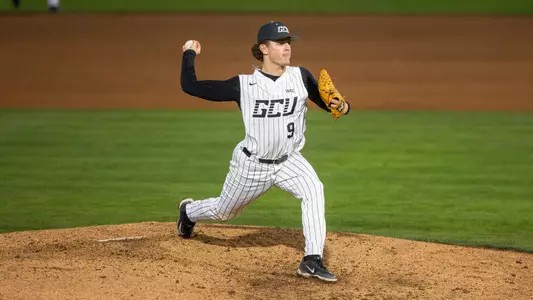
Isaac Lyon could have been our Pitcher of the Year in a different season. Photo via GCU.
Here’s the End of Season 2026 check-in on rotations. Since the various minor league seasons ended at varying points during the month of September, and since the Rochester “rotation” turned into basically a string of bullpen games, these are going to be season-long stat analysis instead of a “hot cold” analysis of just a couple of possible September starts.
Each team section analysis will have the same items: current rotation, changes in the last month, observations, next guy to get promoted (if its in the minors), next guy to get cut, etc.
Important Pitching stats links for this analysis (I like the Fangraphs stats when looking up Fip, Babip, etc).
All Stats quoted are as of 9/27/26, the final game of the MLB season.
We’ll start with the Majors.
Final record: 77-85, 4th place NL East. 21st out of 30 in the league (projecting to 10th pick next July)
Opening Day 2026: Cavalli, Griffin, Mikolas, Littell, Irvin
End of April 2026: Cavalli, Griffin, Mikolas (with Poulin opening sometimes), Littell, Irvin
End of May 2026: Cavalli, Griffin, Mikolas (still with openers), Littell (also with openers), Alvarez.
End of June 2026: Cavalli, Griffin, Mikolas, Littell, Alvarez. Still using Openers in key spots
End of July 2026: Cavalli, Griffin, Mikolas, Littell, Irvin (with frequent openers)
End of August 2026: Cavalli, Irvin, Alvarez, JKent, and bullpen games
End of Sept 2026: Cavalli, Irvin, Alvarez, JKent, and then the return of Herz and Early.
Changes sinceend of last Month: Cavalli got shut down with one start to go, which worked out with the timing of the return of three of our 60-day DL starters in Gray, Herz, and Early. Herz got 2 final week starts, Early one, and Gray came into pitch in relief and get a save.
Rotation Observations: Cavalli finally pitched to his promise when taken in the 2020 draft; 13-5, 3.02 ERA, 142 ERA+. 32 starts, only missing the final start of the season. 200 Ks in 169 IP. And a new long-term contract buying out all his arb seasons and 1-2 of his FA seasons. Can’t ask for more. Irvin finished 2-10 with a 5.48 ERA and a 79 ERA+. His final appearance was basically his season in a microcosm; looked great for 2-3 innings, then gave up multiple bombs to take the loss. Alvarez finished with a 2-6 w/L record in 25 appearances/17 starts, basically used as a long reliever despite his 2nd straight season with excellent numbers (125 ERA+). Kent gave us 7 starts with a 5.94 ERA; he’s not ready. Herz’ 2 starts back were not great, Early’s looked excellent.
2027 way too early rotation prediction: Cavalli, Early, Gray, Alvarez, and a FA acquisition. Send Kent back to AAA, along with Herz and Perales to stretch him out. Keep Cornelio, Lord, and Dion as 2-inning relievers. Non-tender Irvin. I’ll take this sentence along with the same analysis cascading down the system and post this in a week or so once the dust settles.
Next guy to get cut/demoted:
April 2026: Mikolas
May 2026: Irvin (but he got hurt)
June 2026: Littell but they’ll never cut him and his salary, so i’ll go back to Mikolas
July 2026: turned out to be Alvarez, should have been Mikolas.
Aug 2026: With both Mikolas and Littell whacked, next in line is Irvin.
Sept 2026: Irvin. He’s now got more than 100 MLB starts with an ERA north of 5.00.
Quick bullpen thoughts: After amazing churn the entire season, to go with their 42 blown saves the team ends the season with this bullpen, sporting these stats (note; lots of these are SSS, but my point will be made soon):
Tolman: 2.93 ERA, 150 ERA+, 5 saves in a month
Sinclair: 2.45 ERA, 181 ERA+
Cornelio: 3.68 ERA, 118 ERA+
Dion: 3.00 ERA, 116 ERA+
Lord: 3.78 ERA, 114 ERA+
Cruz: 6.75 ERA, 66 ERA+
Lovelady: 4.23 ERA, 103 ERA+
Varland: 6.55 ERA, 66 ERA+
(15 day DL) Ribalta: 3.77 ERA, 115 ERA+
Additionally, In the last 2 week they sent down these three to free up space for Early/Herz starts:
Perales: 11.45 ERA, 39 ERA+
Simpson: 10.38 ERA, 45 ERA+
Yean: 2.45 ERA, 191 ERA+
I mean … yes most of these guys had just a month of work, in September against expanded rosters. But there’s a lot of promise here. After watching this bullpen all year, I’d go into 2026-27 with every one of these 100+ ERA+ guys, especially front lined by the quartet of Ribalta/Lord/Dion/Cornelio, who’ve been doing it for a big chunk of the season. The Nat’s bullpen ended up finishing the season 30th out of 30 in fWAR (-3.3) and 28th in ERA, so there’s no where to go but up.
AAA Rochester
Final record: 90-58, 1st in league, won both halves, won the IL title, lost in AAA final
Opening Day 2026: Alvarez, Parker, Perales, Lara, Cornelio
End of April 2026: Alvarez, Perales, Lara, Cornelio, Champlain (with Ogasawara and Penrod spot starts)
End of May 2026: Perales, Lara, Cornelio, Champlain, Kent
End of June 2026: Perales, Lara, Champlain, JKent, Penrod as an opener
End of July 2026: Perales, Lara, Champlain, JKent, then a slew of openers/rehab starts/bullpen games.
End of August 2026: Champlain, Cebert, Lyon, Herz doing rehab, then 9 different openers/bullpen games.
End of Season 2026: Champlain, Cebert, Lyon, Herz/Early rehabs, and bullpen games.
Changes sinceend of last Month: Not much from August: There were 9 different starters for their 18 games in September. Susana was put on the AAA roster to make a playoff start; he hit 104 in the AAA championship game. The team did all sort of roster shenanigans at the end, with guys on/off the Dev list, Cebert demoted to AA, all to do roster management for the playoff games.
Rotation Observations: Champlain’s 2026 season in total was solid; 3.95 ERA with 127 IP and a 1.14 whip. I wonder if they’ll pursue a MLFA reunion for 2027 here. Lara led the team with 20 official starts and 34 appearances; I also wonder if they’ll renew with the player who’s only ever played for the Nats franchise. Cebert was put back to AA as a paperwork move; he should be in AAA next year after a stellar 2026. Lyon had a 1.53 ERA in four AAA starts after starting the season in Low-A; pretty amazing season for him, even though he lost the Pitcher of the Year award to Sime.
Next guy to get promoted:
April: Alvarez and Cornelio. Verdict: both have been promoted, Alvarez is staying there.
May: Perales and his sub 2.00 ERA could play in the majors and our terrible bullpen
June: Kent the only deserving candidate right now, but he’s not getting promoted anytime soon.
July: Perales; had a good month and is on 40-man so no roster move.
Aug: Cornelio should go back up; both June and July’s candidate are now in majors. (he did)
Sept: They’ve promoted everyone worthy out of AAA at this point.
Next guy to get cut/demoted:
April: none really, Champlain had the least investment
May: Lara clearly.
June: Back to Champlain, who looks like he may be stuck at a ceiling of effectiveness in AA
July: Back to Lara.
Aug: Zak Kent
Sept: Lara or Champlain, both of whom are MLFAs.
Quick bullpen thoughts: AAA finishes the season with somewhere in the 16-17 range of relievers depending on how you define them. Eight of them are 40-man guys; ZKent, Beeter, Nicolas, Bird, Schultz, Simpson, Perales, and Palmquist. Honestly, I’m not sure how many of these guys are even worth keeping into next season. We have 5 guys coming off the 60-day DL at the end of the WS and not one FA, so look for all 5 spots to come from this group in the form of DFAs or non-tenders. I’m not sure exactly where we stand with Rule5 at this point (nearly all our Rule5 potential candidates were already added), but between this crew and the uys who finished the season on the MLB roster with ERAs in the 6s we should have plenty of room to make moves.
AA Harrisburg
Final record: 67-67, 3rd place in their division.
Opening Day 2026: Clemmey, Garcia, Luckham, Ogasawawara, Swan
End of April 2026: Clemmey, Garcia, Luckham, Ogasawara, Kent
End of May 2026: Clemmey, Luckham, Ogasawara, Lyon, Randall (spot starts from Van Scoyoc)
End of June 2026: Clemmey, Luckham, Lyon, Randall, Van Scoyoc
End of July 2026: Clemmey, Lyon, Randall, Maddox, Tejeda (along with 3 rehab starts and a couple of bullpen games)
End of Aug 2026: Clemmey, Randall, Tejeda, Hartle, Susana (Cebert, Lyon for a bit, 2 rehab starts from Herz)
End of Season 2026: Clemmey, Randall, Tejeda, Hartle, Cebert, Swan
Changes sinceend of last Month: Cebert switched places in the last week of the season with Susana to get Jarlin one AAA playoff spot, otherwise no changes in the last few weeks for Harrisburg.
Rotation Observations: Clemmey did a full season in AA, wire to wire. 28 Games/25 starts, 128 IP. 4.64 ERA, 1.47 whip. Second straight season in this general area. No idea what to do with him. He’s too young to give up on, but has stalled. Randall finished with a 5.06 ERA in 17 games for us; probably repeats AA next season to see how he does. Tejeda struggled upon his promotion but should run out in AA again to start 2027. Hartle and Cebert were both excellent in AA upon their arrival and I would think move to AAA next season. Swan made it back to AA after a seemingly endless rehab stint in High-A but struggled.
Next guy to get promoted:
April: Ogasawara, then Kent. Kent was promoted over Ogasawara
May: clearly Ogasawara.
June: Van Scoyoc (and he was promoted on 7/1, but was then demoted back mid-month).
July: Nobody is ready, but Clemmey probably pitched the best and is the longest-serving AA guy. Maybe another month of this and they could consider him, but at his age, there’s no reason to push him to AAA right now.
August: Hartle
Sept: Cebert (who did move up) and/or Hartle.
Next guy to get cut/demoted:
April: Luckham.
May: still Luckham.
June: Chemmey
July: Luckham, who got removed from rotation. Now likely Randall.
Aug: Randall still isn’t good, but Clemmey and Tejeda are concerning.
Sep: Randall and Tejeda may be odd men out next season when injury guys return
High-A Wilmington
Final record: 69-62, 3rd place out of 6 in division.
Opening Day 2026: Bruni (Sullivan), Maddox, Randall, Tejeda, Polanco
End of April 2026: Maddox, Randall, Tejeda, Polanco, Lyon
End of May 2026: Maddox, Tejeda, Polanco, Bruni, Meckley
End of June 2026: Maddox, Tejeda, Meckley, Sime, Tepper
End of July 2026: Sime, Tepper, Fischer, Sthele, Sullivan (plus 3 rehab starts, and a slew of one-offs).
End of Aug 2026: Maddox, Sime, Fisher, Sullivan, Biven (likely Sales coming back into the rotation in Sept)
End of Season 2026: Maddox, Sime, Fisher, Sullivan, Sales
Changes sinceend of last Month: Sales came off DL and took the opener/bullpen 5th rotation spot for the end of the season.
Rotation Observations: Maddox finished the year with stellar High-A numbers (a 3.10 ERA and 1.14 WHIP) but got shelled when he moved up. Sime was our Minor League Pitcher of the Year and had a 2.15 ERA in High-A to go along with 76 Ks in 46 innings). Fisher was very solid for the season (3.02 ERA) but seems very much like a pitch to contact guy and probably starts here again in 2027 thanks to a glut of AA candidates. Sullivan struggled post promotion to a 6.10 era. Sales only had 2 starts and probably has to start here again in 2027.
Next guy to get promoted:
April: Randall: he did indeed get promoted
May: None. Tejeda if I had to name one.
June: Maddox (Promoted on 7/1), should have been Tejeda (who was also promoted on 7/22)
July: Sime
Aug: Maddox
Sept: Sime and Maddox
Next guy to get cut/demoted:
April: Polanco
May: still Polanco but likely Bruni makes way for Sime. (Polanco indeed finally dumped to bullpen)
June: Meckley (indeed he was demoted on 7/8)
July: Tepper
August: Sullivan
Sept: Sullivan
Low-A Fredericksburg
Final record: Total: 80-51 (1/6). Won 1st half. Playoffs: Lost in playoffs to Fayetteville 2-0.
Opening Day 2026: Portorreal, Hughes/Meckley, Sime/Lyon, Harmon/Beck, Fischer/Conradt
End of April 2026: Portorreal, Meckley/Hughes, Sime/Johnson, Harmon/Conradt, Fischer/Sullivan
End of May 2026: Portorreal, Sime, Johnson, Fischer, and Tepper doing rehab the whole month
End of June 2026: Portorreal, Johnson, Fischer, Manning, De La Cruz plus rehab starts from Herz, Williams, Tepper.
End of July 2026: Johnson, De La Cruz, Harmon, Meckley, Millikan, Reyes (with a bunch of openers)
End of August 2026: De La Cruz, Harmon, Meckley, Reyes, Portorreal (plus rehab starts from Sales and Herz)
End of Season 2026: De La Cruz, Harmon, Meckley, Reyes, Millikan
Changes sinceend of last Month: Portorreal was moved out for Millikan, who got moved up from FCL for the tail end of the season.
Rotation Observations: De La Cruz’ first stint in Low-A ended with an ERA of 6.88. Harmon got 12 starts in Low-A and dominated: 1.60 ERA and a sub 1.00 whip. Meckley was ok, but that’s after failing in High-A. I’m not sure he’s long for any rotation. Reyes was excellent in his 5-6 starts after getting called up from the FCL and should lead the line next season. Millikan got shelled after his callup.
Next guy to get promoted:
April: Meckley; indeed he was promoted
May: Fischer
June: Fischer, who was actually promoted 7/1. Should be Johnson
July: None. The low-A rotation is a mess. Gus Hughes as a long reliever is best option to promote this month and indeed he was.
Aug: Harmon
Sept: Harmon
Next guy to get cut/demoted:
April: Portorreal: he has turned it around greatly.
May: Probably Johnson if we had to pick someone; they’ve already settled the tandem starters and demoted guys to the pen
June: Portorreal (put on Dev list mid-month in July)
July: Meckley or De la Cruz. Probably Meckey since he’s 3 years older.
Aug: Meckley again, and De La Cruz again.
Sept: De la Cruz or Millikan
Rookie FCL
Final record: 26-27 (2/5 in division, 7/16 in league)
The FCL season ended on July 23rd.
Opening Day 2026: Weaver, Reyes, Martina, De la Cruz, Robles
End of May 2026: Reyes, De la Cruz, Robles, Lopez, Bothwell
End of June 2026: Reyes, Robles, Lopez, Bothwell, Gillis, Millikan
End of Season 2026: Reyes, Robles, Lopez, Bothwell, Millikan, Medina
Rookie DSL
Final Record: 14-40 (7/7 in division, 49 of 51 overall in league. Pretty bad.
The season ended mercifully on August 29th.
Opening Day 2026: Manzueta, Medina, Sarit, Reynoso, Carela
End of June 2026: Manzueta, Medina, Sarit, Carela, Salas
End of July 2026: Manzueta, Sarit, Carela, Reynoso, Thomas
End of Season 2026: Manzueta, Sarit, Carela, Reynoso, Thomas
Susana heading to the AFL for some more work. Photo Washington Post
The AFL rosters were announced today. The Nats are not well known for sending their best talent to Arizona, and this year seems no different. We’ve announced six (6) names as of this writing, which seems a little light, so I wouldn’t be surprised to hear a few more names added in (we sent 8 last year and most teams send 8-9).
Here’s who we’ve announced so far:
RHP Starter Jarlin Susana, AA
OF Teo Banks, High-A
LHP Reliever Noah Dean, AA
LHP Starter Nolan Hughes, Low-A
OF/3B Jorgelys Mota, High-A
RHP Starter RJ Sales, High-A
Post Publishing update 10/5/26: a look at the Salt River rosters shows a couple more players were added post initial announcement. The following guys are also on the AFL roster but are not discussed below:
RHP Reliever AJ Puk, Low-A
C Kevin Bazzell, AA
This is an … interesting group, to say the least. It includes two top 30 prospects at best (Susana and Mota), a couple of fringe at best arms (Sales and Hughes), an 18th round OF prospect who’s never been on anyone’s radar (Banks), and a frigging MLFA they signed in March who’s thrown a grand total of 14 innings for us (Dean).
Usually AFL players fall into one of several distinct categories:
Pitchers who were injured for most of the season and who need innings
Pending Rule-5 guys who they want one last look at.
Show-me pop up guys who the team wants to challenge in a less-meaningful environment
Top Prospects to show we’re actually playing by AFL roster rules.
So, how do these six classify w/r/t these rules?
Susana is clearly a top prospect, but also most nearly the entire season so he’s the classic “needs innings” case
Banks is … a pop-up guy? This is a 2024 18th rounder who had a .700 OPS figure this season.
Dean is another weird guy; he was a 2026 MLFA of all things, and then barely pitched. So, are we assuming the team signed him for multiple years? He was a 2022 draftee, so he’s technically Rule-5 eligible, but this is a weird one.
Hughes? Clearly the “needs more innings” guy, in that he’s got just 7 IP this season and is on the 60-day dl as we speak.
Mota could be considered a “show me” prospect, but he also only earned a promotion to High-A later in the season and he struggled badly up there; he’ll get destroyed by AA -level pitching in AFL.
Sales is classical “missed most of the season and needs innings” guy.
I wonder if the lack of star power in our AFL roster is mostly a function of the nature of our prospect depth right now, which is for the most part either nearly in the majors, injured, or is still a teen ager. To wit, here’s how the top 20 or so guys in the system would classify:
Already hit the Majors: Simpson, Kent, Perales, Ortiz
Already done AFL: King, Peterson, Petry, Wallace
Still hurt: Sykora, Rosario
Too young or too new: Willits, Fitz-Gerald, Hacopian, Cruz, Fein, Sime, Harmon, Brunson, James, Serrano
Also, thanks to aggressive promotions this season, we have almost no real Rule-5 candidates to consider. A quick guide down the Roster Resource lists a scant few R5 candidates to even talk about (burying the lead on the annual Rule 5 analysis, but here goes). I’m leaving out any 2026 MLFAs and/or 60-day DL guys.
in AAA right now: Romero, Wallace, Lawson, Powell
in AA right now: Young, Boissiere, Made, White, Luckham, Gaston, Huff
in High-A right now: Polanco, Stuart, Hill
Not a lot needing protecting this coming December, and certainly not a lot in the AA range that deserves a trip to Arizona. Boissiere? White? I dunno.
Possible candidates to consider adding if they need a few more bodies:
AAA starters like Cebert or Lyon: both over 100 IP this season though, and no real need to give them more.
AA starters like Clemmey, Tejeda, Randall, or Hartle: all have 120+ ip this year.
Catchers (they always need catchers): Romero, Bazzell, Lomavita; Bazzell in particular could use time behind the plate, and Romero is R5.
Players who I don’t know why they’re not in the AFL:
Swan: he’s the classical arm who needs more work, is AA talent.
Maybe Elijah Greene, just for humor purposes to see if he can strikeout 75% of the time?
So, that’s the AFL this year. I’ll be super curious when Susana throws, probably couldn’t care less about anyone else’s performance out there this year.
Post publishing data dump: I ran through the last few AFL rosters for comparison purposes. These names are in rough order of their “value” as prospects at the time:
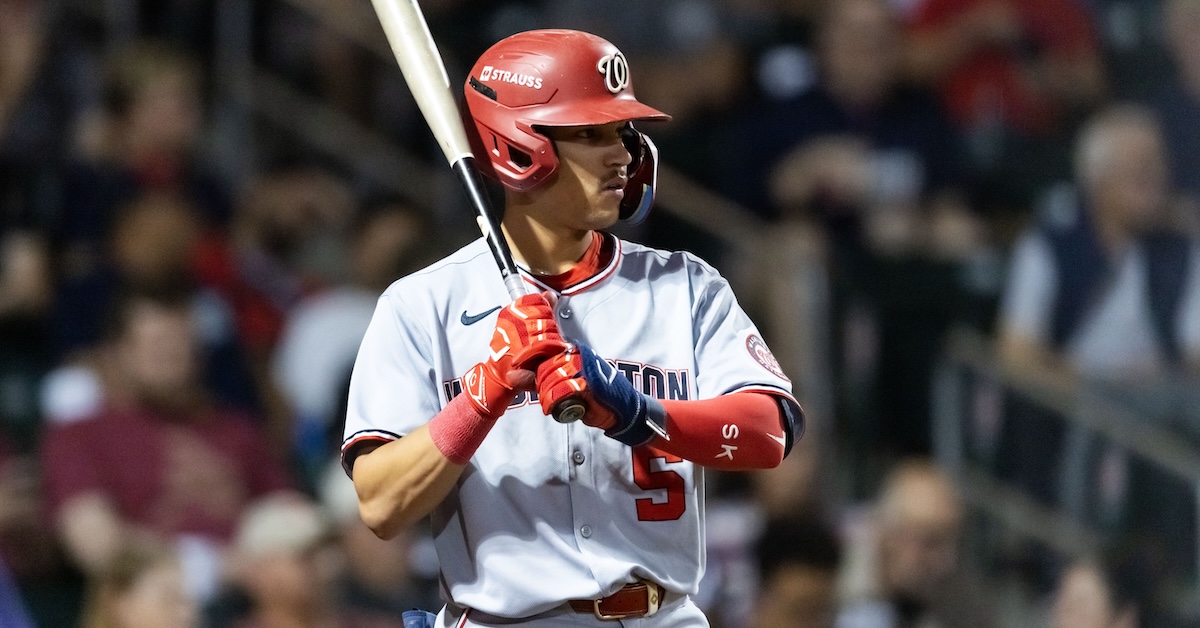
Seaver King merits a call-up; is it coming? Photo via Fangraphs
Here’s a monthly check in on our 20 prospects plus other notables in the system. Stats are for August 2026 for the full season shops, the full-season for FCL and DSL, unless otherwise noted.
All the stats links I use are at my Nats Links page, which I visit every day for various reasons. I won’t repeat all the stats links and transactions pages and what not; just go to the Links page.
Eli Willits SS, High-A: Continues to struggle in High-A, hitting just .232 for the month. Despite that low BA, he managed to have the 2nd highest OPS figure on the team, which should tell you all you need to know about the state of Wilmington’s offense. Willits was given the Nats Baserunner of the Year award earlier this week, in recognition of his 57 SBs and his draft pedigree. It’s probably fair to point out at this point that he’s at the tail end of a 140 game season as an 18yr old who probably has never played more than 30-35 games in a season in his life, and he may be ready for a break. Temperature: luke warm
Harry Ford, C MLB: has stayed in the majors since his call-up/Millas’ injury and will remain there. MLB stats so far: .188/.300/.391. So, that’s not necessarily great, and his numbers havn’t improved in month 2. Temperature: cold, looks like he needs more AAA time.
Jarlin Susana, RHP (starter) AA: Finally off the DL; made one August start. September should be telling; hopefully we get 5 starts, then an AFL stint. Temperature: ready to warm up hopefully.
Travis Sykora: RHP (starter) AA: out for the season, the injury report lists his return as 2027. No new news for months. Temperature: on ice.
Gavin Fien SS/3B, Low-A: took a step back in August in terms of production: .263/.358/.351 with just 1 homer. If he’s stuck as a corner OF, we’re going to want more here. Temperature: cool.
Alex Clemmey, LHP (Starter) AA: Clemmey was awful this month. 7.99 ERA, a ton of walks. I’m not sure what to do here. Reports are that his velocity is way down, and so now his BAA is .319 but he’s still walking a ton of guys. Something has to give here. Temperature: ice code once again.
Seaver King, SS AAA: Blowing up again after getting off the DL and missing most of May and all of June; .330/.417/.640 for August in AAA. With CJ Abrams moving to 2B, I just have to wonder if a call-up is imminent here. He was also just named the Nats Minor league hitter of the year. Temperature: red hot.
Luis Perales, RHP (starter) AAA: was in the middle of a month where he was striking out tons of guys but still not being that effective when he got the call up for some reason. He was the last 40-man member dating to opening day to get called up. I watched his 8/31 appearance, when he came in after Dion’s 3 scoreless innings. Walk, Strikeout, Single, Single, Wild Pitch, Single, Strikeout, Single, Ground out. All over the place; no control. What the f*ck? It took him 34 pitches to labor through this inning, where he wasted a solid opening outing from Dion. Amazingly the offense bailed him out, but if he’s not on a plane back to Rochester soon I’ll be pissed. This trade is not aging well, at all. The team traded a lefty starter on the cusp of the majors for a guy they’ve turned into a reliever who can’t find the plate. Nice work. Temperature: ice cold
Devin Fitz-Gerald, 2B/SS, AA: He had a nice month actually: .310/.390/.493. I’ll take those splits any day. He’s still splitting time mostly between 2B and SS, but his size (5’10”) probably means 2B longer term. That’s fine: as long as he hits like this he can be my 2B any day.. Temperature: heating up.
Landon Harmon, RHP (starter): Low-A: Harmon did five 3-inning starts and is rock solid; he gave up 2 earned runs for the month, one via a solo homer in early August. Its too bad he’s not more stretched out thanks to injury, else he’d be ripe to promote. I wonder if he’s an AFL candidate: he’s kind of young for that AA-AAA level league. Temperature: heating up nicely.
Ronny Cruz: SS High-A. Blasted 6 homers to jack up his slugging, but hit just ..226 for the month. Like Willits, his offensive spree ended the moment he arrived in Delaware and the pitcher’s parks of the Carolina league. Temperature: luke warm.
Luke Dickerson, SS/CF High-A: Promoted to High-A in early August and got 3 weeks in Wilmington: intro to High-A? oof. .154/.276/.200. Let’s see if he rebounds in September. Temperature: cold.
Ethan Petry, 1B AA: he bounced back to have a 6-homer month with a solid OPS: .292/.344/.573. that will do wonder for his seasonal slash line in AA and is good to see. Temperature: heating up.
Coy James, SS/3B, Low-A: Very solid month at the plate: .250/.347/.476 showing both power and speed (4 homers, 6 SB). I’m happy to see him improving month over month in his first pro season as a 19yr old. Temperature: warming up.
Angel Felix, SS High-A: Not good. .179 BA for the month and just a .674 OPS for the season. Temperature: cold.
Yoel Tejeda Jr. RHP (starter) AA: Tejeda got pulverized this month; ERA in the 9s and a .345 BAA. Yikes. Temperature: super cold.
Jackson Kent, LHP (Starter) AAA: had one solid AAA start then got promoted to the majors. His first few starts were rough, but his last MLB start was solid. He’s clearly getting a run-out for the rest of the season Temperature: hot for making the majors in just his 3rd pro season
Miguel Sime Jr. RHP (starter): High-A: Sime continues to strike guys out at ridiculous rates (26 ks in 14ip in August) but is still walking guys at a walk an inning. Somehow he maintained a 1.26 ERA for the month. He was named the Nats Minor league Pitcher of the Year earlier this week. Temperature: still hot.
Davian Garcia, RHP (starter) AA; On the full-season DL, hopefully to return in 2027. No new news. Temperature: on ice.
Yeremy Cabrera CF High-A: Halfway decent slash line for this squad: .241/.306/.391. Not great overall. Temperature: cool.
Other Notable players by level this month:
in AAA:
Graduated prospect Trey Lipscomb continues to rake in AAA; .333/.350/.675 for the month with 11 homers. He exhausted his rookie eligibility more than 2 years ago, but his production cannot be ignored for much longer. Or, maybe it can, as they’ve ignored Morales’ production all year. Could the AAA team end the season with two 30-homer guys, neither of which are on the 40-man or even in consideration for promotion?
(Note: the moment I wrote this, the team called up Morales, but before I had a chance to publish).
unranked 2026 MLFA Leandro Pinedo continues to rake since his AAA promotion and now has maintained an 1100 OPS figure in Rochester for the last two months. We seem to have an abundance of bats in AAA this year.
#30 Cayden Wallace, who has really fallen off the radar of a lot of prospect shops, also bashing the ball in upstate NY. .337/.391/.624 for the month. I mean, are Vivas and Tenas going to be part of the future of this club? Is Nunez? What’s holding these hitters back?
Jack Cebert, who probably slots in now as our #12 prospect or so, was bumped up to AAA at months end; its his 3rd level promotion since the beginning of 2026. This may be pretty aggressive, especially since he wasn’t lighting the world on fire in AA for the Yankees before coming to us, but he was solid in 3 AA starts. We’ll see.
Isaac Lyon also got promoted to AAA with Cebert, and has also now been promoted three times just this season. He had workable numbers in AA and is also just 22, drafted last year in the 10th round, so this seems like found gold. He was the 2nd player in the Jose Ferrer trade in January along with Harry Ford.
#21 Sam Peterson got promoted to AAA to cover for other promotions (not based on merit) and hit just .184 for the month. tough jump for the 2024 draftee .. but he’s also in AAA in his 3rd pro season.
Trade Acquisition Ben Grable, who probably slots into the mid 20s prospect wise, blew through AA and was promoted to AAA where he is working as a SU/CL type high leverage reliever. Hmm. Maybe an alternative for our beleagured bullpen.
In AA:
#26 Caleb Lomavita had just an .617 OPS figure, and now the team promoted 2024 3rd rounder Kevin Bazzell to be his backup and play a handful of games a month. I’m not sure I like this development; Bazzell is no slouch.
Elijah Green watch: he “only” had 30 Ks in 20 AA games in August. Season totals: 110 games, 393 ABs, 198 strikeouts. that is greater than a 50% strikeout rate. I wonder what the MiLB record is for Ks in a season (googling did not immediately find a credible source).
Trade acquisition Josh Hartle, who would probably slot in as the #29-30 ranked prospect, was excellent: 1.83 ERA in four appearances with a 1.02 whip and 20/8 K/BB in 19.2 innings. That’s better than I expected for a #29-30 prospect.
Trade acquisition Joe Glassey (who we traded Franklin for even up) has this month: 9 games, 10 IP, 1 (one) hit, 10/1 K/BB. He had a 0.20 whip and a .031 BAA for the month. I’ll take that.
Trade acquisition Kendeglys Virquez, who has a name that seems purposely difficult to write, was the 3rd guy in the Griffen trade. He’s been not good for us since arriving in AA: 8ip 5/7 K/BB in that time
In High-A:
Jacob Walsh continued to mash the ball, following up on July’s 8-homer month with a 9-homer August. Slash line for the monhth: .315/.371/.708. He’s in line for 30 for the season, a great feat for the 2025 draftee.
2026 1st rounder Chris Hacopian, who probably slots in as the #6-#7 prospect, got half a month in Wilmington with a solid start: .275/.396/.350.
In Low-A:
Hunter Hines, demoted mid-season from Wilmington, had the best slash line of the month; .319/.410/.694. He may be a Low/High A tweener.
#38 Sir Jamison Jones had his second straight solid month at the plate, great for the young catching prospect. .286/.380/.452. We have a MLFA and an NDFA catching in High-A, so not much blocking him from promotion.
#39 Rafael Ramirez Jr improved once again, showing some power and pushing his slugging into the 6s: .286/.379/.653. That’s major production for a middle infielder. Remember, he was dumped back to Low-A earlier this year; maybe its time to push him back up.
#41 Cristian Vaquero posted an .817 OPS figure for the month on the back of some power, but it’s kind of empty given that he’s repeating the level for the FOURTH year.
Our two 2026 drafted hitters pushed to Low-A (Ortiz and Dugger) are both struggling so far.
Our two 2026 drafted pitchers pushed to Low-A (Howard and Konstantinovsky) haven’t really had enough results to judge.
FCL ended at the end of July. We seem to have promoted just a couple of guys at that point; both RHP starter types:
Leodarlyn Colon has served as a swing man for Low-A with decent numbers: 1.38 ERA in 13ip.
Juan Reyes: Reyes’ first three full season starts went well: 1.74 ERA in 3 games/10ip.
None of the rest of the prospects from FCL have yet to merit promotion, so no German, Cortesia, Hernandez, Martinez, Hurtado, etc.
DSL ended at the end of August. Here’s the seasonal hitting stats for the four marquee 2026 IFA signings:
Isaias Suarez OF (corner): .197/.374/.308; a big disappointment for his $$ bonus so far. Should repeat DSL.
Angel Ramirez OF (corner): .215/.349/.393; not the best BA but has some power and a good eye: may repeat DSL.
Samil Serrano OF (cf): .310/.430/.538 for the season. 5 homers leading the team. There’s a reason he’s rocketing up prospect ranks
Juan Duran 1B: .331/.438/.474 for the season: those are very solid numbers and he should be moving stateside.
In the DSL, the remaining big money 2025 IFA signings who are still there:
Ronny Bello SS: ..291/.404/.455 for the year. After repeating DSL, he’ll be in FCL for sure.
Esnaider Vargas: Of/DH: .301/.361/.466; that’s pretty good too and he has nothing left to prove in DSL.
Jonierbis Garces: OF (corner): .250/.373/.286; just 4 XBH all season, not good enough for a corner, but has a ton of speect (27 SBs in 46 games this year). Maybe he profiles as a plus-defender CF/speedy baserunner type. He’s either FCL or released after 2 seasons in the DR.
So, this looks like at least 4-5 DSL->FCL promotions for next season from this group.
There’s not a lot to mention out of the DSL from the pitching side: the pitching staff in the DSL was pretty bad this season. Squinting, here’s maybe a couple of guys who showed a little promise this season:
Ranger Sarit: starter: 4.50 ERA but a .176 BAA and about a K/inning. He’s already 20 and just finished his 2nd DSL season, so its up or out probably.
Manuel Ruiz was a LR/SS with a 4.41 ERA and a bit more than a k/inning, but he walked 21 and hit another 15 in his 32IP.
Jackson Kent got promoted to the bigs this month. Photo: Mlb.com
Here’s the August 2026 check-in on rotations. It has been a pretty bad month for the big-league team, but we’ve seen an interesting churn in the minors. Let’s get to it.
Each team section analysis will have the same items: current rotation, changes in the last month, observations, next guy to get promoted (if its in the minors), next guy to get cut, etc.
Important Pitching stats links for this analysis (I like the Fangraphs stats when looking up Fip, Babip, etc).
All Stats quoted are as of 8/31/26’s Nats-Marlins game, 8/30/26’s games for the Minors.
We’ll start with the Majors.
Opening Day 2026: Cavalli, Griffin, Mikolas, Littell, Irvin
End of April 2026: Cavalli, Griffin, Mikolas (with Poulin opening sometimes), Littell, Irvin
End of May 2026: Cavalli, Griffin, Mikolas (still with openers), Littell (also with openers), Alvarez.
End of June 2026: Cavalli, Griffin, Mikolas, Littell, Alvarez. Still using Openers in key spots
End of July 2026: Cavalli, Griffin, Mikolas, Littell, Irvin (with frequent openers)
End of August 2026: Cavalli, Irvin, Alvarez, JKent, and bullpen games
Changes sinceend of last Month: We traded Griffen, released Mikolas the day after he got his 10 years, released Littell finally, called up JKent, and in the absence of any other obvious starter candidates have been doing bullpen games for the 5th slot since everyone else on our 40-man roster is a reliever and Early is now on the 60-day DL.
Rotation Observations: Cavalli is turning himself into an Ace in front of our eyes: 6 August starts: 1.75 ERA, 0.88 Whip, and just 7 ER in 36ip. After years of injury issues, he’s now tied for the MLB lead in Games Started and has become our most dependable arm. Alvarez continues to defy expectations of a 12th round pick: 6 August starts, 2.45 ERA and a 0.970 whip. His BABIP for the month was not sustainable, but his impact and arsenal are inarguable. When we start talking about the 2027 rotation, his name needs to be in that discussion. Irvin remains in the rotation despite ongoing middling numbers; another 5-something ERA month. To cover for (finally) released veterans, they called up Jackson Kent, our 2024 4th rounder. He struggled in his first three starts but was excellent over the weekend. The 5th “starter” has been bullpen games, with mostly Lord and Dion doing the heavy lifting.
Next guy to get cut/demoted:
April 2026: Mikolas
May 2026: Irvin (but he got hurt)
June 2026: Littell but they’ll never cut him and his salary, so i’ll go back to Mikolas
July 2026: turned out to be Alvarez, should have been Mikolas.
Aug 2026: With both Mikolas and Littell whacked, next in line is Irvin.
Quick bullpen thoughts: Interestingly, the team choose to cut Trevor Williams just a couple weeks after he finally came off the DL at the same time they had a gaping hole in the rotation. Why? Williams missed half of 2025 and most of 2026 and got tens of millions of dollars of Nats money to do so; he’s finally healthy so… we cut him at a time when we can’t find a bullpen guy who can get 3 guys out in the 9th?? I don’t get it; yeah maybe they’re trying to “do right” by the veteran to cut him in mid August so he can hook up with a possible playoff team, but why do we “owe” him that after we paid him $14M to give us less than 100 innings over the last two years and essentially paid him to rehab and prepare for his next contract? Perhaps this sounds callus, but I disagree with this move completely. Mikolas and Littell? yes. Williams? no.
The rest of the bullpen thoughts are repetitive: we have perhaps 2-3 relievers who are reliable, and the rest are trash. One bright spot: Will Dion, who was kind of a throw-in in the Griffen trade with Cleveland. He’s an undersized lefty who was a starter for most of his minor’s career and was pretty effective until he got to AAA, when he got moved to the bullpen. Now for us, he’s regularly giving the team 3-4 innings of nearly spotless long relief. Why don’t we look at him as a starter? As it turns out, between Lord and Dion doing 3-4 inning stints, the team hasn’t needed a real 5th starter since they whacked Littell on August 5th.
One last interesting item of note: at the present moment, the ENTIRE 40-man roster that’s not in the majors are relievers. As of this writing: we’re at 39/40. Take away 26 active players and 2 more 15day dl guys that’s 11 guys left. They’re entirely relievers in AAA. Talk about throwing stuff against the wall to see what sticks.
AAA Rochester
Opening Day 2026: Alvarez, Parker, Perales, Lara, Cornelio
End of April 2026: Alvarez, Perales, Lara, Cornelio, Champlain (with Ogasawara and Penrod spot starts)
End of May 2026: Perales, Lara, Cornelio, Champlain, Kent
End of June 2026: Perales, Lara, Champlain, Kent, Penrod as an opener
End of July 2026: Perales, Lara, Champlain, Kent, then a slew of openers/rehab starts/bullpen games.
End of August 2026: Champlain, Cebert, Lyon, Herz doing rehab, then 9 different openers/bullpen games.
Changes sinceend of last Month: The AAA rotation has been rather difficult to keep track of. Going from August’s relatively stable rotation to now: Perales converted to reliever, Lara the same, and JKent promoted. In their place, towards the end of the month the team promoted Cebert and Lyon to be “conventional” starters, but the rest of this “rotation” has been openers and bullpen games. Fair enough; the major league team needs bullpen arms more than it needs Cornelio going 5 innings, so that’s where we are and perhaps we revisit everyone next spring.
Rotation Observations: Champlain held his own: 5 “starts” with a 3.00 ERA and decent numbers. Cebert and Lyon only got one start each upon promotion so too early to tell. Herz had just one rehab start in AAA so not really worth talking about. Sorting the stats by pure IP for the rest of the long men of note: Simpson had 8 appearances and 21ip; 2.30 ERA and good K/BB numbers. Cornelio has been pretty unhittable since going down; 8 games, 14IP, 27/4 K/BB in that time; not sure why he’s not getting called backup ahead of others. Zak Kent has struggled badly; he’s a 28yr old waiver claim with a 7 ERA in AAA and i’d have to think he’s #1 on the “Next guy to get DFA’d” list when needed.
Next guy to get promoted:
April: Alvarez and Cornelio. Verdict: both have been promoted, Alvarez is staying there.
May: Perales and his sub 2.00 ERA could play in the majors and our terrible bullpen
June: Kent the only deserving candidate right now, but he’s not getting promoted anytime soon.
July: Perales; had a good month and is on 40-man so no roster move.
Aug: Cornelio should go back up; both June and July’s candidate are now in majors.
Next guy to get cut/demoted:
April: none really, Champlain had the least investment
May: Lara clearly.
June: Back to Champlain, who looks like he may be stuck at a ceiling of effectiveness in AA
July: Back to Lara.
Aug: Zak Kent
Quick bullpen thoughts: In the “weirdest stat lines i’ve seen in a while,” here’s Justin Lawrence’s August splits: 12 appearances and 11.1 IP with a 6.35 ERA (ok that’s bad). In those 11.1 IP he’s given up just 6 hits (good) and another 8 walks for a WHIP of 1.24 (ok that’s ok). He has 21 Ks in those 11.1 innings (wow) and his BAA is just .150. Somehow, he gave up 8 Earned Runs along the way of these stats. Amazing. He gave up more ERs than he gave up HITS this month.
AA Harrisburg
Opening Day 2026: Clemmey, Garcia, Luckham, Ogasawawara, Swan
End of April 2026: Clemmey, Garcia, Luckham, Ogasawara, Kent
End of May 2026: Clemmey, Luckham, Ogasawara, Lyon, Randall (spot starts from Van Scoyoc)
End of June 2026: Clemmey, Luckham, Lyon, Randall, Van Scoyoc
End of July 2026: Clemmey, Lyon, Randall, Maddox, Tejeda (along with 3 rehab starts and a couple of bullpen games)
End of Aug 2026: Clemmey, Randall, Tejeda, Hartle, Susana (Cebert, Lyon for a bit, 2 rehab starts from Herz)
Changes sinceend of last Month: Lyon and Cebert promoted, Maddux demoted. In their place we have Hartle (trade acquisition) and Susana (finally off the DL). Swan is off the DL but is doing short inning stints for now.
Rotation Observations: Clemmey was awful this month. 7.99 ERA, a ton of walks. I’m not sure what to do here. Reports are that his velocity is way down, and so now his BAA is .319 but he’s still walking a ton of guys. Something has to give here. Randall had a 6.27 ERA this month with meh peripherals; nothing much to cheer for here. Tejeda got pulverized this month; ERA in the 9s and a .345 BAA. Trade acquisition Hartle was excellent: 1.83 ERA in four appearances with a 1.02 whip and 20/8 K/BB in 19.2 innings. Lastly we have the return of Susana; just one game so too early to tell, but I can’t imagine he’ll be doing anything else but finishing the season in AA and then heading to the AFL to get more innings.
Next guy to get promoted:
April: Ogasawara, then Kent. Kent was promoted over Ogasawara
May: clearly Ogasawara.
June: Van Scoyoc (and he was promoted on 7/1, but was then demoted back mid-month).
July: Nobody is ready, but Clemmey probably pitched the best and is the longest-serving AA guy. Maybe another month of this and they could consider him, but at his age, there’s no reason to push him to AAA right now.
August: Hartle
Next guy to get cut/demoted:
April: Luckham.
May: still Luckham.
June: Chemmey
July: Luckham, who got removed from rotation. Now likely Randall.
Aug: Randall still isn’t good, but Clemmey and Tejeda are concerning.
Quick bullpen thoughts: There’s definitely a couple of arms to point out in AA since we acquired a bunch of them in the trade deadline. In particular: Joe Glassey (who we traded Franklin for even up) has this month: 9 games, 10 IP, 1 (one) hit, 10/1 K/BB. He had a 0.20 whip and a .031 BAA for the month. I’ll take that. Our other received asset was Virquez, who was the 3rd guy in the Griffen trade. He’s been not good for us since arriving in AA: 8ip 5/7 K/BB in that time. Lastly a mention of Holden Powell, who got demoted from AAA earlier this year but who is pitching well in what could be his last year here; the 2020 draftee is inching up on 6years with us.
High-A Wilmington
Opening Day 2026: Bruni (Sullivan), Maddox, Randall, Tejeda, Polanco
End of April 2026: Maddox, Randall, Tejeda, Polanco, Lyon
End of May 2026: Maddox, Tejeda, Polanco, Bruni, Meckley
End of June 2026: Maddox, Tejeda, Meckley, Sime, Tepper
End of July 2026: Sime, Tepper, Fischer, Sthele, Sullivan (plus 3 rehab starts, and a slew of one-offs).
End of Aug 2026: Maddox, Sime, Fisher, Sullivan, Biven (likely Sales coming back into the rotation in Sept)
Changes sinceend of last Month: Maddox was demoted down from AA, Tepper hit the DL, and the team released Sthele. Biven has been doing openers in the interim, plus Susana got 3 rehab starts before returning to the AA rotation.
Rotation Observations: Maddox is clearly in a difficult tweener spot: he gave up 1 run in 23 innings for the month. Honestly, he wasn’t really that bad in AA and I think he needs to go backup there. Unfortunately for him the team acquired an entire rotation of AA starters at the deadline, so there’s a bit of a log jam. Sime continues to strike guys out at ridiculous rates (26 ks in 14ip in August) but is still walking guys at a walk an inning. Somehow he maintained a 1.26 ERA for the month. Fischer continues to hang around despite being an NDFA last year. Sullivan struggled badly in August with an ERA in the 9s. Biven has been operating as an Opener and had 5 “starts” for the season, mostly giving way to others. RJ Sales had a few rehab starts in Fredericksburg and is back on the active roster; i’d imagine he’ll take either Sullivan or Biven’s spot.
Next guy to get promoted:
April: Randall: he did indeed get promoted
May: None. Tejeda if I had to name one.
June: Maddox (Promoted on 7/1), should have been Tejeda (who was also promoted on 7/22)
July: Sime
Aug: Maddox
Next guy to get cut/demoted:
April: Polanco
May: still Polanco but likely Bruni makes way for Sime. (Polanco indeed finally dumped to bullpen)
June: Meckley (indeed he was demoted on 7/8)
July: Tepper
August: Sullivan
Quick bullpen thoughts: In the organization’s continual efforts to find relievers, High-A’s bullpen is now filled with MLFAs. Montero, Roberts, Stuart, Dannelly, Jimenez and Hughes all in this category, to go along with a minor league Rule5 guy in Huizi. Hopefully they find some diamonds in the rough here.
Low-A Fredericksburg
Opening Day 2026: Portorreal, Hughes/Meckley, Sime/Lyon, Harmon/Beck, Fischer/Conradt
End of April 2026: Portorreal, Meckley/Hughes, Sime/Johnson, Harmon/Conradt, Fischer/Sullivan
End of May 2026: Portorreal, Sime, Johnson, Fischer, and Tepper doing rehab the whole month
End of June 2026: Portorreal, Johnson, Fischer, Manning, De La Cruz plus rehab starts from Herz, Williams, Tepper.
End of July 2026: Johnson, De La Cruz, Harmon, Meckley, Millikan, Reyes (with a bunch of openers)
End of August 2026: De La Cruz, Harmon, Meckley, Reyes, Portorreal (plus rehab starts from Sales and Herz)
Changes sinceend of last Month: Johnson released (more on that in a second), Millikan turned more into a long-relief guy. Replaced by Portorreal, who came off the DL after 5 weeks or so.
Rotation Observations: Luke Johnson, 10th rounder out of UMBC who has been more than holding his own, was inexplicably released mid month. He had a 3.35 ERA this season as a 24yr old swing man repeating Low-A. For a team that has multiple players with ERAs in the 7s or higher, it makes zero sense to release this guy at this point in the season … unless there’s a dreaded “off the field” reason for it. I’m sure someone knows something, but that’s what that had to be.
De la Cruz struggled once again; a 7ERA for the month on top of an abhorrent July. Harmon did five 3-inning starts and is rock solid; he gave up 2 earned runs for the month, one via a solo homer in early August. Its too bad he’s not more stretched out thanks to injury, else he’d be ripe to promote. Meckley was just ok, he should be better having been demoted down from High-A. Reyes’ first three full season starts went well: 1.74 ERA in 3 games/10ip. Portorreal’s return from the DL was solid: lets see if he can continue.
Next guy to get promoted:
April: Meckley; indeed he was promoted
May: Fischer
June: Fischer, who was actually promoted 7/1. Should be Johnson
July: None. The low-A rotation is a mess. Gus Hughes as a long reliever is best option to promote this month and indeed he was.
Aug: Harmon
Next guy to get cut/demoted:
April: Portorreal: he has turned it around greatly.
May: Probably Johnson if we had to pick someone; they’ve already settled the tandem starters and demoted guys to the pen
June: Portorreal (put on Dev list mid-month in July)
July: Meckley or De la Cruz. Probably Meckey since he’s 3 years older.
Aug: Meckley again, and De La Cruz again.
Rookie FCL
The FCL season ended on July 23rd.
Opening Day 2026: Weaver, Reyes, Martina, De la Cruz, Robles
End of May 2026: Reyes, De la Cruz, Robles, Lopez, Bothwell
End of June 2026: Reyes, Robles, Lopez, Bothwell, Gillis, Millikan
End of Season 2026: Reyes, Robles, Lopez, Bothwell, Millikan, Medina
Rookie DSL
The season ended mercifully on August 29th. Our DSL Nats finished 14-40 for the season, 3rd worst in the DSL.
Reminder: The Milb.com DSL site can’t do month splits, so this is kind of running full-season analysis.
Opening Day 2026: Manzueta, Medina, Sarit, Reynoso, Carela
End of June 2026: Manzueta, Medina, Sarit, Carela, Salas
End of July 2026: Manzueta, Sarit, Carela, Reynoso, Thomas
End of Season 2026: Manzueta, Sarit, Carela, Reynoso, Thomas
Changes sinceend of last Month: No changes really; a couple of guys were “Long relievers” probably doing tandem starts with some of these guys (Carrasco, Salas, and Ruiz).
Rotation Observations: Some big ERA numbers in this group: Reynoso and Manzueta both had double digit ERAs for the season. Reynoso walked 40 and sruck out 25 in 25innings; that’s hilarous. Manzueta struck out 39 and walked 39 in his 35 innings. Thomas not much better with an 8.71 ERA. Sarit had a solid BAA of .176 but couldn’t find the plate. Carela had more walks than Ks (22 to 21). Long Relivers Carrasco and Salas had ugly ERAs; Ruiz was the best of them with a 4.41 figure
Best stat line of the season: Edinson Hernandez. 10 games, 8innings. He walked 23 guys in 8 innings and gave up 19 runs for an ERA figure of 19.13 and a 3.75 whip. It’s like he’s in a slow pitch softball league.
Next guy to get promoted:
June: Medina (indeed, promoted mid July)
July: none.
Aug: Nobody; i wouldn’t promote a single arm off this team.
Next guy to get cut/demoted:
June: Manzueta
July: Manzueta or Sarit, who’s a year older and repeating the level with no good results.
Aug: I’ll be shocked if Manzueta and Reynoso are on the team come June next year.
Harry Ford is off the mlbpipeline prospect list for now, but has yet to reach rookie eligibility. Photo via Seattle times
It’s the week apparently for major pundits to do database updates. We had Baseball America earlier this week, we had Fangraphs a day after with their completely whacked board, and today we have the saner MLB Pipeline folks updating our top 30 for Drafted players. As we did with the BA list, here’s a quick analysis of who we added and a few comments on the handful of players they made somewhat large adjustments for mid-season
Here’s the announcement from yesterday, which has links right to our system top 30. Below is a table from my Master Nats Prospect Rank XLS where i’ve pulled out the last few MLB Pipeline ranks to show rank evolution since March for these players. BTW, that Master prospect ranks XLS is one of the things I’m most proud of maintaining; it has nearly 300 sources dating back to Nov 2004’s Baseball America system rank for our system pre move, and its where I pull these tables for these poses. We have now ranked at some point 526 players in a list of some sort since the team moved here.
8/13/26 post draft
7/24/26 post trade, pre dr aft
3/3/26 pre-season
First name
Last Name
Position
1
1
1
Eli
Willits
SS
2
2
2
Travis
Sykora
RHP (Starter)
3
3
4
Jarlin
Susana
RHP (Starter)
4
4
7
Seaver
King
SS
5
6
9
Devin
Fitz-Gerald
SS
6
Pre-Draft
Pre-Draft
Chris
Hacopian
2B
7
5
25
Ronny
Cruz
SS
8
8
5
Gavin
Fein
SS
9
9
14
Jackson
Kent
LHP (Starter)
10
10
16
Miguel
Sime Jr.
RHP (Starter)
11
13
10
Landon
Harmon
RHP (Starter)
12
11
6
Luis
Perales
RHP (Starter)
13
Pre-Draft
Pre-Draft
Chase
Brunson
OF (CF)
14
13
Pre-Trade
Jack
Cebert
RHP (Starter)
15
18
17
Coy
James
SS
16
28
Samil
Serrano
OF (Corner)
17
15
12
Ethan
Petry
1B/OF (Corner)
18
14
11
Alex
Clemmey
LHP (Starter)
19
23
24
Abimelec
Ortiz
1B/OF (Corner)
20
17
15
Alejandro
Rosario
RHP
21
25
Pre-Trade
Ben
Grable
RHP (Reliever)
22
12
8
Luke
Dickerson
SS/CF
23
Pre-Draft
Pre-Draft
Luke
Williams
SS
24
Pre-Draft
Pre-Draft
Cooper
Harris
RHP (Starter)
25
16
13
Yoel
Tejeda Jr.
RHP (Starter)
26
20
21
Marconi
German
SS
27
30
Yovanny
Cruz
RHP (Reliever)
28
19
20
Yeremy
Cabrera
OF (corner)
29
21
22
Sam
Peterson
OF (CF)
30
25
28
Caleb
Lomavita
C
(In majors)
7
3
Harry
Ford
C
(In majors)
30
19
Andrew
Pinckney
OF (Corner)
Traded away
29
18
Christian
Franklin
OF (CF)
Traded away
Traded away
27
Sean Paul
Linan
RHP (Starter)
22
23
Angel
Feliz
SS/3B
24
26
Eriq
Swan
RHP (Starter)
26
29
Yohandy
Morales
3B
27
30
Nauris
De La Cruz
OF (Corner)
29
Pre-Trade
Josh
Hartle
LHP (Starter)
Ok. Here we go
In this list, the 2026 draft netted us 4 additions: Hacopian, Brunson, Williams, and Harris. Same 4 added by BA.
2026 Trade deadline netted us just 2 of the current top 30: Cebert & Grable. Hartle was #29 until we added in the 4 new draftees, so he’s right there.
As of this ranking, Ford (#7) and Pinckney (#30 ish) were in the majors but still have rookie eligibility, so they’re not listed. Kent was probably promoted after this work was done else he’d be missing too under their guidelines for prospect listings.
There’s not a ton of movement from the 7/24 list to the 8/13 list … that’s just 3 weeks of play, but we did see a couple of interesting players making somewhat significant jumps:
Serrano, unraked in March, went from #28 three weeks ago to #16 today. BA has jumped him up a ton as well.
Dickerson has gone from #8 in March to #12 three weeks ago to #22 today. Honestly, having him #12 in July was probably the problem; he should have been well below that level of ranking at that point.
Tejeda has gone from 13->16->25. On the one hand, I think MLB was way high on him in March, but he solved High-A in his 2nd pro season and is in AA as a 23yr old; I would think that would at least keep him somewhat where he was ranked a month ago. Weird.
They dumped both Cabrera and Peterson ten spots for meh 2026 performances so far.
There were five guys on the top 30 now pushed off with addition of draftees: Angel Feliz, Eriq Swan, Yohandy Morales, Nauris De La Cruz, and Josh Hartle.
I’m not going to do a Fangraphs ranking reaction piece. I don’t think any of the other major pundits do updated rankings mid-season due to workloads, so this is it for now.
Hacopian debuts at #7 on BA’s list. Photo via mlb network
Well, we’re past the trade deadline and the 2026 draft, where we got a near top 10 pick added to the system.
How are we looking? The first shop to do a post-trade deadline and post Draft prospect inclusion is the trusty old Baseball America shop; here’s their updated top 30 with some commentary.
Ok, so lets talk about the additions and notable changes.
The Draft netted us 4 new top-30 prospects: Hacopian, Brunson, Harris, and Williams. Our first 4 rounders.
The Trade Deadline also netted us 4 new top-30 prospects: Cebert, Grable, Hartle, Cruz.
As of this ranking, 3 guys were in the MLB and are not included: Ford, Cornelio, Pinckney (though Pinckney would have been pushed off the end of the previous top 30 with all these new names coming in).
No changes in the top 6 from 7/1 to 8/10, even though Susana seems to be on track to miss the entire season with a murky injury that’s never really been disclosed. Update: maybe not; apparently he’s on track to return next week … just in time for the season to be over.
Hacopian slots into his first ranking at #7. Our farm system has come a long way when our first rounder comes in so low. Here’s some comparisons to other top draft picks and where they debuted in our farm system:
Willits: 2025 1st round, 1st overall: Went right in at our #1
King: 2024 1st round, 10th overall: debuted at #7 on BA’s first list post draft
Crews 2023 1st round, 2nd overall: was #2 on Fangraphs (behind Woods), #1 most everywhere else
Greene 2022 1st round 5th overall: was #5 on Fangraphs, #4 on BA’s first list
House 2021 1st round 11th overall: went right to #2 behind Cavalli
Cavalli 2020 1st round 22nd overall: Went to #4 to start
Rutledge 2019 1st round 17th overall: started at #4 in the system.
Denaburg 2018 1st round ?th overall: started at #4 on multiple shops
Romero 2017 1st round ?th overall: Started at #5
Kieboom 2016 1st round-S: 6-7th
Dunning 2016 1st round-S: 7th-8th
As noted elsewhere, Jackson Kent #10 is going to get called up to pitch in the MLB rotation, above Perales.
Samil Serrano is the first player with a significantly improved relative ranking to 5 weeks ago, going from #25 to #11 on this list. No surprise, with him slashing .300/.418/.523 in the DSL in his debut season after signing for $1.9M in January. It would be great to develop someone out of the DSL.
Gavin Fein gets dumped 6 spots for his struggling 2026 season, fair.
Coy James actually moved up a few spots relatively. It pays to play the infield.
Fein: .238/.330/.406 with 9 homers splitting time between CF and RF.
James: .230/.345/.438 with 18 homers playing all around the dirt.
Our highest ranked prospect acquired in trade is AA starter Jack Cebert, ranked #17 here.
Alex Clemmey takes a dive, from #13 to #19. Understandable given his season performance, even if he’s had some decent games lately.
Sam Peterson takes a dive as well, from 16->22. The Nats don’t think so; they just promoted him to AAA and he’s started hot.
The biggest drop has to be Ethan Petry, who was on the cusp of the top 10 in early July and got dropped 14 spots in this ranking. Ouch.
In the same vein, Morales got dropped from 15 to 27 after struggling for the last two months. That seems awfully harsh.
The last two guys on the current top 30 are also hitters who have gotten dropped: Cabrera and Wallace. Cabrera I get; he’s now finishing his 5th pro season and is struggling with the promotion to High-A, but Wallace’s dinging doesn’t make sense. he’s had a really solid season and is now in AAA.
Ford, Cornelio, and Pinckney if they were still on the list probably would come in at around 20, 25, and 30ish respectively. None of the three are graduated yet in terms of ABs or IPs, probably just some BA thing where they don’t rank guys in the majors.
Five guys got pushed out of the top 30 with all this churn: assuming they’re still in the same order:
31: Angel Feliz
32: Caleb Lomavita
33: Jorgelys Mota
34: Marconi German
35: Marlon De la Cruz
In terms of overall farm system rankings, I’ll be super curious to see where we sit now. One week after ranking our top 30 in July, BA put us at the #4 farm system in all of baseball, and that was before adding 8 more guys. The three teams ranked above us (Milwaukee, Tampa, LA Dodgers) are all in first place and were absolutely “buyers” at the trade deadline, meaning the combination of us adding and them all subtracting gives this team a real chance at getting to the #1 spot, which is crazy.
In all the time i’ve tracked prospects and Farm system rankings, going back well before our time in DC, the Nats farm system has been ranked #1 exactly ONCE by any shop: the 2012 Baseball America Handbook release just before we moved a bunch of guys to acquire Gio Gonzalez. Do we have a chance to get there again?
Luke Dickerson is starting to heat up in Low-A. Photo via MLB
Here’s a monthly check in on our 20 prospects plus other notables in the system. Stats are for just July 2026 for the full season shops, the full-season for FCL and DSL, unless otherwise noted.
I’m writing this just after the trade deadline; no stats here for any of the 10 guys we acquired.
All the stats links I use are at my Nats Links page, which I visit every day for various reasons. I won’t repeat all the stats links and transactions pages and what not; just go to the Links page.
Eli Willits SS, High-A: Finally had a bad month, slashing just .190/.388/.222 for July. Still not bad for an 18yr old. Temperature: cooled off for sure
Henry Harry Ford, C AAA: was having the start to a solid month (.292/.486/.542) when he got the callup to cover for Millas’ broken finger. Is just 4-29 since his call-up. Temperature: warm for AAA performance.
Jarlin Susana, RHP (starter) AA: Still on the 60-day DL, and zero injury updates for 6 weeks now. This is now basically a lost season for Susana, certainly not how we thought this season would go. Temperature: still on ice.
Travis Sykora: RHP (starter) AA: out for the season, the injury report lists his return as 2027. No new news for months. Temperature: on ice.
Gavin Fien SS/3B, Low-A: regressed a bit this month from last: .238/.315/.438. So far, he has not lived up to his draft hype, though he is just 19. Temperature: cool.
Alex Clemmey, LHP (Starter) AA: Clemmey had a good month. 6 appearances, 1.98 ERA, 30/17 K/BB in 27 IP and just a .191 BAA. Hopeful this continues… Temperature: a little warm?
Seaver King, SS AAA: Missed basically the entire month with an oblique injury, but he’s off the DL as of 7/30. Let’s hope he has a solid run in August. No Abrams trade, thus no real pressure to call him up in 2026. Temperature: on ice, now off.
Luis Perales, RHP (starter) AAA: Perales was … great! 5 games, 1.46 ERA, .180 BAA. Still too many walks (29/16 k/bb in 24ip), but finally a solid month for the guy. Temperature: Warm.
Devin Fitz-Gerald, 2B/SS, AA: Improved from last month, slashed .250/.333/.306 but then got hurt. On the DL as we speak, unknown what the issues is. Temperature: Hot to get to AA, now on ice for a bit.
Landon Harmon, RHP (starter): Low-A: Finally off the DL after nearly 2 months there. Harmon’s first two starts back off the DL have looked short and effortless: 2 games, 5ip, 2 hits allowed, 0 runs. Bummer he’s missed so much time this season; at least he has August to build up some innings. Temperature: hopefully warming up.
Ronny Cruz: SS High-A. Fell off a cliff in July: .160/.292/.253. After such a torrid start, clearly has not made the jump to High-A and may be there for a bit. Reminder: he’s only 19. Temperature: cold.
Luke Dickerson, SS/CF Low-A: Very solid month for Dickerson: .261/.420/.507. He’s mostly splitting time between SS and CF still, and had 5 homers this month. Temperature: getting a lot warmer.
Ethan Petry, 1B AA: He slashed .221/.293/.441 in July, which is better than June but still not good. Temperature: now pretty cold.
Coy James, SS/3B, Low-A: connected for 6 homers this month, which pushed his slugging and OPS way up: .220/.280/.476 for the month. Would like to see a better BA and OBP. Temperature: warming.
Angel Felix, SS High-A: Treading water from June, slashing .250/.297/.429. Reminder: he’s only 19. Temperature: luke warm.
Yoel Tejeda Jr. RHP (starter) AA: Finally got promoted out of High-A after nearly 2 months of being the leading starter on the rotation. First two AA starts were middling; more to come in August. Temperature: very warm for the promotion.
Jackson Kent, LHP (Starter) AAA: Kent almost matched his June numbers with a 4.66 ERA for July; a quick peek at his advanced numbers shows a 3.85 Fip and a .324 BABIP, so he’s a bit better than appearances. Not good enough yet to be seriously pressing for a promotion, especially since he’s not on the 40-man. Temperature: room temperature.
Miguel Sime Jr. RHP (starter): High-A: 4 starts, just 14 IP. 2.51 ERA, 1.12 whip; ok those are solid. He gave up FIVE hits in the month. Five. 23/11 K/BB in those 14 innings. Ok, so maybe the guy can’t find the plate, but when he does, he mostly strikes people out. .106 BAA. I wrote it elsewhere, but you have to move this guy up again, even though he’s walking nearly a guy an inning and he’s only 19. You have to find a level where they actually hit the guy. Temperature: still hot.
Davian Garcia, RHP (starter) AA; On the full-season DL, hopefully to return in 2027. No new news. Temperature: on ice.
Yeremy Cabrera CF High-A: still struggling 2 months into his High-A promotion: .207/.283/.341. It’s just hard to hit in Wilmington. Temperature: cooled off.
Notables #20 and above by level:
in AAA:
#27 Yohandy Morales 1B/3B in AAA had another poor batting average month, but still had an .843 OPS for the month with the power he’s shown.: .217/.321/.522. Hopefully with the trades of Mead & Garcia this opens up an eventual slot for Morales.
#30 Cayden Wallace finally earned a promotion to AAA and had the typical adjustment month: .210/.242/.306. Great for him to finally push his way to AAA, now sharing middle infield time with Glasser, King, and Lipscomb.
#31 Phillip Glasser 2B in AAA had another great month: .351/.471/.421. Hopefully with the clear-out of players in AAA, he’ll have a clear path to full-time playing time.
#32 Andrew Pinckney, against all odds, got called up after years of solid AAA production.
#33 Albimec Ortiz 1B/DH in AAA hit just .211 but had an OPS > .800, and as a 40-man member got the call-up to replace Garcia upon his trade.
The team parted ways with Hassell, and Weimer continues not to hit and likely is in the lead for “next man to get cut from the 40-man if the team needs a spot,” especially since the team opted to add Pinckney instead of recalling him. Weimer, now as of this writing, is the sole non-pitcher on the 40-man who remains in the minors post trades. Postpublish update; a few hours after writing this, the team put Weimer on release waivers.
Riley Adams is crushing the ball … but needs an injury to get back on the 40-man/back tot he majors. They played him at 1B the other day, interesting.
Former 40-man member Trey Lipscomb is crushing the ball too: .356/.410/ .533 in July as a middle infielder.
In AA:
#21 Sam Peterson continues to struggle, hitting just .229 this month after hitting .221 last month. He’s definitely stalling in 2026.
#26 Caleb Lomavita settled down a bit in July: .264/.316/.396. The team opted to keep him starting in AA when Ford got called up, instead leaving Adams as the starting C in AAA and promoting one of the AA backups. I’m guessing we won’t see a Lomavita promotion this year.
#60 TJ White, showed some power this month with 5 homers in AA but still struggling to a .221 BA.
Brandon Boissiere powered it up in July: .306/.378/.514.
Isaac Lyon, the throw-in player in the Ferrer-Ford trade, has been quietly an assassin this season, earning 2 promotions and now more than holding his own in AA. July numbers: 3-1 with a 1.84 ERA in 5 starts.1.06 whip, .229 BAA.
AA is where most of our Trade deadline acquisitions have initially landed: they’ve added 2 starters, 4 relievers and an OF. We’ll see how things shake out for next month’s version of this and the rotation post.
In High-A:
#40 Kevin Bazzell continues to produce with a .953 OPS figure in July. Nowhere to go though.
#61 Randal Diaz got flipped to Baltimore on 7/1 for a AAA reliever.
Elijah Green had a nice slashline .296/.363/.444 to go with his 40 Ks in 22 games.
Jacob Walsh rebounded in a big way for July, mashing 8 homers for a slugging percentage in the 600s.
Jack Moroknek had his 2nd straight month of hitting in the .125 range post promotion.
Carson Fischer was a 2025 NDFA who had a 3.18 ERA month in the High-A rotation; can’t ask for much more than that from a $10k signing.
In Low-A:
#38 Sir Jamison Jones had another sub .200 batting month.
#39 Rafael Ramirez Jr bounced back with a solid .286/.444/.405 month.
#41 Cristian Vaquero finally got off the DL, and got demoted to Low-A for his troubles. He only hit .229 in F’burg when he got there, and his career seems stalled.
#51 Dashyll Tejeda, took a step back in his second Low-A month, hitting just .204.
Unranked Jordan Williams, a 26yr old NDFA signed earlier this year, continues to hit and needs to be socially promoted.
Unranked Elian Soto continues to hit: .271/.386/.458 for July, though without much power. His brother, he is not, but he’s showing some value.
Note: just as I was getting ready to publish, the first 2026 draftee got moved to a full-season team in CA Cashel Dugger, 9th rounder this year.
In FCL, whose season ended in mid July, here’s seasonal stats for the 25IFA class that moved up from the DSL from 2025. Some good, mostly bad.
#23 MarconiGerman; .246/.425/.486 for the season with some power and improvement from June->July.
#36 Brayan Cortesia: .243/.381/.257 for the season: that’s just 2 XBH in 144 ABs. That’s not good.
#42 Daniel Hernandez: .190/.238/.215 for the season, getting worse as he went along. Ugh.
#46 Browm Martinez: .271/.431/.430; that’s solid, but not a ton of power.
#47 Victor Hurtado .259/.410/.407, really turning it around in July.
Maxim Medina pitched twice at the end of the FCL after dominating DSL this year and got absolutely shelled: 4.2 IP, 10 runs
Juan Lopez‘s K/BB numbers are hilarious: 37ip: 46Ks and 33walks. He’s an older IFA; signed last year but already 21, so that may explain things.
In DSL, here’s the seasonal hitting stats for the four marquee 2026 IFA signings:
Isaias Suarez OF (corner): ..198/.390/.337; struggling to start his career. At least he’s getting BBs.
Angel Ramirez OF (corner): .205/.346/.375; about in line with the first month.
Samil Serrano OF (cf): .297/.413/.517 so far; looking really good.
Juan Duran 1B: .327/.431/.478; came back a bit from a hot July, still a .900 OPS for the season.
In the DSL, the remaining big money 2025IFA signings who are still there:
Ronny Bello SS: .291/.404/.455, adding even more power from June, clearly earning a promotion to FCL in 2027.
Esnaider Vargas: Of/DH: ..292/.355/.458, a solid year so far.
Jonierbis Garces: OF (corner): .266/.408/.316; had a really good July to increase his BA and OBP; little power.