Nationals Arm Race

"… the reason you win or lose is darn near always the same – pitching.” — Earl Weaver

Archive for the ‘Baseball in General’ Category

Opening Day Starter Trivia for 2025 plus Observations on the state of Starting Pitching

4 comments

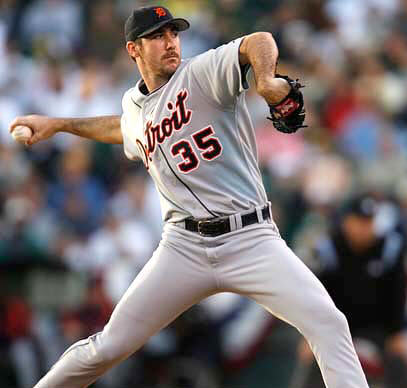
Richmond Native Verlander remains the career leader of Opening day starts. Photo unk via rumorsandrants.com

Now that the 2025 Opening Day is past us, and I’ve updated the XLS for this year’s starters and done some housecleaning of now-retired starters, here’s some Opening day starter trivia for you.

Here’s a link to the Opening day starter xls, which is also updated along the right hand side in the Links section. It is also worth noting that Baseball Reference of course maintains similar information. Here for example is the canonical opening day list of lineups (pitchers and players) for the Washington Nationals franchise. And here’s the list of all 30 teams’ opening day lineups for the 2025 season, with similar data for all past seasons). I can’t quite find a similar resource to just the starters across all 30 teams, but I’m sure it’s there somewhere, so I continue to maintain this XLS.

Ok, that being said, here’s some useless trivia related to Opening Day Starters:

  • First time Opening Day Starters for 2025: 12 of the 30, including our own MacKenzie Gore. It may be fair to say that, were there not an opening series in Japan, and were there not a couple of last minute scratches, this number should have been a lot lower, like maybe 8-9.
  • Current active Leader of Opening Day Starts: still Justin Verlander, with 12. He did 9 in Detroit, then another 3 in Houston. Others in the conversation are Kershaw (9), and Scherzer (7), neither of which seems likely to extend this record before they’re out of the game.
  • Current Active Consecutive streak: Logan Webb and Framber Valdez both now have 4 consecutive Opening day starts for San Francisco and Houston respectively.
  • Current Leader of Consecutive Opening Day Starts: both Verlander and Kershaw at one point made 7 straight opening day starts for their teams, and are the current leaders in that category. We’ll need another four years of consistency from Webb/Valdez to catch them, which seems unlikely (see my commentary below).

Historical records:

  • Most Opening Day Starts in History: Tom Seaver (16).  Tied for 2nd place with 14 is Jack Morris, Randy Johnson, Steve Carlton, Walter Johnson
  • Most Consecutive Opening Day Starts in History: Jack Morris; all 14 of his starts were in a row, Mr. Durability, and Mr. Hall of Famer thanks to the Veteran’s committee.

Nats Records:

  • Max Scherzer is the Nats franchise leader in Opening day starts with 6.
  • Strasburg is 2nd with four: he took the ball opening day in the 3 seasons before the Scherzer acquisition, then got it in 2017 mid Scherzer contract.
  • Gore with his 2025 start becomes just the 9th guy to get the ball opening day for Washington.
  • Odalis Perez remains the most unlikely Opening Day starter, getting the ball in our bottoming-out year of 2008.

Lastly, here’s some interesting team observations for 2025’s Opening day Starters

  • With Eovaldi getting the ball for the 2nd year in a row, Texas breaks a streak of having 8 different opening day starters in the 8 years prior to 2025. And it’s even crazier than that: They’ve had 15 different opening day starters in the last 16 seasons, dating to 2009! Only one guy has repeated: Cole Hamels in 2016 and 2018, and Now Eovaldi in 2024 and 2025.
  • Los Angeles Dodgers, despite being probably the league’s best team over the past decade or so and your defending WS champs, now has had 7 different guys make their last 7 opening day starts. Yamamoto, Glasnow, Urias, Buehler, Kershaw, May, and Ryu.
  • Urias, in case you didn’t remember, just was suspended a Half a Season for his SECOND domestic Violence arrest and has probably thrown his last MLB pitch. So, a 2nd DV arrest, charge, and pleading guilty = half a season suspension according to MLB. Meanwhile, Trevor Bauer, when he was accused of his first DV issue (but not charged, arrested, or guilty) was suspended for two full seasons and now cannot get a job in the Majors at a time when teams are begging for starters and is seemingly blacklisted by all 30 teams. Yes, Bauer comes across as opinionated and abrasive, but he was definitively cleared of charges AND pretty clearly demonstrated that his accusations were a complete setup by someone trying to catfish a major leaguer and who was subsequently indicted on felony fraud charges for filing false reports against Bauer … yet here we are. He’s missed out on literally hundreds of millions of dollars of salary because … why? Because he’s outspoken on Twitter?
  • Other teams who have not really been able to find a consistent starter: NY Mets: 5 straight different opening day starters. Cincinnati: 10 different starters in the last 11 years. Pittsburgh: 9 different starters in last 10. Baltimore: 9 different starters in the last 10 years. Angels: 9 in the last 11. Some teams just can’t find Aces.

Now for some random commentary on the state of Starting Pitching in the game. I write answers on Quora about Baseball all the time, and came across a question there asking whether recently inducted starters like CC Sabathia were “worthy” of the Hall b/c he “only” had 251 career wins. This in the context of the three aging star starters Verlander, Scherzer, and Kershaw who currently lead all active starters in Wins with (as of this writing on 3/28/25) 262, 216, and 212 respectively. They’re 42,40, and 37 respectively, meaning that the odds of them significantly adding to their current win totals seem slim.

But, I don’t think anyone would dispute that all three are no-doubt hall of famers, despite two of them not being close to even 250 wins, let alone 300 wins. Three major individual awards basically make a player a lock for the hall:

  • Verlander: 3 Cy Youngs (9 seasons in the top 5), 1 MVP, 1 Rookie of the Year, 3400+ Ks
  • Scherzer: 3 Cy Youngs (8 seasons in top 5), 3400+ Ks.
  • Kershaw: 3 Cy Youngs (7 seasons in top 5), 1 MVP, and has 2968 Ks as we speak.

But….. what’s next? A quick perusal at the state of Starting Pitching in the league reveals that we may not see another 250 win pitcher…. ever? Here’s the rest of the current active top 10 of career Wins leaders with their ages and some context:

  • Gerrit Cole: 153 wins at age 34; just blew out elbow so he’s missing all of 2025. Does he even get to 200 career wins now?
  • Charlie Morton: 138 wins at age 41: he’s the #2 guy in Baltimore’s rotation but this may be his last season.
  • Chris Sale: 138 wins at age 36; having a second-wind career moment, coming off of last year’s Cy Young, but he made just 11 starts in 2020, 2021, and 2022 combined thanks to injury. Does he get to 175 career wins?
  • Kyle Gibson: 112 wins at age 37. Quick: what team does Kyle Gibson pitch for? I had to look it up; he signed with Baltimore a week ago and just got optioned to AAA. He’s 7th in the majors in career wins! And now he’s going to pitch in Norfolk for a bit.
  • Sonny Grey: 111 wins at age 35. Ok, so he’s St. Louis’ #1 starter and has been relatively durable, but can you count on him getting even to 150 career wins? He has 36 wins in his last four seasons combined.
  • Carlos Carrasco: 110 wins at age 38. He signed a MLFA/NRI deal with the Yankees and seems to have lucked his way into a rotation spot. In his last two combined seasons, he’s had a 6.00 ERA and a -2.6 bWAR, and it doesn’t seem like he’s long for the majors at this point.
  • Yu Darvish; also 110 wins at age 38. He’s still under contract for 3 more years in San Diego, which may give him a shot at 150 career wins.

Where’s the sure-fire Hall of Fame starting pitcher with 250 wins and 3,000 Ks in this group?? Nowhere to be found. Would you even characterize the two best guys on this list (Cole and Sale) as hall of famers right now? I wouldn’t. Maybe Cole if he comes back and dominates, but that’s no sure thing.

Lets look a bit further down the list of active starting pitcher win leaders to see who looks like they’re putting together a career that, maybe possibly could turn into a HoFame career?

  • The two best Age/Accumulated wins combos might be Aaron Nola (104 wins at age 32) and Jose Berrios (99 wins at age 31).
  • Nola had one great 9.7 bWAR season in 2018, while Barrios has received Cy Young votes in exactly one season in his career (a 9th place finish, meaning he probably got like one home-town writer vote, in 2021).
  • The highest career win total for a player who hasn’t turned 30 yet is Dylan Cease, who has 57 wins at age 29.
  • the 50-career win range has a slew of other guys who are “known names,” guys like Logan Webb, Zac Gallen, Jack Flaherty, etc.
  • Our former #1 draft pick Lucas Giolito? 61 wins at age 30, right in this same range.

I mean, do any of these guys sound like Hall of Famers to you?

What’s my point? Randy Johnson was elected to the hall in 2015, finishing off a 300-win career in 2010. That was a decade ago, but it might as well be a lifetime ago in terms of evolution of pitching in the game. Not only does it not look like we’ll see a 300 win pitcher ever again, after Justin Verlander I’m sure we’ll ever see a 250 game winner again. And, I’ll just go ahead and say it; after Scherzer and Kershaw i’m not sure we’ll ever see a 200 game winner again. Nobody except Gerrit Cole is projecting to be even close to 200 wins for his career.

A Decade from now, will the new standards for SPs in Cooperstown really be 175 wins and 2,500 Ks?
Written by Todd Boss

March 31st, 2025 at 8:35 am

Housekeeping Post – Link cleanup and Resource review

one comment

I do a lot of spreadsheet work when it comes to tracking Baseball stuff that I like to track. Some of those have turned into relatively well-known resources, while others are things I generally edit privately and post to Google Sheets sporadically.

First, some Housekeeping.

Frequent commenter Will pointed this out, and also pointed out that the links on the front page of NationalsArmRace.com were well out of date. What’s ironic is, I almost never go to the non-WordPress dashboard version of this page, so I hadn’t really looked at the mess of content that was along the right-hand side. In like 10 years. Most of the links there were for long-dead blogs, or spreadsheets I did in like 2015 or 2016. So, I cleaned them up drastically. I also got rid of several useless sections (the tag cloud) and now the right-side set of links is much more streamlined with content that’s actually up-to-date.


Next, now that I’ve cleaned up the Link section called “NatArmRace Creations,” here’s a review of those links and some discussion/insight into them. I’ve got these sections organized in the order these links appear along the right-hand side.

If any of these links don’t work, please let me know. They should all be set to be viewable for those with the link.


“a All Nats Links I use“

Direct Link: Nats Links: or https://www.nationalsarmrace.com/?page_id=16709

What is it? ALL the Nats/Baseball related links I’ve ever collected and/or use frequently. This is essentially my browser bookmark set for baseball and the Nats.

History/fun facts: I got tired of trying to use bookmarks to go to the pages I visit frequently, so initially this was a private HTML page, but eventually I migrated it to be a WordPress “page” within the nationalsarmrace.com blog site.

The links in the top few sections are mostly what I visit on a daily/weekly basis; for each of our minor league affiliates I have direct links to the Local paper for gamers (if one exists that covers the team), the milb.com home page, the roster, the stats, schedule, standings, and transactions.

If you scroll down you’ll see some out of date links for the Nats, and then you’ll see entire sections devoted to thinks like PEDs, Hall of Fame, stats, etc. I’ve recently put online all the CBA pdfs I have to have them all in one place, and all those links are on there.


Minor League System Org Rankings

Direct Link: Minor League System Rankings or https://docs.google.com/spreadsheets/d/1ipxQoHgXrf0EDL0iMc2zqLu4rX7RbXani4nfY0RUJlw/edit?usp=sharing

What is it? This is a list of all the Minor League system rankings i’ve found over the years from various pundits. There are more than 175 at this point dating back to 2000 and with links to older Baseball America rankings from there. There are divider lines that denote breaks in the rankings. Yellow shaded ranks are outliers that seem to not comply with the general consensus.

History: this is an XLS i’ve maintained since the late 2000s as I started to get into tracking prospects for the team. I used to actually keep a narrative of why each teams’ ranking rose or fell, but that proved to be too difficult to maintain (its still at the far right side dating back to 2010).


2025 MLB Draft Order

Direct Link: 2025 MLB Draft Order or https://docs.google.com/spreadsheets/d/1eOam8iWCo-n3BC9baIU06c7aBxvV9oKqANl7WDqUsys/edit?usp=sharing

What is it?. this is a working XLS that tracks the changes in the draft order as players with Qualifying Offers sign. Published/finalized with last QO-assigned signee once the last order-impacting event occurs.

History: I couldn’t find a resource elsewhere on the internet that kept the data in the way that I wanted to see it, which was driven initially by a desire to see what kind of draft picks teams were giving up when they signed QO-affiliated FAs. Other draft tracking sites (like MLB) just remove the picks as they’re lost without great detail as to what happened. I keep the team in place and adjust the number so you can see how many picks have been added or forfeited.


MLB Qualifying Offer Disposition

Direct Link: Qualifying Offer Worksheet or https://docs.google.com/spreadsheets/d/1f9oJDRmCD0rH7zVj5FlcJ65YvPiuVvpFz3dkyUhHuaI/edit?usp=sharing

What is it? Every single QO player since the system was created is tracked in this XLS, with their new contract, draft picks given up, and a judgement whether the QO “screwed” the player or not.

History: when the QO system first was devised, I was fascinated to see if players were “screwing themselves” by taking a QO. So this spreadsheet was a way to kind of judge that, and to judge the effectiveness of the system.

Opinion: I can’t stand QOs. They are the epitome of a Union negotiating a “benefit” that impacts a tiny fraction of its member base instead of addressing larger concerns. Each year around 12-14 players get offered one and accept it. That’s around 1% of the union at any given time. Half those QOs offered are from teams who have no intention of re-signing the player; they’re just gambits to net an extra draft pick from a player already heading out the door. Plus, each year a chunk of the players just re-sign and it becomes moot. It also seems that every year one or two guys really mis-read the market and end up getting screwed by the QO. This past off-season, that screwed player was clearly Nick Pivetta, who took a 4yr/$55M deal and a huge decline in AAV.

The player who probably got the MOST screwed in the history of the QO system? It was either Mike Moustakas in 2017 or more likely our own Ian Desmond in 2015, who turned down a $100M contract from the Nats to play the market, found zero buyers, and ended up taking a 1 year $8M deal in which he moved to left field.


The Big Board

Direct Link: The Big Board or https://docs.google.com/spreadsheets/d/186nm-v5F-zTCoR2Be7TFYM3e2cZ-gYi2WVqJLEkHdmc/edit?usp=sharing

What is it? Updated rosters for every Nats major and minor league franchise, from the MLB all the way to the DSL. Each year has two tabs: one for the Rosters, one for the Releases.

History/fun facts: This document was the initial brainchild of an O.G. Natmosphere staple in Brian Oliver, who maintained the old Nationals Farm Authority site. From there, another big-time Nats fan named “SpringfieldFan” took over the XLS updating for a long time (the current online XLS dates from 2010, so we’ve lost the first few years of Oliver’s ownership). In Dec 2019 they transferred control to myself, and i’ve been updating it ever since.

Updates I’ve made since I took over:

  • I’ve added milb.com/baseball-reference.com links for every player.
  • I have added color coding for in-season promotions/demotions.
  • I’ve added in current age columns for all players
  • I added the XST section for players who seemed to be missing but not released but not assigned to a team.
  • I add URLs documenting releases if I can.
  • I try to keep the actual starters in the main positions they’re holding per team.
  • I try to keep the rotations accurate, and in the synced order with the big team across the system.
  • I mostly keep the bullpen roles accurate, especially in the upper levels, but in the lower levels it’s fluid.
  • This year I just added a running count of the entire system, given MLB’s new 165-person limit.

On a daily/weekly basis I’m updating transactions (DL trips, promotions, demotions, releases, MLFA signings, etc), confirming the rotation order in each level, and adjusting the starters. To do this, I’m completely indebted to Luke Erickson and his daily work at NationalsProspects.com basically summarizing the same. If/when Luke decides to hang it up on this daily work, I’m not sure I’ll have the time to do it myself, but for now, Luke seems game to keep going.


The Nats Draft Tracker

Direct Link: Draft Tracker or https://docs.google.com/spreadsheets/d/1Qd5DS9GlmkQOEh_zGhOvlhHK0EegqY1uJB4mLGmRBaY/edit?usp=sharing

What is it? A spreadsheet that has every single Nats draft pick since the team moved to DC in 2005, along with key information such as position, draft round, overall draft pick, their school, initial assignment, when they become Rule-5 eligible, and their bonus amount.

History/fun facts: I’m not sure who the original author was of this resource, but I do know that Erickson owned it for a time, as did SpringfieldFan. I’m also not sure exactly when I took over updating the data, but it was probably Dec 2019 as well.

Updates I’ve made since I took over:

  • Added in milb.com links for every player
  • Changed the color coding for readability; green means active in Nats system, blue means released from Nats sytem, etc.
  • Did a ton of googling about players we drafted but who didn’t sign to put in the correct disposition from older drafts. This is easier for more recent drafts, but harder for older players.
  • Began adding two draft artifacts I maintain every year: a Draft Signing worksheet with twitter links for the players, notes, and NDFAs. Plus I maintain a “Local Drafted Player worksheet” with every player drafted who has DC/MD/VA ties. These are all now in the Draft Tracker.

I’m not updating this on a daily basis, but do periodically go through and update for player releases, Rule-5 status in a class, etc. On a yearly basis i’m adding the new class details plus the two worksheets mentioned. And once in a blue moon i’ll google unsigned players from prior classes to see where they are and update the roster. I recently abandoned the “level” as impossible to maintain accurately and just turned it into “roster status” to track release dates for players.


Nats IFA Tracker

Direct Link: IFA Tracker or https://docs.google.com/spreadsheets/d/1ksPorXhEHhtkNAGqxrJWqUFkvioMgoWhBU50uaZstc8/edit?usp=sharing

What is it? This is an emulation of the Draft Tracker, only for the International Free Agent classes. There’s a set of columns for each “class,” that includes Name, DOB, age at signing, position, country of origin, initial assignment (which is almost always the DSL), Rule5 eligibility date, and known signing bonus.

History/fun facts: I created this with the Jan 2023 class, then have been building it backwards one year at a time. I have it back to 2015 right now, but probably could continue to build it backwards by digging through draft class announcements and our big board releases over the years. However, much past the 2015 IFA class all it would be would be a cut-n-paste job of dozens of kids who got released before they turned 20, and the value doesn’t seem to be there.

The bonus pools are quite sketchy in the international market, but I’m pretty close to having the entire pool accounted for in the last few seasons. Well, not 2023, where i’m off more than $100k. I have no idea how bonus dollars work; can a team sign whoever it wants if the dollars are under a certain amount? Kind of like how you can sign NDFAs to your heart’s content for domestic players? Or does it all count towards the yearly dollar amount?

The IFA tracker also shows that we sign a slew of players each year and don’t announce the bonus amount, which I can only assume means its a nominal amount (like $2k or $5k). Also, we announce a “class” on January 15th each year (what used to be July 2nd until they pivoted the date thanks to Covid), but then they continue to sign IFAs throughout the year. If a player signs in a given year, I still call them part of that draft class.

MLB cancelled the July 2nd signing date in 2020 for Covid, hence no 2020 class, but they still managed to sign a couple guys in late 2020, who are now listed in that year’s class.

Should I build this backwards until we get closer to the “dark days” of Smiley Gonzalez and Jim Bowden? Maybe.


Nationals Prospect Ranks

Direct Link: Nationals Prospect Rankings or https://docs.google.com/spreadsheets/d/1Dtx_W2CN19W2EyRyQ17iaSkoyc51u1qR/edit?usp=sharing&ouid=102402795225850924380&rtpof=true&sd=true

What is it? This is a canonical list of EVERY prospect ranking i’ve ever found for the Nats farm system, from the most recently announced (Fangraphs in early June), back to Baseball America in 2004. More than 260 lists, with direct links whenever I could provide it. This sheet also has some cool information per player: their position, the year by year starting level (with red shading that indicates they’re repeating a level), their signing bonus, acquisition method and their signing/draft year. I’ve recently added their milb.com links and an active flag for sorting.

History: i’ve privately maintained this XLS since the Nats moved to Washington and update it every time a new list is released. Periodically I’ll update/upload it to google for announcement.

Note: i’ver never paid for BaseballProspectus, so i’m missing most of their lists over the years. I do pay for the Athletic, BaseballAmerica, D1baseball.com, and ESPN+ so all of those are there.

I’ve taken to highlighting in yellow the “outlier” rankings per player as I ingest them, which helps when i do the writeups/reviews of prospect rankings in this space. So if you see a rank that’s highlighted in yellow it probably is an outlier as compared to the rest of the ranking for that player in that year.

Lastly, my personal rankings are in Green.


Opening Day Starters

Direct link: Opening Day Starters or https://docs.google.com/spreadsheets/d/1Mv8gLgJOuJHEAf_pXNwPWGCNRL4RnYEyulH6rxMuudA/edit?usp=sharing

What is it?: just a list of the opening day starters for every team, dating back to 2000. I have always had a fascination with these guys, and there’s a bunch of trivia questions in there. Baseball-Reference now has the same data at their site per team, which is really cool.

I usually do a post the day after opening day and will update it then.


Other random artifacts not always online: As alluded to above, I maintain a few other random spreadsheets and documents, mostly locally, but do periodically upload copies of them. But, if anyone is interested in these things I could throw them onto Google.

  • Nationals 40-man Roster tracking document: maintained in a Text file locally. This is mostly useful to me because I keep track of major transactions here, and it’s a useful way for me to quickly grab acquisition dates for stuff.
  • Top 100 prospect tracking: this used to be more comprehensive, but how basically just a collection of pundit top 100 prospect lists for the Minors with Nats guys highlighted. Maintained in a Text file locally. I update this every time someone publishes a “Top 100 prospects in the minors” link.
  • Nats Minor League Rotations (now just season beginning and ending): maintained in a Text file locally. Only really updated a few times a year; opening day and closing day.
  • Nats Trading Partners: Maintained in a text file locally, updated whenever we make a trade. Fun fact: this team has not made a SINGLE TRADE with Baltimore since 2001. We havn’t traded with Houston since 2007, Colorado since 2009. It’s crazy how we trade with some teams constantly but others almost never.
  • Nats Catcher Depth Chart: Maintained in a text file locally, updated several times a year when we have Catcher movement/transactions.
  • Nats Attendance and Home Opener stats: Maintained in a text file locally, used to do an annual post on the same topic.
  • Nats Payroll worksheet: abandoned recently, Cots does a better job.
  • Nats Options worksheet: abandonded recently, Roster Resource does a better job.

Plus for all of baseball i’ve got stuff like:

  • MLB Franchise Financial Overview: this is an XLS I put together from some other sources I maintain to put all the core financial details of each MLB franchise in one place: It has the RSN revenue amounts and ranks, each team’s MSA rank and DMA rank for comparison, their Forbes valuation and 2023’s payroll to see who’s skimping and who is spending. It’s a subset of data on the Sports/Winner/City xls below but updated to 2023 figures.
  • Sports/Winner/City: a huge spreadsheet that tracks all four major sports in the USA to track franchise movement, champions, most recent year each city won a title, who held multiple sports titles at once, etc.
  • Manager roster: used to answer the question, “What percentage of managers were Catchers?” Answer, its not as many as you think. I updated it recently to support a Quora answer I was crafting.
  • GM Rankings and Roster: difficult to keep updated, especially “ranking” GM/front offices, but its current to the latest moves.
  • Player Demographics: annually updated when the opening day rosters are announced. When I get 2025’s figures i’ll do a quick post and throw it into Google Sheets.
  • MLB Team Payroll worksheets: annually updated, then finds its way to other XLS here.
  • Hall of Fame Roster: I manually maintain a HoF roster to be able to quickly filter by position.
  • Sports Revenues Annually across major sports; updated when we get more macro level revenue figures for the sport.
  • Realignment Scenario Worksheet: I did a post on this
  • Verducci Effect worksheet: abandoned. In the macro his theory was disproven, though his point was not to apply his theory to every pitcher, just certain starters.
  • Ball in Play Studies Worksheet: subject of a great 2012 post I did about the amount of time the ball is in play for major sports, probably needs updating.
  • Opener Worksheet: a worksheet that attempts to show how a team could use a staff entirely made of relievers, to see if it could work. Short Answer: i don’t think it can work.
  • MLB Team Playoff History: made up to show just how much parity there is in MLB. 66% of the teams in the league have made the playoffs in the last three years and every team in the league has made the playoffs in the last 8, as example stats.

If I was more diligent i’d have all these artifacts in the cloud instead of locally, so everyone could see. If anyone wants to see some of these artifacts I can always upload them somewhere.


Anyway, hope you enjoy the main links above, which was the reason I posted this in the first place.

Written by Todd Boss

March 20th, 2025 at 11:14 am

Qualifying Offer recap and 2025 Draft Order finalized

22 comments

With the final two qualifying-offer attached FAs signing yesterday (Bregman and Pivetta), we’re doing a double duty post today; recapping the Qualifying Offer (QO hereafter) crop for this offseason, then publishing the now-finalized draft order for 2025.

First; QOs. We’ve come a long way since the first QO season, and we’ve come a long ways since the awful 2015 season when so many veteran FAs (our own Ian Desmond headlining) got royally screwed by the QO. So, how did the crop fare this year?

Here’s a link to my full QO worksheet with a lot more detail than the below table. It is in chronological order, so scroll to the bottom. But, here’s a summary table:

YearPlayerOld TeamNew TeamDraft Pick ForfeitedSigning DateNew ContractAAV changeQ.O. Screw the player?
2024Juan SotoNew York YankeesNew York Mets2-70,4S-14312/9/202415yr/765M29.95No
2024Corbin BurnesBaltimoreArizona2-5912/30/20246yr/$210M13.95No
2024Alex BregmanHoustonBoston2-532/12/20253yr/$120M18.95Not really
2024Max FriedAtlantaNew York Yankees2-71, 4S-14412/10/20248yr/$218M6.2No
2024Willy AdamesMilwaukeeSan Francisco2-54,5-15512/9/20247yr/$182M4.95No
2024Pete AlonsoNew York MetsNew York Metsnone2/5/20252yr/$54M5.95Sort of
2024Anthony SantanderBaltimoreToronto2-491/20/20255yr/$92.5M-2.55Not really
2024Teoscar HernandezLos Angeles DodgersLos Angeles Dodgersnone12/30/20243yr/$66M0.95No
2024Sean ManaeaNew York MetsNew York Metsnone12/23/20243yr/$75M3.95No
2024Christian WalkerArizonaHouston2-63, 4S-14212/20/20243yr/$60M-1.05Not really
2024Nick MartinezCincinnatiCincinnatinone11/17/20241yr/21.05M7.05No
2024Nick PivettaBostonSan Diego2-632/12/20254yr/$55M-7.3Yes
2024Luis SeverinoNew York MetsOakland2-4812/6/20243yr/$67M1.25No

So, what’s the breakdown of the 13 QO-attached Free Agents this year?

  • 4 Resigned with their old team, negating the QO and draft pick loss
  • 9 signed with new teams, thus triggering draft pick compensation and IFA money loss
  • 5 of the 13 in my opinion had some level of “impact” to their Free Agency by virtue of the QO attachment, even if its arguable:
  • Nick Pivetta was probably the most impacted; he took $7.3M less in AAV than if he’d just signed the one year deal.
  • One QO attached signing was ludicrous: Oakland/Sacramento signed a reliever Luis Severino to a 3yr/$67M basically to get the union off their backs for hoarding money. Honestly; someone needs to divest this team from its ownership.
  • The Rich get richer: four of the signing teams were so far over payroll that they gave up two draft picks (Mets, Yankees, SF, Houston)
  • 13 total draft picks were surrendered, which we’ll talk about in a bit in how it impacts a team like the Nationals.
  • Boras represented 6 of the 13 players: 2 of the re-signed, 2 got the expected massive deals (Soto and Burns), but if i’m his remaining two clients (Alonso and Bregman) I’d be pretty underwhelmed by what happened this off-season. Alonso got just a 2year deal, Bregman a 3-year deal (albeit with opt outs each year). At least both can go back to FA soon w/ zero attachment.
  • CAA Sports represented 4 of the 13: Fried and Adams did well, Walker got less in AAV than the QO but signed early so you can’t say the market played him. But they also represent Pivetta, who signed a deal worth $13.75/year AAV when he could have gotten a $21M QO for 2025. A mis-read by the player and the agent.

I continue to not be a fan of the QO system. I believe it artificially suppresses salaries for veteran FAs. I also believe FAs generally speaking are morons and continually misread their markets. Year after year we see players get screwed by this system.


So, now that all the QO assigned players are signed, there’s no more draft pick gains and losses, and we now have a basically finalized 2025 draft order. I believe I have this correct and updated for all the moves, but here’s my working XLS of all the drops and adds for the first five rounds due to draft pick comp, comp picks, etc.

As it stands now, here’s how the Nats will be picking:

  • 1st round: #1 overall
  • 2nd round: #49 overall
  • 3rd round: #80 overall: this moved up 9 spots thanks to lost picks
  • 4th round: #111 overall:
  • 5th round: #142 overall
  • 6th round: #171 overall
  • +30 every round subsequent

So, we’ll get three picks in the top 80 in 2025, which should add nicely to our existing slate of prospects.

Written by Todd Boss

February 13th, 2025 at 12:00 pm

Juan Soto makes $300M more than the Nats offered

11 comments

“Hey did you hear my contract value?” Photo via NYpost

Some random thoughts today on the Juan Soto deal.

15 years, $765million.

Just putting that out there. $51M/year AAV. If a WAR on the FA market is worth $9M (that’s the going rate from a few years back, i’ll bet its more now), then Soto will have to put up about 80 WAR in the next 15 years to “earn” this contract. Or maybe you can’t think about this contract in those terms, because he’ll sell a million jerseys in the next decade, and he’ll be the cornerstone of a franchise that should be able to buy its way to the playoffs each year. Or, perhaps in about 12 years time when Soto has around 700 career homers … the media blitz alone will be worth the money (he just finished his age 25 season and already has 200 homers, and he averages 35/year … do some quick math and factor in that he’s not even in peak slugging years yet and look out).

Honestly, i’m surprised he went with the Mets. He was such a perfect fit in the Bronx. Right attitude, perfect field, all the history, the pipeline of prospects in the DR, etc. But you don’t hire Scott Boras to take the second best offer (reportedly 16yrs, $760M).

I know we’ve made comments about how the Nats 2025 payroll could have absorbed all these contracts and still have room to spare. I think i’m more irritated they let a core of players go that could have carried the team into the next rebuild; Turner ($27M/year), Harper ($26M/year), Schwarber ($20M/year), basically the Phillies 1-2-3 hitters, all Ex nats. But, you take the good with the bad. We gambled on Strasburg and lost, but cut bait on Rendon and won. Nobody has a crystal ball. Was letting Harper go the right move? We offered Soto $440m, he said no, so we traded him for a cache of players that are (or are projecting to be) crucial to us being relevant again (MacKenzie Gore, Robert Hassell III, C.J. Abrams, James Wood, Jarlin Susana). Was that a good trade? Absolutely. Should this team have committed $51M/year to Soto? Hard to say, given the fact that we were competing against two teams that print money (NYY and LAD) and another team owned by a profligate hedge fund billionaire who could give a sh*t about the luxury Tax.

Draft lottery tomorrow; we project to pick 4th, could move up, will pick no worse than 10th I believe. There’s some decent names in the top 10 projecting already; once we know where we’re picking i’ll throw up a 2025 draft proffer to show what’s likely to be in the mix at our slot.

Written by Todd Boss

December 9th, 2024 at 11:12 pm

Welcome to the pre-2025 Off Season

29 comments

The World Series is over. The Yankees bungled away game 5, but let’s be honest, they would have struggled to win a game 6 with Yamamoto dealing and Rodon choking. The Dodgers were just the more powerful, complete team in a year when the NL was just far more stacked than the AL. If it had been the Mets, Phillies, or Padres in the WS instead of the Dodgers, I don’t think we’re looking at much of a different result.

So, now we’re to the off-season. I try to write content throughout the off-season as we hit major deadlines that impact our roster. So, based on the off-season calendar of events, here’s when we’ll try to write to.

  • 10/31/24: Day after WS ends. All MLB FAs officially cut loose into a 5-day exclusive negotiating period that nobody bothers with anymore. The Nats’ 3 remaining FAs that we didn’t already release or trade are Corbin, Williams, and Barnes. We’ve already moved them to the “2025 Releases” tab on the Nats Big Board.
  • 11/4/24: MLB options must be cleared we have one club option that should have already been declined on the .165-hitting Gallo, but that’ll happen soon.
  • 11/4/24: All 60-day DL players must be returned to 40-man. We have 4 players on the 60-day DL (Thompson, Cavalli, Gray, Adon) but only 3 open spots on the 40-man. My guess is that the Nats decline Gallo’s option, then put all four on the roster for a 40/40 slate.
  • 11/4/24: All MLFAs are officially declared. This is always slightly tough to track from the Big Board perspective. We have 11 2024-MLFAs still on minor league rosters as of the end of the season who one might think might automatically become FAs anew, but we really have no idea what kind of deal’s they’ve signed. There’s still a slew of 2023 MLFAs and a handful of older MLFAs still hanging around.
  • 11/4/24: Furthermore, at this stage all 6-year players in the system are declared FAs as well, so this would mean anyone we have who was signed/drafted in 2018 ore before. I count nearly 20 active players we got in the 2018 Draft and another dozen or so 2017 IFA signings still active; are they all now cut loose? The 2020 covid year may factor in here and delay things, but i’m not sure how.
  • When all three of these 11/4/24 deadlines hit, i’ll do a ton of cutting-and-pasting in the Big Board
  • I’m not really into Awards posts anymore, but all throughout Nov and Dec there’s awards announced, finalists, etc.
  • 11/18/24: Hall of Fame Ballot released: i’ll definitely do a post here like I always do, with my fake ballot listing who i’d vote for.
  • 11/19/24: Qualifying Offer responses due in: I’ll wait until all the QOs are resolved to do a post-QO post, which may not happen until well into the spring. QOs drive draft picks, and once the draft order is finalized we’ll post about that too.
  • 11/19/24: Rule5 protection Deadline; we’ll definitely write about this ahead of 11/19: we have a TON of decisions to make, and we have a relatively full 40-man roster right now.
  • 11/22/24: Non-tender deadline; another interesting one for us, b/c it ties into the Rule5 somewhat (if we’re going to non-tender someone to make room for a new prospect, might as well do it before 11/19/24), but we also have a slew of arb-eligible players who may not actually be worth it.
  • 12/10/24: Draft Lottery. By final record, we should be picking 4th. We’re guaranteed not to drop below 7th (I believe).
  • 12/11/24: the actual Rule5 draft; if we gain or lose players will post here.

By this point, we’ll start seeing all the prospect ranking shops start to publish pre-2025 lists, which I love responding to. I’ve already got my draft prospect list going … i’ve got it built out to more than 80 players (which is crazy, b/c we only have like 140 minor leaguers right now) but I can’t wait to publish that list like I did last year.

So, once we get all the MLFA’s declared (here was the 2023 BA list of MLFA declarations officially) i’ll publish a note.

Written by Todd Boss

October 31st, 2024 at 4:36 pm

Ohtani achieves 40-40 status … in August

leave a comment

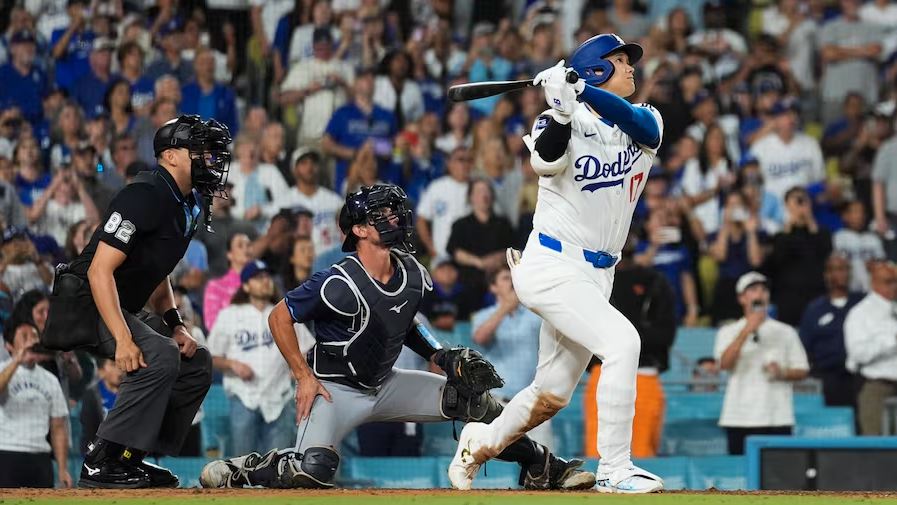
Ohtani hits his 40th of the season in grand style; a walk off grand slam against Tampa. Photo via Tampa Bay times

Shohei Ohtani added another achievement to his already lore-level career: he hit a walk-off grand slam for his 40th HR of the season to officially reach 40-40 status.

40-40 has only been done five other times in the history of the sport:

  • Jose Canseco, who did it in his MVP 1988 season at the age of 23 likely before PEDs took over his narrative. He hit a homer and had two SBs in a Sept 23rd 9-8 game as the 104-win Oakland team was cruising into the playoffs. Doing this at the age of 23 sent shockwaves through the sport, but Canseco’s injury-riddled career never really offered another opportunity for him to get another 40/40 season; he only hit 40 homers in two other seasons, and never again came close to 40 steals.
  • Barry Bonds, who did it in in 1996, in his age 31 season where he had a 188 OPS+ but somehow only finished 5th in MVP voting. He stole a bag in the final game of the season to get the achievement as his 68-win team was playing out the string. Bonds nearly did the feat again in 1997 (40/37) and then he entered his mid-30s PED era where he was much more of a slugger than a runner. It is only fitting that Bonds did the feat, considering that his father Bobby Bonds was the original pioneer for this feat, nearly doing it twice in his career in the 1970s.
  • Alex Rodriguez did it in 1998 when he was just 22, hitting 42 homers and stealing 46 bags. It took a-Rod deep into September to get to 40/40 (game 153), getting his 40th homer for a middling Seattle team out of the playoffs. He added a couple more dongs and a couple more SBs to pad the stats. Like Canseco, doing this at age 22 seemed to really portend A-Rod repeating the feat for years to come, and indeed A-Rod became a home-run machine, hitting 40+ homers each season for basically the next decade, but he never came close to 40 SBs again despite being in his mid-20s prime.
  • Our own Alfonso Soriano, who did it for our awful 2006 Washington Nationals team during his one season here. The team signed him to a 1yr/ $10M deal as kind of a pillow contract after he had an ignominious exit from NY and a couple of middling seasons in Texas, and the early news was dominated by the team’s fight with him over where he was going to play. He initially refused to head to the outfield but eventually grudgingly trotted out in spring training to take his left field spot, where he played the rest of his career. Once we got past that, he certainly delivered for us; he was our all star that year and made national news with his 40/40 achievement. Soriano had been threatening 40/40 for a while, nearly doing it for New York in 2002 (39/41) and again in 2003 (38/35). In fact, he should have gotten the achievement in that 2022 season: he sat at 39 hrs and 40 SBs for two weeks in September but couldn’t get that 40th homer. As soon as he signed a big money deal with the Cubs for 2007 (manager, Lou Pinella, same guy managing A-Rod in his 40/40 time), his SBs dropped off considerably and he never came close again.
  • Ronald Acuna who went for 41/73 last season in his age 25 season, taking full advantage of the new pitching rules (which we’ll touch on later) to run up his SB count early and then getting his 40th homer deep into September to achieve the result. He hit his 40th in later september, right in the same game 153-154 range as most of the guys above, so he had some time to spare. Acuna nearly did the feat at age 22, going 41/37 in 2019, so this shouldn’t be too much of a surprise. Unfortunately for Acuna, he blew out his ACL in May of this year, so it may be some time before we see him challenge 40/40 again. Acuna is still in his prime, and seems like an easy threat for 40/40 for a few more years assuming he gets the confidence back in his knee.

I feel like there should have been a 40/40 season prior to 1988, but likely candidates like Bobby Bonds, Mickey Mantle, Willie Mays, and a couple others just never quite made it there. Mantle never prioritized SBs and had a very bad knee injury early in his career, Bonds (as discussed above) nearly got there a couple times, Mays came close a couple times very early in his career in NY, Hank Aaron had a 44/31 season in the early 60s but was more of a steady power presence.

That leaves us with Ohtani, who as of this writing has exactly 40 hrs and 40 SBs, and achieved the plateau at least a month earlier than any of the 5 previous guys. Amazing. One just has to ask … does he have a shot at 50/50? Yeah, I think he does. He achieved this feat in game 129 of the season (126 that he played), which is amazing enough, but may just leave him enough time to do a 50/50 season.

Ohtani is averaging one HR every 14.45 PAs, and averaging one SB every 3.15 games. Assuming he plays every game the rest of the way (he’s played in 126 of the 129 games for the Dodgers, they have 33 games left, so I’ll assume he plays in 30 of those games, averaging 4.5 PAs per game).

  • 30 games, 4.5PAs/game = 135 PAs left this season, divided by 1 hr/14.45 PAs = 9.3 homers projected the rest of the way.
  • 30 games, one SB every 3.15 games = 9.5SBs projected the rest of the way.

So Ohtani statistically projects to a 49/49 season right now, rounding those numbers down. If he gets hot, or if he plays every game the rest of the way out maybe he gets enough additional looks to get to 50/50.

The new pitching rules have become a boon for stolen bases in the league, something that MLB knew quite well when they went to pitch clocks and limits on pickoff attempts. A few years ago the SB leaders were leading the league with 40-50 SBs. Already this year we have guys with 60 and its mid-august. And some of these guys have power: Elly De La Cruz leads the league with 60 SBs right now and he has 22 Homers to go with it and he’s in his 2nd pro season. Jose Ramirez isn’t exactly known for his speed, but he’s already sitting on a 30/30 season himself and could make a push for 40/40 with a hot September. So, hopefully we’ll see more of this going forward.

It should be exciting to see if he can get there.

Written by Todd Boss

August 24th, 2024 at 12:08 pm

Final QO Free Agent signs, 2024 Draft Order finalized

6 comments

Super agent Scott Boras seems to have over-played his hand with his stable of FAs this off-season, leaving them with shorter deals, less guaranteed money, and far too little spring training to get ready. Photo via LA Times.

If you had March 18th for a two-time Cy Young award-winning free agent to sign, then you won the Scott Boras 2024 off-season bingo game. Blake Snell, who had this stat line last year as a 30yr old: 14-9, 2.25 ERA, 1.189 whip, 234/99 K/BB in 180 innings/32 starts, finally signed just a couple weeks before the season starts, virtually guaranteeing that he misses time for his new club San Francisco. He gets a handsome pay day for 2024 on a short-term gig (2yrs/$62M) but fails to secure the long-term deal that he probably expected coming off a Cy Young winning age-30 season, and probably heads back into FA next off-season w/o the qualifying offer dragging him down.

This is a two-part post. One briefly about the draft, then one about the QO in general.

2024 Draft Order. With Snell’s signing, the 2024 draft order is (finally) finalized. The Giants give up a 3rd rounder to sign Snell, and with it barring any additional last minute penalties we know how things are going. Here’s a link to the 2024 Draft order worksheet (with sources and past years all in the same place), showing the original order and how the various teams picked up or lost picks. Quick summary of movement:

  • Arizona, Baltimore: got supp-1st picks for having top-performing rookies
  • Minnesota, Los Angeles Angels, Toronto, and Sandiego: picked up picks at various points for losing QO-attached FAs.
  • St Louis, San Francisco, Los Angeles Dodgers, Houston: lost picks for signing the same QO-affiliated guys.

The Nats started with the #10 overall, then #48, #88, #118, #148 and so on. After all the movement, we now sit with #10, #44, #79, #108, #140, #169, #199 and so on. So we improved 4 spots in our 2nd rounder, 9 spots for our third rounder, 10 spots for the 4th rounder, and 9 spots for each round going forward.

Qualifying Offer recap for 2023 off-season

Ever since the Qualifying Offer system was introduced in 2012, i’ve hyper-tracked the players who have gotten tagged with them to gauge impact to their free agency. Here’s a Link to my Qualifying Offer Tracking xls. This past off season saw a massive drop in spending from teams, as typical big-money spenders sat out the off-season, were already maxed out and sitting at luxury tax penalties, or had serious revenue concerns with all the RSN issues we’ve been having. However, we also saw that Boras’ three QO-tagged agents sit and wait for months into the off-season before signing.

  • Cody Bellinger: didn’t sign until 2/24 for 3yrs/$80M
  • Matt Chapman: didn’t sign until 3/3 for 3yrs/$54M
  • Snell as discussed; didn’t sign until 3/18 for 2yrs/$62M

As others have pointed out, that’s less guaranteed money for those three guys than some guys got by themselves this off-season. None of them get the kind of 9-figure career-setting payday they probably wanted, but at least all three get opt-outs in case they blow up 2024 to try it again.

Snell therefore is the first QO-assigned player who I think was really hampered by the tag in years. When it first came out, several mid-level free agents took the QO confidently thinking they’d get t heir money like they always did, and got hurt by it. In fact, probably the worst example of the QO screwing a player involved one of our own, Ian Desmond, who declined a 1yr $15.8M deal but couldn’t find anything on the market and ended up taking a 1yr $8M deal three weeks into spring training that year. Now, Desmond eventually got paid by Colorado in a weird contract that turned out to be awful for the team, and of course all these guys are millionaires, so i’m not crying too much for them, but this analysis is more about players getting (or not getting) their worth.

The two sides had their chance to get rid of the QO, but bailed on it in the last CBA negotiations because the owners tied an International Draft to it, which is kind of ridiculous on both sides. QOs impact just a handful of the 1200 union members every year … and owners are just being stupidly short-sighted if they demand an international draft so that they can save a couple million dollars a year. But that’s a topic for another day.

At least these QO Boras clients can go into next off-season knowing they can’t get the offer again, which will free up their markets considerably.

Written by Todd Boss

March 19th, 2024 at 11:32 am

2023 HR Derby – Who is in and who should be

leave a comment

So, the participants for the 2023 Home run Derby have been named. We get:


So, who SHOULD we have in the derby? Lets look at this a few different ways. Here’s your current top 10 MLB home run leaders:

  1. Shohei Ohtani (with 31 before the break, better than Judge’s 60+ pace last year)
  2. Matt Olsen
  3. Luis Robert Jr
  4. Pete Alonso
  5. Mookie Betts
  6. Ozzie Albies
  7. Jorge Soler
  8. Kyle Schwarber
  9. Adolis Garcia
  10. Ronald Acuna

So, based on the current leaders, our HR derby field has just 4 of the current top 10 HR leaders.


Here’s 2022’s HR leaders, since often the ASG is a small sample size of who’s been hot for a couple months:

  1. Judge
  2. Schwarber
  3. Mike Trout
  4. Alonso
  5. Austin Riley
  6. Yordan Alvarez
  7. Christian Walker
  8. Betts
  9. Rowdy Tellez
  10. Paul Goldschmidt

Just two of last year’s top 10 HR hitters are in the derby.


Now, since its an All Star game, meant to feature (you know) All Stars, here’s the current active list of HR leaders in the sport:

  1. Miguel Cabrera
  2. Nelson Cruz
  3. Giancarlo Stanton
  4. Mike Trout
  5. Joey Votto
  6. Evan Longoria
  7. Paul Goldschmidt
  8. Nolan Arenado
  9. Freddie Freeman
  10. JD Martinez

Not one of these top 10 active HR hitters is in the derby.


Here’s a list of active HR Derby winners:

  • 2022: Juan Soto
  • 2021: Alonso
  • 2019: Alonso
  • 2018: Bryce Harper
  • 2017: Aaron Judge
  • 2016: Stanton
  • 2015 and before: all now retired

Soto opted out, Judge is hurt, and neither Stanton or Harper is earning an all-star nod.


So, if you wanted to put together the absolute best possible HR derby roster, factoring all these lists in, here’s who you’d want. I’m including players we know are injured right now, but astericking them and then adding on players at the bottom until we get to 10.

  1. Pete Alonso: 2-time winner, top10 in HRs both this year and last year. Has to be here.
  2. Juan Soto: 2022 champ, really should be defending his title.
  3. Shohei Ohtani: 2023 active leader, defending MVP, well on his way to being 2023 AL MVP, leads majors in ISO. Its ridiculous he’s not in the derby this year.
  4. * Aaron Judge: 60+ homers last year, 2017 champ.
  5. Giancarlo Stanton. Top-10 active HR leader, 2016 champ.
  6. Kyle Schwarber: top10 in HRs both this year and last year, some of best pure power in game.
  7. Mookie Betts: top10 in HRs both this year and last year, perennial MVP candidate.
  8. * Mike Trout: future Hall of Famer who sits 4th in active HRs despite being only 31.
  9. Ronald Acuna: The guy is on pace for a 40 hr, 80 steal season and is the likely NL MVP.
  10. * Bryce Harper: the only remaining former HR derby champ not yet mentioned, on pace for 500 career homers.
  11. Paul Goldschmidt: top 10 both in 2022 and active.
  12. Luis Robert: #3 this season in both active HRs and ISO. Averaging 32 homers/162 games as a CF.
  13. Matt Olsen: #2 this season in active HRs, #2 in the league in ISO. Huge power guy.

Now, if you want some wild-cards, i’d also accept these players just because:

  • Julio Rodriguez: runner-up in 2022’s derby, last year’s ROY, one of the best young players in the game.
  • Vladimir Guerrero Jr: runner-up in 2019, huge power, big personality.
  • Randy Arozarena: exploded onto the scene, a showman.
  • Fernando Tatis Jr: another high-profile young player we need to be showcasing.
  • Austin Riley: power-first guy who finished top 10 last year.
  • Corbin Carroll: 18 homers and 24 SBs at all star break, could press for 40/40.
  • Elly De La Cruz: Talk about a debut.

Written by Todd Boss

July 6th, 2023 at 10:02 am

Are we sure this is the right Direction for 2023?

15 comments

Corey Dickerson, new Nats signing, from 2019, the last time he was good. Photo via wikipedia

Upon hearing the latest “1 year veteran FA lottery ticket” signing (Corey Dickerson), I paused to update the Big Board and slot in Dickerson into the starting lineup.

If the season opened today, here’s what we’re presumably putting out on the field:

CARuiz, Keibert#
1BSmith, Dominic*
2BGarcia, Luis*
SSAbrams, C.J.
3BCandelario, Jeimer#
CFDickerson, Corey*
CFRobles, Victor
RFThomas, Lane
DHMeneses, Joey

This lineup includes now three off-season signings in Dominic Smith, Jeimer Candelario, and now Dickerson. All of them are getting non-trivial money to come here, and all of them are going to start.

Here’s the thing. The team lost 107 games last year. We (arguably) had internal players to cover the three positions these guys are now projected to play.

Why exactly did we sign them, instead of playing our prospects??

So, instead of allowing Joey Meneses , who lest we forget hit 13 homers in 65 games last year en route to a 165 OPS+ figure, to play 1B primarily, we’ve bought Smith and guaranteed him the spot (2022 slash line for Smith: .194/.276/.284.

Instead of seeing if Carter Kieboom can actually hold onto the job at 3B, or (gasp) maybe give a shot to (arguably) the best minor league hitter we had last year in Jake Alu, we now get to watch some random guy named Candelario (2022 slash line: .217 .272 .361).

Instead of rolling the dice in LF with a guy like Alex Call (or even positionally-flexible Meneses or Alu) or newly signed Stone Garrett, or maybe even to continue to give ABs to Yadiel Hernandez (who had a 108 OPS+ last year at the position) … we get Dickerson, who is now on his 7th team at the age of 34, has zero history here, and is literally the definition of journeyman.

Is this what we really want as a fan-base? To have these positions filled by guys we couldn’t pick out of a lineup, instead of seeing if we have internal options that can grow into the positions?

What’s the goal in 2023? To only lose 106 games? Do we really care if we go 55-107 again? All our top prospects are babies, aged 19-20 and playing in the lower minors. It’s going to take several years for these guys to matriculate. We KNOW 2023 is a lost season already. The ownership is in flux, the damn MASN thing still remains unresolved, and we have $65M tied up in two starters who may never pitch again.

I mean, what’s next? Do we re-sign Nelson Cruz to paper over Meneses yet again and relegate him to the bench? What’s more valuable to the team: 4 months of a 1yr FA on the off-chance he has a decent summer and can be flipped for some low-A reliever at the trade deadline, or to see if guys like Kieboom, Alu, Garrett, heck maybe even Jeter Downs can compete?

Written by Todd Boss

January 11th, 2023 at 8:11 am

Qualifying Offers out … this isn’t how the system is supposed to work

8 comments

Soon to be named MVP Judge headlines the 14 QO recipients . Photo via SI Kids online

The GM Meetings are underway, now that the little matter of the 2022 World Series is settled (sorry Bryce, still no title for you). And thus the 2022-2023 off-season is underway. We’ll have our regular content (things like Rule-5 protection analysis/predictions, non-tender deadline predictions, and of course prospects), but first up is the Qualifying Offer!

The player’s union really wants to get rid of it; the owner’s don’t really care since it operates as yet another safeguard on their payrolls. This past summer the owners offered to get rid of the QO in return for an international draft … which in my mind would likely kill foreign baseball in a number of countries. The union thankfully said no thanks, so here we are.

Here’s the 14 players who got a QO:

2022Aaron JudgeRFPSI Sports ManagementNew York Yankees1yr/$19M1919
2022Jacob deGromSPVC SportsNew York Mets5yr/$137.5M27.533.5
2022Xander BogaertsSSScott Boras/Boras CorporationBoston Red Sox6yr/$120M2020
2022Dansby SwansonSSExcel Sports ManagementAtlanta Braves1yr/$10M1010
2022Trea TurnerSSCAALos Angeles Dodgers1yr/$21M2121
2022Willson ContrerasC?? UnknownChicago Cubs1yr/$9.6259.6259.625
2022Carlos RodonSPScott Boras/Boras CorporationSan Francisco Giants2yr/$44M2222.5
2022Chris BassittSPPro Star ManagementNew York Mets1yr/$8.8M8.88.8
2022Brandon NimmoOFCAANew York Mets1yr/$7M77
2022Nathan EovaldiSPACESBoston Red Sox4yr/$681717
2022Anthony Rizzo1BSports OneNew York Yankees2yr/$32M1616
2022Joc PedersonOFExcel Sports ManagementSan Francisco Giants1yr/$6M66
2022Martin PerezSPOctagonTexas Rangers1yr/$4M44
2022Tyler AndersonSPGSELos Angeles Dodgers1yr/$8M88

Notice something about this list? They’re all Big market teams! Breakdown by team:

  • Yankees: 2
  • Mets: 3
  • Red Sox: 2
  • Dodgers: 2
  • Giants: 2
  • Cubs: 1
  • Rangers: 1
  • Braves: 1

I mean … there’s not one “mid-sized” or smaller market team here. its basically a list comprised of players from the largest markets in the land. By CMSA:

  • New York: 1
  • Los Angeles: 2
  • Chicago: 4
  • San Francisco: 5
  • Boston: 6
  • Dallas: 7
  • Atlanta 10.

That missing #3 spot? Yeah that’d be us. Washington-Baltimore CMSA is now the 3rd largest in the area, having recently overtaken Chicago.

the larger point is this: these are the sport’s biggest and wealthiest teams basically set to gain a bunch of extra picks because they happen to have a bunch of highly paid players on their rosters.

Now that being said … there are some obvious QO candidates and some guys who just got tagged in one who… are kind of a surprise. Lets categorize:

Players who will reject the QO and will get FAR more in AAV:

  • Judge, DeGrom, Turner, Bogarts,
  • These are all going to be major FAs this off-season, getting 30M or more a year.

Players who will reject the QO and who will get a bit more in AAV but longer term deals:

  • Swanson, Rodon: probably getting 5-6 years at $22-$25M per.
  • Contreras is the #1 catcher available and likely gets a 4-5 year deal at a tick above the QO.

Players who may struggle to get an AAV contract matching the $19.65M QO

  • Nimmo: interestingly he’s always had solid production but is “only” on a 1yr/$7M deal at the end of his arb years. Odd. He stepped up his power this year though and MLB trade rumors is projecting a 5yr $110M deal. We’ll see. Seems farfetched.
  • Eovaldi: he was decent this year, but not earth shattering while making $17M AAV. I could see him getting like a 3-4 year deal at $20M AAV.
  • Rizzo: 34yrs old, had a great 2022 in a lefty-hitter’s paradise in NY, but is 1B only. I can’t imagine him doing much better than his $16M AAV contract, and needs to be careful where he goes.
  • Bassitt is a serviceable mid-rotation starter with solid stuff. He’s the kind of guy you get in the 15th round of your fantasy draft and you look like a genius. He only made $8.8M this year, but seems set to get a decently sized contract right above the QO.

Players who may want to take that QO

  • Pederson: he blew it up in 2022, putting in a 144 OPS+ season after not really being effective at all the last few seasons. Is this enough for a team to sign him to a multi-year deal at $20M per? Doubt it: he clearly likes SF and he should take that QO to see if he can replicate 2022, then go back out on the market unencumbered in 2023.
  • Perez: he went from years of ERAs in the 4s and 5s to a 2.73 ERA season in 2022. He played for just $4M this year; he’s almost a lock to accept the QO since no other team is going to give up a pick for a guy who might regress to the mean.
  • Anderson: Like Perez, he went from a 4.81 ERA to a 2.57 ERA with the Dodgers, and after making just $8M this year seems a lock to take the QO and give it another go with Los Angeles.

Written by Todd Boss

November 11th, 2022 at 1:43 pm