Nationals Arm Race

"… the reason you win or lose is darn near always the same – pitching.” — Earl Weaver

World Series Game 5 Pitching Matchup and Prediction

3 comments

Four games into this World Series, and we’re tied up at 2 games a piece.  Boston got their must-win victory last night on the strength of the unlikely Jonny Gomes (former Nat) and on 85mph fastballs from Clay Buchholz.  Lance Lynn didn’t pitch badly; in fact his stuff looked pretty good early on.  But one bad pitch to Gomes and the game was over.

Game 5: Jon Lester versus Adam Wainwright.  a repeat of the Game 1 matchup, though this time the tables are reversed in terms of road team/home team.   In four career home playoff starts Wainwright has conceded exactly four runs.   Lester had a .500 record and a 4.21 ERA on the road this season.  Despite St. Louis’ inability to hit lefties, I don’t think Wainwright is losing tonight.

Expect a close game, with St. Louis perhaps coming out on top with a 2-1 victory.  And since we’ve already had two rather rare game-ending baserunning mishaps (an obstruction call and a pick-off), i’m calling for Game 5 to include something like a running out of order, or a missed base being called out on appeal or something random.  Maybe we’ll just get a hotly contested balk.

Written by Todd Boss

October 28th, 2013 at 8:15 am

World Series Game 4 Pitching Matchup and Prediction

leave a comment

So far, the World Series has played out the way I thought; St. Louis up 2 games to 1 (albeit on rather odd circumstances last night) and heading into the most difficult match-up to predict: game 4.

Starters: Clay Buchholz versus Lance Lynn.  Neither guy has pitched well this post season (both have identical 5.40 ERAs this post-season).  Neither guy looks like he’s going to be able to keep the opposing offenses down.  And I sense this game is going to be a 4.5 hour marathon going deep into each team’s bullpen and likely featuring early appearances for 5th/neglected starters for Boston such as Ryan Dempster, Felix Doubront.  Meanwhile St. Louis’ forgotten man Shelby Miller has thrown a grand total of 1 inning this off-season; against the Pirates on October 4th.  Could he possibly now feature more than three weeks later in a pivotal situation?

For all the grief the 2012 Nationals got for voluntarily sitting Stephen Strasburg … why has there not been similar outrage for the Cardinals removal of their #2 starter all year from their post-season plans?  If the Red Sox bomb Lynn tonight and end up taking the series, is there going to be similar outrage facing the Cards’ management that Mike Rizzo took for sitting Strasburg and “costing” his team in the playoffs?  Because clearly Lynn is the Card’s #5 pitcher, the starter that normally wouldn’t even be on some post-season rosters and clearly wouldn’t be getting a post-season start.

How much will Buchholz’ “shoulder fatigue” play in to tonight’s game?  How much will Lynn’s hittability factor in?

I see a slugfest, and I see Boston coming out on top tonight.  Which is good for Boston, because I can’t see them beating Wainright tomorrow night and they need this game to get the series back to Boston for games 6 and 7 (where Wacha looms for a possibly classic Game 7, if they can get there).

Written by Todd Boss

October 27th, 2013 at 10:29 am

World Series Game 3 Pitching Matchup and Prediction

leave a comment

The series heads to St. Louis after the teams split in Boston.

However, the predicting gets harder from here on out, as each team gets deeper into its rotation and has to rely on lesser starters.

Game 3: Jake Peavy vs Joe Kelly.   Kelly was pretty good in September, lowering his season ERA from the 2.80 range to the 2.60 range, and Kelly pitched a nifty 6ip/2ER home start in the NLCS.  Peavy was not good in September, leaking runs left and right.  Peavy got hammered in the ALCS in Detroit.

All signs point to St. Louis jumping up 2 games to 1 in this series and putting a lot of pressure on the Game 4 starters (perhaps Clay Buchholz and Lance Lynn).  Boston obviously needs to take a game in St. Louis or they’re done.  And unless they want to take their chances beating Michael Wacha in a game 7 back in Fenway, they want to get two.  Kelly’s no pushover; he may look like an accountant but he throws some serious cheese: 94.4 average two-seam velocity with a peak of 98.8 this year.  Boston has its work cut out for them.  Meanwhile Peavy hasn’t been good, and I think the Cardinals jump on him quickly.

Because they’re in St. Louis, Boston has had to choose between sluggers, and Mike Napoli misses out.  This takes away a slugger in the middle of Boston’s order and puts a severe defensive liability at first in David Ortiz.  I think this and the return home to the charged up St. Louis crowd spells a Game 3 victory for the Cardinals.

Written by Todd Boss

October 26th, 2013 at 9:45 am

Lincecum’s deal seems like a massive overpay

6 comments

Lincecum cashes in for 2 more years.  Photo via SD Dirk flickr via wikipedia

Lincecum cashes in for 2 more years. Photo via SD Dirk flickr via wikipedia

One of the more intriguing FA situations for the coming off-season was resolved incredibly early, with Tim Lincecum signing 2yr/$35M deal to stay with the San Francisco Giants for two more years.  Lincecum also gets a full no-trade thrown in.

$17.5M a year for a guy whose last two seasons looked like this:

– 2012: 10-15, 5.18 ERA, 1.468 Whip and a 68 ERA+.  -1.7 bWAR

– 2013: 10-14, 4.37 ERA, 1.315 Whip and a 76 ERA+. -0.6 bWAR

His fastball velocity, once a strength, rank him 62nd out of 81 qualified starters in 2013.  He was averaging 93-94 with a peak of 99 earlier in his career; now he’s averaging 90.2 and peaking 94.3.  That’s a huge, significant velocity loss that hasn’t been accompanied by any D/L stint or time off.   He’s 29, he’s got incredibly weird (lets call them “unique” to be nice) mechanics and he’s coming off of two seasons where he’s pitched like a 4-A pitcher, well below replacement value.  I’m sorry, but why would anyone believe at this point that he’s got any shot of returning to his Cy Young glory?

Now, you can argue that his more advanced numbers (Fip, xFIP, Siera) aren’t as damning as the traditional numbers I posted above (this is exactly what Dave Cameron does in one of the reaction links located at the bottom of this post).   And you’d be right to a certain extent.   By xFIP for 2013 he’s ranked 29th of 81 qualified starters.   By FIP he’d be ranked 45th, and by SIERA 35th.   None of those are elite placements for the year.  It still don’t make Lincecum a $17.5M/year arm.  And, that’s putting an awful lot of faith in the xFIP, if that’s your argument.  Because we’ve seen plenty of pitchers whose xFIPs always trail their FIPs (and Lincecum pitches in SF, where homers go to die).  And we’ve seen pitchers whose FIP is improved because they get more K’s than ground ball outs (and Lincecum is still a high strikeout pitcher, so his FIP will always look better).   And one final rebuttal; xFIP is an estimator of future performace, not a guaranteer of it.  Look at Lincecum’s career and his xFIP-next year’s ERA link is all over the place.  To blindly look at his 2013 xFIP and predict that he’s returning to form is, well, foolish.  And none of these arguments apologizes for his negative WAR values the last two years; hey Sabre-nerds; you can’t pick and choose stats to approve this and leave out your favorite one.

I wouldn’t have given him half the guaranteed money the Giants just did.  I wouldn’t have even given him a Q.O., because its hard for me to believe someone out there would have given him even $14M guaranteed for 2014.

Here’s another stat line to consider:

– 2013: 10-14, 4.67 ERA, 1.238 WHIP, 81 ERA+, -0.1 bWAR.

Comparing this stat line straight up with Lincecum’s 2013, you’d clearly think this pitcher would be more in line to get paid than Lincecum, right?  This stat line belongs to none other than Dan Haren.  Who thinks Haren is scoring a 2 year/$35M deal this off-season?  Who here thinks Haren even gets a 1 year/$8M deal?  Certainly Haren’s not going to get a Qualifying Offer out of the Nats this fall.

Other opinions on the deal: Hardballtalk advised not to “freak out” about the contract, that there’s so much money in the game and blah-blah.  Sorry, this isn’t about salary escalation (if you wanted to talk about that, lets talk about the Hunter Pence deal … a clear example to me of salary escalation for a good but not great player).   Dan Symborski at ESPN hates the deal with pretty good points about the timing, the lack of a Q.O., the lack of a market for him, etc.  Keith Law points out that the contract seems like a “thanks for the memories” contract, not one that will actually help the Giants win.  Gwen Knapp on SportsonEarth points out the sentimentality of the deal.  Dave Cameron points out that Lincecum’s xFIP makes him actaully more valuable than his traditional numbers appear.  Maybe we’re the dumb ones and the Giants are the smart ones.  Rob Neyer tries really hard not to be harsh about the contract.  And lastly unabashed SF homer Grant Brisbee chimes in.

Giants GM Brian Sabean has long had a bad rap in the blogosphere as being one of the poorest GMs in the game.  And then his team went and won the World Series two years out of three.  But moves like this bring back questioning of his competence.  Unless he throws his owner under the bus and washes his hands of the deal, if that’s indeed the case.

Written by Todd Boss

October 25th, 2013 at 3:06 pm

Ladson’s Inbox 10/23/13 edition

leave a comment

At least when Williams takes the job, his uniform colors won't change much.  Photo unk via zimbio.com

At least when Williams takes the job, his uniform colors won’t change much. Photo unk via zimbio.com

[Editor’s note: I wrote this nearly two weeks ago and forgot to publish it.   Since Oct 23rd, obviously we’ve hired a manager and crowned a WS champion.  So some of this may sound dated.  In fact, the first two questions are about a topic that’s already been settled].

While we wait for the beginning of what looks to be a classic World Series (a rare time when both #1 seeds make the series), Bill Ladson pops up with the latest edition of his mailbag, dated 10/23/13.  Without a manager and with interviewee names swirling, lets see what the tenor of the questions is on mlb.com.

As always, I write my answer here before reading Ladson’s and edit questions for clarity if needed.

Q: Do you think Dusty Baker has a shot at becoming the manager of the Nationals?

A: Nope.  I think Dusty Baker‘s demonstrated obstinance to any modern baseball strategy will prevent him from working for Mike Rizzo.  Rizzo isn’t exactly Mr. Sabrematrician GM, but he seems to know which way the tides are going in the baseball industry (as opposed to, say, Philadelphia’s Ruben Amaro).   Baker may be bound for the broadcast booth come 2014 and beyond, along side other stubborn old-school baseball people like Joe Morgan and Tim McCarver who seem determined to continue the historical narratives of the game.  What are Baker’s primary sins?  Stubborn adherence to the save statistic with Aroldis Chapman, over-use of the bunt, no defensive shifting imagination, and lineup mistakes involving the #2 hitter.  Ladson doesn’t criticize any of Baker’s moves, just notes that the Nats want someone  younger.  Yes there’s that too.

Q: What are the chances of Cal Ripken Jr. managing the Nats?

A: Apparently as slim as Baker’s.  Rizzo (for better or worse) likes his Arizona connections, and that’s why I think it’ll be Matt Williams.  I know that Tom Boswell wrote a fierce rebuttal in either a chat or a column to those who think Ripken is not “qualified” to be a manager … but I still tend to think that modern baseball managers need a maturation time no matter how much time they played or how good they were.  Ryne Sandberg toiled in the minors for years before getting his shot, Williams is a bench coach, Don Mattingly was Joe Torre‘s bench coach for years.  Its kind of the same reason why I don’t think player-managers will ever work again in the Majors; the job is too specialized these days to just put some veteran out there and ask him to do both roles.   Ladson says no-go on Ripken.

Q: When do you think Rizzo will finally give Ian Desmond a long-term contract which he deserves?

A: Good question.  Ian Desmond‘s two consecutive 4 bWAR seasons have probably increased his FA market cap about 10 times over.  You’d be hard pressed at this point to compare Desmond to Elvis Andrus (he of the 8yr/$120M contract) and not finding them to be equals.  Its a balancing act; in April of 2012 this team was wondering if Desmond was going to be released.  Now, two great seasons later we’re wondering if we can get  him to sign for “just” $100M.

My theory on baseball team construction says that you need to lock up your “spine.”  If you have quality players at Catcher, (Starting) Pitcher, Shortstop and Center Field, you lock them up and then fill in around them.  Because good two-way catchers, short stops and CFs are the hardest positions to lock up.  So for me, I want Desmond locked up for the long haul.  Ladson thinks this will happen before or during Spring Training.

Q: I know the Nats insist the offense is set for next year, but do you see any possibility of the team pursuing a big name like Robinson Cano to help improve the offense?

A: Maybe, but I doubt it.  Robinson Cano‘s salary demands given the current state of the game (where draft picks are cherished and teams show they can make the playoffs by building from within on a budget) and the clear mistakes that recent massive deals for aging sluggers (Albert PujolsJosh Hamilton being exhibits A and B) will likely make teams shy away from his contract demands.  The Nationals have to be looking at their current payroll (two 9-figure deals already), look at who they’re going to have to pay in the next few  years (Desmond, ZimmermannHarper, and Strasburg leading the way) and should be thinking to themselves … would we be better served with the low-budget Anthony Rendon versus breaking the bank on Cano?  I would be saying that, and I’d imagine most every other team out there is as well.  I think Cano slinks back to New York for great money, but nothing like $300M.  Ladsons hedges; anything is possible.

Q: I look around with envy at the Braves and Cardinals with their young fireballers. After Henry Rodriguez left, it seems as if the Nationals do not have any relievers who fit that role. Are they in the Minors, and if so, how long until they can contribute?

A: Lord, I think that’s the first time I’ve ever heard someone complain about the team releasing Henry Rodriguez.  The Braves have a lot of firepower … but not in the rotation you’ll note.  MedlenHudson, Minor and Maholm all were relatively softer tossers.  Meanwhile the Nats placed three guys into the qualified top 17 starters in terms of average FB velocity.  So don’t sleep on the Nats.  I’d rather have velocity in my starters versus relievers.   However I will note that only Drew Storen ranked in the top 50 of relievers in FB velocity this year … whereas the Braves had a couple guys in the top 10.

The Cardinals are who they are; the best (or 2nd best with Tampa) franchise in the game for producing pitching.  They’re the envy of every franchise.  But Rizzo is trying; he’s drafted a TON of pitching over the past few years, he’s focused on power arms when he could, and there’s a lot of decent starters rising in our system as we speak.  Not all of them are going to stick as Starters, so we could get more power arms into the bullpen.  Consider Nathan Karns; in his MLB debut on 5/28/13 he averaged 94.4, hit 97.1 as a peak, which would easily put him on page one of MLB relievers.  So help could be coming.  I cannot think of a big-time, known hard-thrower off-hand; the MPH readings we get from the minors are so spotty.  Ladson reports that A.J. Cole, Blake Treinen, Jake Johansen and Jefry Rodriguez as profiling as hard-throwers in the near 100 mph range. 

Q: With Michael Morse available as a free agent next year, would the Nats consider bringing him back?

A: I know this is a common refrain among fans, but after his departure and after seeing what he’s done in the outfield (he was absolutely *awful* in 2013; in 456 innings in RF he posted a -33.1 UZR/150.  Wow), I believe Michael Morse belongs in the AL as a 1B/DH type.  I can’t see him taking a bench role, not after hitting 30 homers just two seasons ago.  I can see him taking a low-cost deal to DH somewhere and try to rebuild some value.  Ladson agrees.


World Series Game 2 Pitching Matchup and Prediction

2 comments

Game 1 went as I thought; Adam Wainwright may be unbeatable at home, but he’s shown that he’s vulnerable on the road (see the Nationals’ destroying of him in last year’s Game 5 start).  Boston jumped on him early and cruised to an 8-1 victory.

(I don’t know what that green substance was on Jon Lester‘s glove … but i’m sure we’re going to a) be reading all about it and b) it won’t be there when he pitches again in Game 5).

Game 2: Michael Wacha vs John Lackey.   Without doing a bunch of analysis, as badly as St. Louis hits lefties is as well as they hit righties.  Wacha has been unbelievable this post season (a 0.43 ERA).  Lackey has been competent but not un-hittable.  I feel like St. Louis gets a split and goes home with the series tied 1-1.

I think Carlos Beltran will be fine.  I think all the nerves and errors we saw in Game 1 will go away.  St. Louis has been here before and should be able to rebound from the series of bone-head plays that led to many of Boston’s runs.

(btw; interesting piece in the Post today about Wacha, who was drafted a few picks after the Nats took Lucas Giolito.  Lots of second-guessing going on by everyone who skipped him in the 2012 draft.  It is what it is; you setup a draft board, and if you get to your pick and Giolito is ahead of Wacha you pick him.  Albert Pujols was a 13th round pick; sometimes you miss on amateur guys.   Per the story, if Giolito had been gone the team would have taken him).

Written by Todd Boss

October 24th, 2013 at 11:53 am

World Series Game 1 Pitching Matchup and Prediction

leave a comment

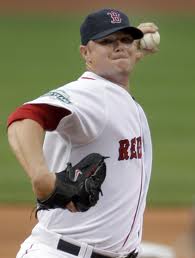
Boston's Ace Jon Lester takes the mound in game 1.  Photo via weei.com

Boston’s Ace Jon Lester takes the mound in game 1. Photo via weei.com

For just the 3rd time since divisional play went into effect, the World Series will be contested by the two best teams (by record) in Baseball (other two times: 1995 Atlanta-Cleveland and 1999 Atlanta-New York series’).  And since both Boston and St. Louis finished with the same number of wins, tying for the league lead with 97, we are guaranteed to have a situation that has happened just three times in the divisional era; the team with the best regular season record will also win the World Series (the other 3 times: New York in 2009, Boston in 2007 and the Yankees again in their legendary 1998 season).

Lets take a look at Game 1’s pitching matchup and make some predictions.  Time permitting I’ll try to do this ahead of each game.

Game 1: Adam Wainwright vs Jon Lester.  Ace-versus-Ace, mano-y-mano.  Straight up you’d have to take Wainwright over Lester; he has a 1.57 ERA in 3 post season games in 2013, having given up just 4 runs in 23 innings.  However, he has not exactly been doing this against an offense with the capabilities of Boston.   The Red Sox are #1 in the league in wRC+ as a team against right-handed throwers, #2 in the league in wRC+ at home.  I think it is safe to say that Boston likely gets some runs off of Wainwright tonight.

Meanwhile St. Louis’ issues with left-handed starters are pretty clear; 21st in wRC+ as a team, with a collective .238 BA.    And they’re going against a premier left-handed starter who just went against one of the “other” best offenses in the league (Detroit) twice with great success.

I’m predicting Boston gets to Wainwright, Lester holds StL at bay, and Boston takes game one to the great delight of the home fans.

Written by Todd Boss

October 23rd, 2013 at 10:34 am

Posted in Post Season

Tagged with ,

MLBtraderumors.com Nationals Off-season Review

leave a comment

Pretty much the best one-post review of the Nats 2013 off-season i’ve seen, from Jeff Todd at mlbtraderumors.com.  Salary, arbitration cases, position by position thoughts, a decent inclusion of closer-to-the-majors prospects who may be impactful in 2014.  A good read.

http://www.mlbtraderumors.com/2013/10/offseason-outlook-washington-nationals.html


Written by Todd Boss

October 22nd, 2013 at 9:03 am

Roster construction of 2013 playoff teams

leave a comment

I like doing this post every year (here’s 2012’s version, here’s 2011’s version), looking for trends in baseball’s most successful teams.  How do the best teams generally construct their rosters?

Borrowing from last year’s post, there are four main ways teams can acquire players:

  1. Draft/Development: The player is with the original team that drafted him.  In the case of international free agents, if they’re signed as 16-year olds they are considered in this category as well (i.e. Jose Fernandez is a developed player despite being acquired as an international “free agnet” while Yasiel Puig).  It could be better defined as “Club developed players.”
  2. Trade MLBers: The player was acquired by the team by virtue of trading an established MLB player.  Most of the time these days, this means the player was acquired as a prospect (since most trades seem to be of the prospect-for-established player kind).
  3. Trade Prospects: The player was acquired by the team by virtue of trading prospects.  This is essentially the reverse of #2.
  4. Free Agency: The player was acquired in free agency.  This category also includes several other types of acquisitions: waiver claims, Rule-5 draftees and cash purchases.  These three categories are lumped together since all three indicate that a team has acquired a player with zero outlay in terms of development or prospects.

Sometimes these trades get a bit muddled; if you send a combination of major and minor league talent to the other team, which category does it fall under?  But for the most part trades are simply categorized.

Now, here is the summary of roster construction and “Construction Strategy Category” for all 10 teams that made this year’s playoffs.  I only count the “core players” on a team for this analysis.  The core players is defined as the 5-man starting rotation, the setup and closer, the 8 out-field players, and the DH for AL teams.  I didn’t extend this all the way to the 25-man roster, figuring that these core 15-16 players are the main reasons teams win and advance.  That and huge chunks of the bullpen and the bench are either fill-in FAs or draftees and it would skew the analysis of how teams really got to the playoffs.  Here’s the summary (the table is sorted by count of Draftees):

Team Drafted/Developed Traded Prospects Traded MLBs FA/Waivers Constr Method
Boston 7 1 0 8 #4
Detroit 5 4 2 5 #2/#4
Oakland 3 1 7 5 #3
Tampa Bay 6 1 4 5 #1
Cleveland 4 1 7 4 #3
St. Louis 10 2 2 1 #1
Atlanta 8 0 5 2 #1/#3
Cincinnati 9 2 2 2 #1
Pittsburgh 5 3 3 4 #1/#3
Los Angeles Dodgers 3 4 1 7 #4

So, what are these four Team Construction Methods?  Lets go one by one:

Method #1: Build from within nearly 100% (Tampa, St. Louis and Cincinnati the best examples, Atlanta and Pittsburgh to some extent): Two great fact points drive this team construction for two of the best example teams in this category:

  1. 18 of St. Louis’ 25 man post season roster was drafted by the team and is still with the team.   Another 5 total guys were acquired in trade (including Adam Wainwright who was acquired more than a decade ago).
  2. When Roberto Hernandez got a start this past April, it broke a nearly 8-season long trend of Tampa having every one if its starts being taken by a starting pitcher developed in house.

These are easily the two best examples in the game of success from almost entirely in-house player development.  St. Louis has one core Free Agent (Carlos Beltran and only two on its entire playoff roster).  Cincinnati isn’t too far behind with its sole major FA acquisition on this year’s roster being Aroldis Chapman.   Atlanta and Pittsburgh do qualify for this (Atlanta has a huge number of home-grown players), but also have made enough trades/signings to create their current rosters that they don’t entirely fit here fully.

Method #2Ride your developed Core and use your prospects to acquire big names: Detroit (to a certain extent).  Detroit has a good core of home-grown guys to which they’ve augmented by trading prospects and major FA acquisitions to arrive at their current incarnation; a very good, very expensive squad.

I continue to classify Washington in this category as well, 6 of our core 15 were drafted and another 3 were acquired by flipping our prospect depth.

Method #3: Wheel and Deal: Oakland, Cleveland entirely, then Atlanta & Pittsburgh to a certain extent.  Is roster-turnover the new market inefficiency?  Oakland’s 2013 team featured an entirely new infield from last year’s 2012 AL West winning team.  Only 3 of Oakland’s core 16 players were home-grown this year.  Billy Beane’s M.O. of wheeling and dealing is paying major dividends; his trades of established major leaguers to acquire prospects has resulted in two AL West divisional crowns in a row.  Meanwhile Cleveland has adopted some of the same strategy, with just one real home grown starter and a whole batting order assembled via trade and free agency.

Atlanta and Pittsburgh each have done their fare share of major trades/signings lately, with Atlanta ending up with Justin Upton and Pittsburgh ending up with 4/5ths of a rotation thanks to big moves.  So while both teams have their cores in player development, smart transactions have made big differences in their 2013 playoff pushes.

Method #4Spend what it takes to win: Boston, Los Angeles Dodgers and Detroit to some extent.  Certainly no one can argue with Los Angeles’ planned path; they more than doubled their team payroll from 2012 to 2013 by taking hundreds of millions of dollars off the hands of … Boston, who still remains in this category despite a large bulk of their core 16 being home grown.  You just can’t have a $150M payroll and not be categorized as a “spend what it takes to win” team.  Detroit’s owner has opened up the pocketbook time and again to try to buy a winner, so they aren’t entirely in this category but they’re getting close.


So, what’s the *right* way to build your team?  I guess it depends; clearly all four of these methods can result in playoff appearances.  Perhaps its better to look at the downsides of each method:

Method #1 depends on a long track record of consistent player evaluation and drafting.  St. Louis, in my opinion the best franchise in the game, has a great track record.  Their 2009 draft alone produced 5 of their 25 man roster, and Michael Wacha was a 2012 draft pick who shot to the majors and may be the steal of that draft.  But getting there takes time and talent; to me clearly teams like the Cubs and Houston are re-booting in order to get to this point.  It tests the patience of your fan base and your RSNs (as Houston is learning).  Kansas City has tried this method for years and years and has had little luck.  Seattle went this route mostly and a slew of big-name prospects have failed to really pan out.  So you need great player development and some draft-day luck.  The new CBA is going to make this method harder and harder to do.

Method #2 is slightly less harrowing than going entirely by method #1, but does depend on finding trading partners and finding matches for your spots.  This is where I classify the Nats right now; we have a good core of home-grown guys earned on the backs of several years of last place finishes/high first round draft picks.  And now we’ve parlayed some prospect depth into two key members (Gio Gonzalez and Denard Span).  The downside of this method basically is that your farm system gets depleted very quickly.  Washington’s farm system went from the best in the game to being ranked in the low #20s after matriculations, losses of first round picks and the two big trades.  Suddenly your team has no big-time rising prospects, your major league team has no reinforcements coming, and you soon devolve more into category #4, spending hand over fist to extend your stars and to fill in holes.  Kind of like where Philadelphia is right now.

Method #3 can go bad, fast.  If your trades don’t work out … you look bad, quickly.  You’re also buying yourself some known down years (think what Miami is doing; they clearly punted on 2013 while trading away a ton of salary and major league assets).  That can be tough on the fan base; Oakland and Miami’s fan bases already have their own problems, but Cleveland struggled to sell seats this  year even on their way to 90 wins.

Method #4 can go bad, fast as well … and expensively so.  Only three of the game’s 11 most expensive teams made the playoffs this year.  The Yankees got 85 wins for their $228M in payroll and look like they may be in trouble for a time to come.  Philadelphia?  73 wins.  The Angels and Giants were losing teams.   Free Agents are generally being paid for what they DID, not what they’re going to do.  And Free Agents are almost always in their late 20s/early 30s, entering their natural decline years, and invariably are going to be overpaid for their performance.  If you want to build your team through FA, consider that new estimates value a “win” at roughly $7M on the open market … meaning that to build just a 90 win team through free agency would cost more than $300M in free agent dollars.  Or about what Robinson Cano wants this off-season.  There will continue to be high-payroll teams of course (that RSN money has to get spent somewhere), but I feel as if the industry is going to get smarter about these long term deals.  One look at the Angels last few off-seasons should give you every bit of proof you need to know; hundreds of millions committed to aging sluggers, several very productive prospects traded away chasing glory, and the Angels (even with the best player in the game at $500k/year) look lost.

I think the answer to “which way is best” really resides in the skills of the organization at large.  You can succeed using all four methods … its just how *long* can you continue to succeed?

2013 playoff team payroll analysis

9 comments

One little spreadsheet I like to put together at the end of each baseball season is the subject of this post: a look at the payrolls of the 30 teams compared side-by-side with their seasonal performance and then looking at the playoff teams.

Here’s the table; the teams are sorted by the Opening Day Payroll as calculated by Cots.   I used Cots’ numbers because they were far more accurate than other typical sites that report these types of things  (Googling leads to tables at Newsday, CBS and USAToday among others).  Cots are the most accurate because they take into account payments to former players, which is significant in some teams.  The other lists do not take this into account, just summing the payroll of the players still on the roster.  The team this makes the most difference for in 2013 is the New York Mets, who released Jason Bay but are still on the hook for his $17M payroll this year; that took them from the #23 payroll to #15 just by itself.

Team Cots Opening Day Payroll Cots Opening Day Rank Final W/L W/L Rank Playoff Status Payroll/Record Delta (CBS)
New York Yankees $228,106,125 1 85-77 14 -13
Los Angeles Dodgers $216,753,286 2 92-70 8 NL West -6
Philadelphia Phillies $159,585,714 3 73-89 24 -21
Boston Red Sox $154,555,500 4 97-65 1 AL East 3
Detroit Tigers $148,693,600 5 93-69 6 AL Central -1
Los Angeles Angels $137,271,250 6 78-84 17 -11
San Francisco Giants $136,908,777 7 76-86 18 -11
Texas Rangers $125,340,100 8 91-72 10 -2
Toronto Blue Jays $119,277,800 9 74-88 20 -11
Chicago White Sox $118,914,500 10 63-99 28 -18
Washington Nationals $118,289,679 11 86-76 12 -1
St. Louis Cardinals $116,790,787 12 97-65 1 NL Central 11
Cincinnati Reds $106,855,533 13 90-72 11 NL WC 2
Chicago Cubs $106,837,810 14 66-96 26 -12
New York Mets $93,684,590 15 74-88 20 -5
Baltimore Orioles $92,238,333 16 85-77 14 2
Atlanta Braves $90,039,583 17 96-66 3 NL East 14
Milwaukee Brewers $88,828,333 18 74-88 20 -2
Arizona Diamondbacks $86,300,500 19 81-81 16 3
Seattle Mariners $84,199,643 20 71-91 25 -5
Minnesota Twins $82,010,000 21 66-96 26 -5
Kansas City Royals $81,871,725 22 86-76 12 10
Cleveland Indians $80,605,733 23 92-70 8 AL WC 15
Colorado Rockies $73,949,071 24 74-88 20 4
San Diego Padres $68,333,600 25 76-86 18 7
Pittsburgh Pirates $66,805,000 26 94-68 5 NL WC 21
Oakland Athletics $61,964,500 27 96-66 3 AL West 24
Tampa Bay Rays $61,928,975 28 92-71 7 AL WC 21
Miami Marlins $50,526,900 29 62-100 29 0
Houston Astros $26,105,600 30 51-111 30 0

The “delta” column gives a barometer for teams who over performed or under-performed based on their salary.

Some interesting observations in bullet-form:

  • The Jason Bay note from above: nearly 20% of the Mets’ payroll this year is dead money.
  • 3 biggest over-performers this year shouldn’t be a surprise: Oakland, Tampa and Pittsburgh.
  • The biggest under-performer also isn’t much of a surprise: Philadelphia.
  • Only 3 of the most expensive 10 teams made the playoffs.
  • Half the top 10 payroll teams finished with a LOSING record.  That’s amazing.
  • The Dodgers spent nearly as much as 3/5ths of its divisional rivals (San Diego+Colorado+Arizona’s payroll).
  • I didn’t realize just how much payroll the White Sox were carrying this year, for a last-place finish.
  • Miami more than halved their payroll from last year to this.  Los Angeles more than doubled theirs.
  • Washington, despite the disappointing season, finished almost exactly where they should have based on their payroll; they had the 12th best record of any MLB team and had the 11th highest payroll.
  • The only two teams to “under-perform” their payroll and make the playoffs were Detroit and the Dodgers.
  • Boston was the only team to “over-perform” their payroll rank of the 11 highest payroll teams.  That’s a lesson for you.

The playoffs consisted of:

  • 3 high-payroll teams (LA, Boston, Detroit)
  • 3 mid-league payroll teams (StL, Cincinnati, Atlanta)
  • 4 lowest third of the league payroll teams (Cleveland, Pittsburgh, Oakland, Tampa)

This post dovetails nicely into my next coming post, which looks at the roster construction of the 10 playoff teams and talks about team building mechanisms.

Written by Todd Boss

October 18th, 2013 at 2:31 pm

Posted in Baseball in General

Tagged with ,