Nationals Arm Race

"… the reason you win or lose is darn near always the same – pitching.” — Earl Weaver

Rotation Predictions for the National’s System 2011

7 comments

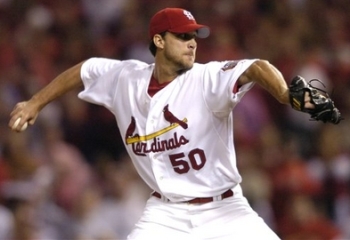
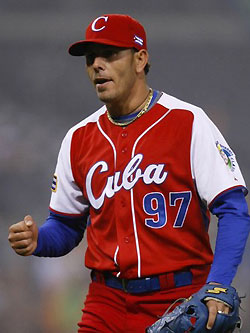
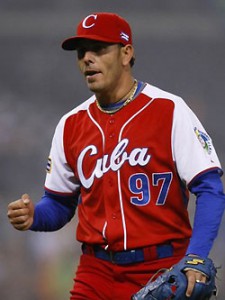
Your 2011 Opening Day starter. Photo: AP/Washington Times.

I started this blog to talk about the Nationals pitching staffs on the various levels, since that’s always been my obsession with this franchise.  However time constraints and the off season have limited my posts and analysis.  Today, for the first time in quite a while, I’m going to write about that which this blog supposedly focuses on: Nationals pitching.

Initially I was going to do an in-depth review of all 5 minor league pitching staffs for 2010 with detailed predictions for 2011.  Now that we’re 3 weeks away from pitchers and catchers reporting … I’m giving up on finding the time 🙂

However, here’s my thoughts on who I would be putting into the rotations of each level to start 2011.  These rotations cascade downwards from the top obviously, and assume no injuries.


Washington Nationals/MLB

Prediction Livan, Zimmermann, Lannan, Marquis and Gorzelanny in that order.

Despite some people (Ladson, Bill) thinking that we acquired Gorzelanny to be a middle reliever, in my mind Rizzo made the acquisition because he doesn’t trust either Maya or Detwiler in the #5 slot.  And I wouldn’t either; In 5 starts last year at the MLB level Maya looked outmatched and unable to keep MLB hitters at bay.  I like Yunesky Maya and think he can be a competitor in this league.  He was probably rushed through the minor leagues last summer and wasn’t ready for what he saw in September.  However, he fared very well in the Dominican Winter league (named best pitcher) and could change some opinions by beating out Gorzelanny for the #5 spot.

Meanwhile Ross Detwiler looks like a busted #1 pick, not able to stay healthy long enough to make an impression and (thanks to an incredibly questionable decision to call him up in Sept 2007) he’s quickly running out of options.  He’s in a similar boat as Madison Bumgarner; a lanky lefty who throws across his body with some pace, making consistency difficult and making his breaking pitches too horizontal.  Personally, i’d suggest packaging him in a trade and making the argument that he’s still a #1 overall pick who hasn’t gotten opportunity here.  Unfortunately competing GMs know what we know and probably are not giving up decent talent to get him.

This isn’t the greatest rotation in the league (most pundits easily put it in the bottom 5 right now), but it is an improvement over 2010’s opening day rotation (Lannan, Marquis, Stammen, Livan and Mock in case you forgot or blocked it from your memory).  If Wang can somehow show he’s healthy and productive, then our 2012 potential rotation of Strasburg, Zimmermann, Lannan, Wang and decent FA could be halfway decent.


Syracuse/AAA

Prediction: Maya, Detwiler, Arneson/Stammen, Tatusko, Roark.

Syracuse ended 2010 with this rotation (ages next to names): Chico 27, Arneson 26, Kown 28, Martis 23, Mock 27.

What a difference a couple weeks makes in terms of predicting a rotation.  We have DFA’d Martis, released Martin and outrighted ChicoKown is pushing 30 and was already a minor league free agent signing to begin with.  Mock continues to have a future in this organization by virtue of his live arm, but he’s never put it together at the MLB level and nobody seems to know if it is as a reliever or a starter.  For now I’m predicting that he ends up either being converted to a reliever or outrighted off the 40-man.

The AAA rotation probably ends up being a mix of promotions from AA and spring training losers from MLB.  I’m going under the assumption that Atilano gets DFA’d in the next week or so to make room for signings as they become official, and i’m assuming that Stammen is being converted to a middle reliever and is out of the starter mix.  Additionally, Mandel clearly has been converted to a reliever and looks set to stay there.

Arneson may be an odd-man out here as well; he’s not on the 40-man and has survived a rule 5 draft or two.  If the Nats want to keep Stammen as a starter, I could see Stammen taking Arneson’s place here.

Lastly, the two promotions from last year’s AA rotation are the two hurlers Tatusko and Roark we got from Texas in the Guzman trade.  Both came over from Texas’ incredibly strong AA affilliate and both continued dominating in the Eastern League.  In 6 starts , Tatusko had a 1.72 era, a 9k/9 ratio and a 1.17 whip.  Roark’s numbers were slighly worse but still better than anyone else on our AA squad.  The only problem is that both guys are “old” for AA and may be quickly moving from “prospect” to “organizational arm.”  I’d like to see what both guys can do in AAA.

We have a couple of additional names that may show up in this mix.  Brian Broderick was a rule-5 pickup from St. Louis that seems to be a long shot to crack either the MLB rotation or the bullpen.  However in this day and age, it seems that most rule5 guys are eventually acquired instead of returned, so I can see a lower-end prospect trade for the guy if he sufficiently impresses during spring training.  Also, Ryan Mattheus seems to be a favorite of the organization as well, and has signed a more-than-minimum deal for 2011.  Chuck James signed on as a minor league free agent and bounced around multiple levels of our system, always pitching fantastically, but never sniffed a call up or even a second contract.  I’d be curious to see where he ends up in 2011.

2/4/11 update: We have re-signed both JD Martin and Matt Chico and invited them to spring training, which may indicate that they could factor into the AAA rotation discussion.  The question may be; is it better to give Roark and Tatusko starts at the AAA level to see what they can do, or should we have open competition to see who shakes out?  I think we know what we have with both Martin and Chico (as does the rest of the league, since no one claimed them upon release and nobody gave them a major league deal).  We’ll see what happens.


Harrisburg/AA

prediction: Meyers, Peacock, Milone, Lehman and Holder

Harrisburg ended 2010 with this rotation: Peacock 22, Milone 23, Thompson 23, Roark 24, Tatusko 25.

Other notable names in the rotational mix for Harrisburg in 2010 include Mandel (promoted to AAA and converting to a reliever), Brad Meyers (injured after starting the season incredibly hot), Andrew Kown (moved up to AAA but probably not being retained), and Chuck James (who signed a minor league deal and pitched great, but does not seem likely to be retained).

Aaron Thompson (bounty for the Nick Johnson Trade) never lived up to his expectations as a Florida #1 draft pick and was DFA’d earlier this off season.  He got picked up by Pittsburgh (as did Scott Olsen) and that may be a better place for him to attempt to advance his career.

I believe we’ll see 3/5th of the starting 2010 rotation starting in Harrisburg in 2011, based on age and the log jam of hopefuls in AAA.  I like Meyers and hope to see him continue to dominate AA and have a healthy season.  We’ll see the two best starters from last year’s Potomac team (Lehman and Holder) moving up to start in AA.  I’d like to see Holder (who was considered a reach of a draft pick in 2009 by most pundits) to succeed and show his worth in 2011. This seems like a pretty strong group and will join some serious batting firepower coming up from high-A for the Harrisburg team in 2011.


Potomac/High-A

prediction: Frias, Rosenbaum, Bronson, Fabian, Applebee

Potomac ended the 2010 season with this rotation: Lehman 24, Holder 23, Frias 22, Alaniz 26, JJones 28

Potomac’s rotation was all over the map in 2010 due to injuries and promotions.  Jaime started the year
on the DL, Morris, Rosenbaum and Fabian ended the  year on the DL, which forced the continued use of
minor league retread Jones and effective but old Alaniz in starting roles.  We’ve moved AJ Morris (who
would have been Potomac’s ace last year) in this offseason for Gorzelanny, leaving open some opportunities.
And we gambled taking Jaime off the 40-man roster and lost, with Arizona quickly claiming him.  That move was necessary but probably a mistake, as Jaime was a live armed guy who at one point was a top 10 Baseball America system prospect for us.  Ah well; we had to keep a spot open for JD Martin you realize!

I’m predicting that Lehman and Holder move up to AA to start based on their age and time in the minors.
Neither guy really dominated the Carolina league last year but Lehman features a very good K/9 ratio and
Holder is a very high draft pick that the team isn’t about to give up on.  That leaves high-A holdovers from
2010 Frias, Fabian and Rosenbaum to lead the line.  Frias’ numbers were not great, but he was only 22.
Rosenbaum was effective before going down with injury.  The others (Bronson, Fabian and Applebee)
earn the spots more through a slight gap in the prospect line between the low-end leagues and high-A.

I’m not as confident with these predictions, and we very well may end up seeing Lehman and Holder starting
out the season in High-A again, with the plan to quickly move them up to AA.


Hagerstown/Low-A

Low-A prediction: Solis, Clegg, Demny, Ott/Jenkins, Grace

Hagerstown ended the 2010 season with this rotation: Low-A: Demny 21, Hicks 20, Bronson 23, Applebee 22, Ott 22.

Other notable names in the 2010 mix included McGeary (tommy john surgery; what a mess for this guy.  First round talent, bought him out of his Stanford commitment only to watch him struggle at every level.  You have to wonder if he’ll ever return), Clegg (who was 9-3 and pitching very well for a 21st rounder before DL), Smoker (another Bowden toolsy draft pick whose career seems to be in the toilet), and Sammy Solis (two spot starts after signing in mid august as a high-profile 2nd rounder).

We have traded Hicks, who didn’t have the greatest numbers last year but was only 20 pitching in a full season.  I’ve got Bronson and Applebee in the high-A rotation for now.

I think Solis’ success in the AFL may earn him a spot in high-A to start; if so switch Solis and Applebee.
Clegg has a chance to quickly move up the ranks as well and may be in line for a quick promotion.  Demny was young for low-A last year and had a decent first full season; i’ll bet he starts in low-A again and moves up mid-season.  Lastly, Ott came up late last year and had two unremarkable starts but there isn’t much else to compete with him, unless one of the college-guys from short A has an amazing spring and beats him out.   Jenkins possibly could  be in the mix here, being a lefty with good K/9 rates and being a bit too old to stay in short-A.  Finally, i’m predicting that 2010 draft pick Grace gets a look.  He was an 8th round pick out of UCLA and didn’t have the best numbers in the GCL … but he is a lefty, he doesn’t walk a ton of people and he could be a sleeper.

I have seen a couple of sites that believe we’ll be starting both A.J. Cole and Robbie Ray in full season Hagerstown.  I have a very hard time seeing that; both basically lost the entirety of 2010 in terms of professional development by waiting until August 15th sign, meaning that they both got minimal innings.  I think they stay in Florda as camp breaks and start in the GCL.  See below…


Short-A (Vermont last year, Auburn this year) and GCL/extended spring

Prediction: Cole, Ray, Hanks, Meza, KLopez, King, Encarnation and 3-4 starters that we draft in 2011.

Vermont ended 2010 with this rotation: Jenkins 22, Hansen 21, Swynenberg 21, Jordan 21, McKenzie 21/Bates 22
The GCL ended 2010 with this rotation: Hanks 20, Meza 20, KLopez 20, King 20, Encarnacion 21

There was not a whole lot to like about Vermont’s 2010 rotation.  The four guys who got the most starts
all had almost identical numbers in terms of ERA, Whip and K/9 (for me the three numbers most worth
looking at for minor leaguers).  They were all in the mid 4s in ERA with decent K/9 rates.  It is hard to see
any of them really having an impact; i’ll guess that most of them get converted to middle relief and move up
to comprise Hagerstown’s bullpen or repeat the Short-A season to determine if they have a future in professional baseball in general.

Meanwhile the GCL saw a very high number of starts go to rehabbing starters in 2010.  By my count, 14 of the 56 starts in GCL last year were either rehab starts or “extended spring training” starts for guys that
were headed for upper levels.  This may have been due to the lack of young starting pitcher prospects available to us, since the starts we did get from prospects in the GCL (Hanks, Meza, KLopez, King) were as unimpressive as the starts we got out of Vermont.

In many ways both rotations really depend on who we draft in June, since both leagues essentially start just after the draft.  The higher-end/older draft picks fill up the short-A roster, while the younger/lower-end draft picks form the GCL roster.  I’m guessing that both the starlet high school arms out of 2010’s draft (Cole and Ray) start in extended spring and then move up to short-A when they’re ready.  I do not believe they’ll start in Hagerstown based on the lack of professional innings in 2010.  They’ll be initially supplimented by the four 20-yr olds in GCL last year until solutions make themselves apparent.  If guys like Meza, King, Lopez and Encarnation do not improve, they’ll soon be converted to relievers or outright released to make room for the next set of draft picks.


Thats it.  From an organizational perspective, it seems that outside of Ray and Cole we have very few starter prospects anywhere below low-A, and that our pipeline seems thin right now.  Perhaps something to think about during the 2011 draft, which is very college-arm heavy and we have 3 early draft picks. Hopefully we identify some fast-moving arms and continue the improvement of the system in general.

Written by Todd Boss

February 4th, 2011 at 3:14 pm

Who comes off the 40-man?

5 comments

JD Martin's days could be numbered with the team. Photo courtesy of natsnewsnetwork.blogspot.com

1/19/11 Update: with the signing of reliever Todd Coffey, the team now appears to be three men over the limit.  Oh, and about 2 hours later the signing of infielder Jerry Hairston now requiring four guys to be dropped or traded.  One player has been cleared off the 40-man; the predicted JD Martin given his outright release unfortunately later in the afternoon.

Unless I’ve forgotten how to count, and unless I really do not understand the 40-man roster rules, the Nationals have been over the limit for nearly two weeks now.  They signed Adam LaRoche on 1/4/11, then made the announcement official on 1/7/11Answer: per Zuckerman’s posting today, “corresponding [40-man roster] moves don’t have to be made until the contract for the new player is formally processed at MLB headquarters in New York.”  LaRoche’s contract didn’t hit NY til today, so the Martin release is the corresponding move.  Still 3 to go.

Yet, here we are on 1/19/11 and no corresponding move has occurred yet.  The Nationals’ 40-man roster has been above 40 ever since.  I believe teams have to make immediate moves but do not have to make them public; a player could have been designated for assignment on 1/7/11, at which point the team has 10 days to actually decide what to do with him.  So perhaps tomorrow 1/19/11 (since we had a holiday mixed in there?) we’ll have an answer.

Likewise, Tom Gorzelanny will also require a corresponding move, since none of the 3 players traded for him were on the 40-man to start with.  With his addition (yes the trade has been announced but it will not be official until all physicals are passed) we’ll be at 42 (43 with the Coffey signing).

So, who on the current 40-man roster is next to go?  If we need to clear four spots without a major trade, then my initial guesses are:

1. Justin Maxwell: I know that Maxwell is a local and is a fan favorite, but the fact remains that we now have at least 5 outfielders with major league time last year (Werth, Ankiel, Morgan, Bernadina, and Morse) that seem to be ahead of Maxwell on the depth chart, plus a 6th outfielder prospect who will get a look prior to Maxwell at this point (CBrown).  He’s never produced at the MLB level and is now far too old to be considered a prospect.

2. J.D. Martin: Martin is probably the right-handed starter version of Maxwell.  He’s fallen down the depth chart, his name isn’t being mentioned as even competing for a rotation spot out of spring, and the argument can be made that he’s not in the top 5 players to make the AAA rotation.  He’s always had ok numbers when he’s pitched in the majors but in a power-arm league, spots for soft-tossing slight-of-frame right handers are limited.

3. The third and fourth spots are tougher.  I think #3 may end up being someone like Luis Atilano.  Mediocre MLB numbers in 2010, coming off of injury, he probably can sneak through waivers as Chico did and get assigned to AAA to try to get back.  He’ll be 26, slightly older than you want in a prospect, and he’s clearly not in the MLB rotation battle for 2011.

4. Atahualpa Severino: he has no mlb experience and is behind Slaten in the loogy battle right now.  However, other teams may see that we just added him to the 40-man last year and might take a look.  He’s a bit old for a prospect with no MLB time and he could slip through waivers.

This 4th spot is a stretch though, and I think honestly a better way to clear space may be a set of prospects trade for a veteran.  I don’t see at this point how Morse or Detwiler makes the 25-man roster, so perhaps we should look instead to package these guys for a player.

Other candidates (and their reasons for keeping them over Atilano and Martin right now) could be Mock (lively fastball, good stuff and a favorite of the organization), Martis (still young and still could prosper),  and Marrero (still too early to give up on him; needs one more season to prove he belongs but he’s clearly blocked for 2 years by LaRoche; could be a trade candidate).

Gorzelanny trade thoughts…

5 comments

The Nats' newest #5 starter, Tom Gorzelanny. AP Photo/Mark J. Terrill

Love the Trade to get Tom Gorzelanny.  The three guys we gave up were all marginal prospects in the grand scheme of things.  Burgess was a Bowden toolsy draft pick who has moved slowly through the farm system and now is completely blocked for the next 7 years or so by Werth and Harper.  I really liked AJ Morris when we drafted him (he was a 4th rounder but was fantastic in college, giving Mike Leake his only loss of the 2009 season) but he’s already lost his starter status and seems like a middle relief guy at best.  Lastly Graham Hicks was probably the 2nd or 3rd best pitcher in Hagerstown this year and has some promise.

Gorzelanny’s numbers are not fantastic, but you wouldn’t expect them to be for a 5th starter from a team that lost 90 games last  year.  He had a 106 era+ for the season pitching out of a hitters park in Chicago.  He probably has the inside track on the 5th starter spot here in DC by virtue of his acquisition.  If the season started tomorrow you have to think the rotation would be going Livan, Lannan, Zimmermann, Marquis and GorzelannyMaya and Detwiler are starting in AAA save an injury, and Wang has a bit more time to rehab.

Meanwhile, AAA is looking jammed.  We already had Atilano, Martin, Mock and Martis as returning rotation starters in AAA.  Chico is down there as well, having passed through waivers to be reassigned.  Maya and Detwiler are going to need places to pitch.  Plus we have some older prospects from last year’s AA team (Roark and Tatusko) who really need to be pitching in AAA to see if they’re MLB candidates.

All in all, a competent pitcher to compete for a spot in the rotation and who may help out the rotation in the short term.  And not for a lot of money (probably something close to Lannan’s $2.75M deal for 2011).

Off Topic: ranking the ESPN 30 for 30 series

3 comments

Photo courtesy of ESPN Films, the producers of the series.

For me, the ESPN “30 for 30” series was one of the best creations of TV over the past few years.  The documentary approach to sports journalism has been refreshing and (in most cases) great TV.  When sports programming can keep even a passing sports fan (my finacee) interested and asking for more, you know its been done well.

I listen to almost exclusively podcasts in the car these days, and one of my favorites is the “Firewall and Iceberg” podcast recorded by the lead TV reviewers Alan Sepinwall and Dan Fienberg from www.hitfix.com.  I first learned of reviewer Alan Sepinwall by his appearances on Bill Simmons‘ podcasts (which are first in line to listen to when they get released) and really enjoy his reviews online and their podcasts.

I happened to be perusing the hitfix.com site lately (I was looking for the name of a show they were extolling on the latest podcast) when I came across this link: Dan Fienberg’s rankings of the 30 “30-for-30” shows.  While I did appreciate most of his comments, I didn’t necessarily agree with the rankings he came up with for the programs.  Since i’ve seen every one of the series, I thought i’d go ahead and do my own rankings.

Disappointing or Unwatchable

  • “Marion Jones: Press Pause”   As most critics have noted, this essentially turned into a glorification of Marion Jones and never once delved into her steroids usage, why she did it, or touch on any of the real issues involved with her.
  • “Without Bias” – It essentially was a step-by-step review of the story of the player without adding much analysis to the story.
  • “Straight Outta LA” – Unwatchable, I turned it off halfway through.  Ice-T‘s not much of a filmmaker.
  • “One Night in Vegas” – Another really weird documentary, especially with the gangsta-poem readings at the beginning and end of the show.  I find it really difficult to glorify the death of a rap star who essentially talked his way into being a target.
  • “Silly Little Game” – Re-enactment of the first group of people to play fantasy baseball; it sounds as interesting as watching the first accountants come up with regulatory principles in a room together.
  • “The House of Steinbrenner” – This wasn’t so much a documentary as it was a glorification of a franchise that has used its superior financial might for the entire century.  Poor Yankees fans; your stadium has been replaced with a Billion dollar monstrosity that has $4,000/game seats and is guaranteed to skew the revenue system in baseball for another 50 years.  Awesome.

Watchable but could have been done better

  • “The Birth of Big Air” – Matt Hoffman certainly is an interesting character but I don’t really consider extreme sports of any kind to be “real” sports.  Yes they’re difficult feats of athletic prowness … but so is ballet dancing.  Yes, i’m difficult to watch most olympic sports with 🙂
  • “The U” – Too long, and gets bogged down in the year-to-year machinations of the program.
  • “Unmatched” – Such an uncomfortable documentary; I came away from watching it with the interesting storyline that Evert and Navratilova were such friends … but the tone of the story and music choices had me essentially waiting for the lesbian coupling that seemed to be so pushed by the filmmakers.  Ugh.
  • “Little Big Men” – Good story, but there’s been so many American little league winners, as well as the dilution of the field, that this story loses its impact.
  • “Guru of Go” – Perhaps combining both the story of Hank Gathers’ death AND the basketball system of Paul Westphal confused the story.
  • “The Legend of Jimmy the Greek” – one of the very first ones shown and certainly an interesting story, but the re-enactment voice over ruins the story.
  • “June 17, 1994” – Brings bad some strange memories.  I loved the never-before-seen footage of sportscasters but I thought the story could have done with actual images and story telling.
  • “Run Ricky Run” – Another weird documentary.  Hard to feel remorse for a drug using athlete though.
  • “Muhammad and Larry” – This was perhaps the most depressing of the series.  Ali was so brain damaged by the time he took this fight, it seems almost criminal now that he was allowed to fight.  The story drags though, using weird fillers for most of the time and not really showing the fight itself.

Interesting watches

  • “The 16th Man” – Good, but so was Invictus.
  • “Jordan Rides the Bus” – I love Ron Shelton‘s work but you cannot help but wonder how good this would have been with actual participation from Michael Jordan.  You come away from the story with the thought that Jordan actually had talent and that he worked at his baseball craft.
  • “The Pony Excess” – Lots of interviews, great detail.  Probably a bit too long though.
  • “Tim Richmond: To the Limit” – I thought it was really interesting that NASCAR turned out to be so introspective about the clear mis-treatment of one of its own … all in the name of fear over his illness.  Read his wikipedia page for some really interesting notes about his essentially be framed for his positive drug test.  I cannot imagine this news breaking in Nascar or any other major sport today.

Good to Very Good

  • “Fernando Nation” – If you don’t remember just how amazingly dominant Fernando Valenzuela was when he came to MLB, check out his baseball-reference page.  In his rookie season he threw EIGHT shutouts, and started the season 8-0 with 8 complete games, and only gave up FOUR earned runs in his first 8 starts.  That’s a heck of a start to the season.  The story telling related to the treatment of the Mexican-American community in Los Angeles was also interesting to learn about.
  • “No Crossover: The Trial of Allen Iverson” – Another that really could have used involvement of the principal character of the story.  Nonetheless, the substories related to the high school rivalries and politics of the Tidewater area were fascinating, if not necessarily substantiated.  Having lived in Virginia at the time, the amazing part of the Iverson story was that he was named both the Football and the Basketball player of the year in the state … as a Junior.  He undoubtedly would have done the same as a senior.
  • “King’s Ransom” – Interesting story telling from a great director in Peter Berg.  The involvement and discussions with Gretzky on the golf range really gave this story its life.  Unlike the story of LeBron James moving cities and destroying a franchise, Gretzky’s departure clearly altered the direction of the Edmonton Oilers for the long run.
  • “Small Potatoes: Who Killed the USFL?” – Some criticized this documentary, but just for the interview with the incredibly egotistical Donald Trump make this for me.
  • “Into the Wind” – Such a moving story. Steve Nash‘s involvement was really special in telling this inspirational Canadian pride story.

The Best of the Series

  • “Four Days in October” – A great documentary if only for the fantastic interviews with Pedro Martinez.  I found the footage of the Red Sox players facing a 3-0 deficit fascinating, and the drama of the games in retrospect makes the Boston comeback even more amazing.  Update: After several re-watches, I moved this up in my rankings.
  • “The Band that Wouldn’t Die” – Most say this is the best of the series.  I feel they’re getting starry-eyed by the director (Barry Levinson) versus the actual story.  But this obscure story is a highlight of the series and is a great example of the richness of American sport as a subject matter.
  • “Winning Time: Reggie Miller vs. The New York Knicks” – One of the absolute best stories.  The interviews with Reggie Miller and Spike Lee make this one of the best of the series.
  • “The Best That Never Was” – My father immediately recalled who Marcus Dupree was, and this story was an interesting tale.  My biggest takeaway was the 100% positiveness of Dupree, even today.  He’s not angry or sad about what his life has become (he’s a truck driver in rural Mississippi).  On the contrary, he’s grateful for everything he had and all the opportunities he got.
  • “The Two Escobars” – the footage, interviews and story told here was fantastic.  I only wish it was not 100% subtitled.
  • “Once Brothers” – Another great story, told through the eyes of the very human Vlade Divac.  It could have used a bit more subtext into the politics behind the split of Yugoslavia for those of us who get lost in the mid 80s politics.

If I had to give a best and worst, I’d probably go with “The Two Escobars” for best and “Marion Jones” as the worst.  I can’t wait to see the stories they have in the pipeline.  Steve Bartman should make for a great story to tell.  The great news is that the series will continue and some of the original ideas proposed will be explored.  Again referring to a Bill Simmons podcast, here’s some of the original series ideas kicked around that may still be turned into documentaries:

  • 86 masters
  • 89 ws earthquake
  • Tysons-robin givens Relationship
  • doc and darrell
  • title 9
  • dream Team
  • fab five
  • wwf/ andre the giant (couldn’t be done b/c Vince McMahon owns all the film)
  • 94 rangers
  • kerri suggs
  • scott norwood/scapegoats (delayed b/c of the Bartman film)
  • racism in sports
  • franchise relocation (pushed off b/c of the Levinson Baltimore Colts band story)
  • pete rose

Here’s to a great series and many more great documentaries.

5/11/11 Update: ESPN’s 30-for-30 site now allows you to rank the series yourself, which I did and ranked them as such:

1.Two Escobars
2.Band/Wouldn’t Die
3.Reggie Miller
4.Marcus Dupree
5.Four Days Oct.
6.Once Brothers
7.No Crossover
8.Who Killed USFL?
9.Fernando Nation
10.King’s Ransom
11.Into The Wind
12.Jordan Rides/Bus
13.Pony Excess
14.Tim Richmond
15.The 16th Man
16.Muhammad / Larry
17.Unmatched
18.Birth of Big Air
19.Little Big Men
20.Jimmy The Greek
21.The U
22.Guru of Go
23.June 17, 1994
24.Run Ricky Run
25.Without Bias
26.Steinbrenner
27.Silly Little Game
28.Straight Outta L.A.
29.One Night/Vegas
30.Marion Jones

After submitting my rankings, I could see how the rest of ESPN nation had these ranked and was rather surprised.  As of 5/11/11, here’s the rankings overall:

1 The U
2 Pony Excess
3 Marcus Dupree
4 Reggie Miller
5 Run Ricky Run
6 Two Escobars
7 Without Bias
8 June 17, 1994
9 Once Brothers
10 No Crossover
11 Muhammad / Larry
12 Jordan Rides/Bus
13 One Night/Vegas
14 Four Days Oct.
15 Who Killed USFL?
16 Straight Outta L.A.
17 King’s Ransom
18 Guru of Go
19 Jimmy The Greek
20 Steinbrenner
21 Band/Wouldn’t Die
22 Into The Wind
23 Silly Little Game
24 The 16th Man
25 Fernando Nation
26 Little Big Men
27 Birth of Big Air
28 Unmatched
29 Tim Richmond
30 Marion Jones

“The U,” which I thought was only mediocre, led by a fairly large margin over #2.  My #1 film “The Two escobars” was in the top 10, but was 3rd in overall #1 votes.

Post publishing edit: on 8/13/17, SI.com’s Media writer Richard Deitsch published his list of hte best 30 for 30’s.   Many of his best list are those done well after this list was created.

“Marion Jones: Press Pause”
“Without Bias”
“Straight Outta LA”
“One Night in Vegas”
“Silly Little Game”Watchable but could have been done better
“The Birth of Big Air”
“The U”
“Unmatched”
“Little Big Men”
“Tim Richmond: To the Limit”
“Guru of Go”
“The Legend of Jimmy the Greek”
“The House of Steinbrenner”
“June 17, 1994”
“Run Ricky Run”

Run of the Mill
“The 16th Man”
“Muhammad and Larry”
“Jordan Rides the Bus”
“Four Days in October”
“Fernando Nation”
“The Pony Excess”

Good
“No Crossover: The Trial of Allen Iverson”
“Once Brothers”
“King’s Ransom”
“Small Potatoes: Who Killed the USFL?”

Great
“The Band that Wouldn’t Die”
“Winning Time: Reggie Miller vs. The New York Knicks”
“Into the Wind”
“The Best That Never Was”
“The Two Escobars”

The Rest of the 2011 HoF Ballot

one comment

Will Bagwell be a first ballot Hall of Famer? Photo bill37mccurdy.wordpress.com/

As noted in my previous Bert Blyleven rant post, from the looks of the baseball blogosphere lately, it is part of my duty as a baseball blog writer to put in my 2 cents on the 2011 Hall of Fame ballot.

On Jan 5, 2011, Hall of Fame BBWAA voting will be announced and we’ll have an entire week of blog postings doing post-vote analysis.  Its a great little way to fill the time in-between insignificant FA signings but before pitchers and catchers report.

I posted previously just about Blyleven, one of the most talked about candidates in some time.  I don’t think he’s a Hall of Famer but I think he’ll get voted in.  Here’s a quick rundown of the rest of the ballot.

————————————-

First, the returning candidates from previous years

Roberto Alomar: Received 73.7% of the vote in his first year in 2010.  Probably penalized for being a complete jerk to sports writers for most of his career, and for the infamy that has followed him since he retired (HIV infection lawsuits and restraining orders).  Unfair that he wasn’t a first ballot hall of famer.  10 gold gloves puts him in pretty restrictive company.  12 straight all star games, numerous MVP vote gathering seasons.  Retired rather early for a middle infielder at 36.

Verdict: Should be a lock for HoF.

Other’s on returning ballots:
Jack Morris: i’d vote for him before Blyleven.
Barry Larkin: unfair comparisons to current power-hitting short stops are leaving Larking behind.
Lee Smith: Saves are overrated to begin with, and Smith never seemed like he was as dominant as his contemporaries.
Edgar Martinez: great guy, great hitter, one dimensional.
Tim Raines: Why he has lost candidacy points i’ll never know.  Probably due to his later Yankee years souring the east coast sportswriter crew on his career in general.

Trammell, Mattingly, McGriff, Parker, Murphy: all these guys are probably destined to be eventually included by some veterans committee 30 years from now, when we have recovered from the steroids era and we realize that a guy like Murphy and his 398 career homers isn’t that bad.

————————————-
Requisite Steroid-Accused HoF Candiates.

Mark McGwire: Yeah he used.  But he was also quite a hitter prior to his using.  5 years run of 52-58-58-70-65 home run seasons.  A shame.  He’ll never get in.

————————————-
First time on 2011 Ballot.

Rafael Palmeiro: probably the dumbest steroids user on the accused list.  He’s the punchline of the era and I’ll be surprised if he garners 10% of the vote.

Jeff Bagwell: He should be a HoF lock, the first we’ve had in a while.  But i’m hearing rumbling that not a ton of guys are supporting him.  It may just be a matter of time before he gets in but he’s deserving.

Larry Walker: excellent career OPS+ numbers clearly inflated by playing in Colorado.  He really could hit though, leading the league in batting average 3 times and homers once.

Juan Gonzalez: one or two great seasons and then a mess of a career.  Hey at least he made a ton of money.

Kevin Brown: amazing to think he’s been retired for 5 years.  His career will be defined by his ridiculous 9-figure contract.
————————————-

No one else on the 2011 ballot in my opinion will be close.

In summary, If I had a vote here’s my ballot: Alomar, Bagwell, Morris, Larkin, Raines, McGwire, Trammell.

2011 Hall of Fame Ballot: No to Bert Blyleven

19 comments

Blyleven throws his trademark Curveball. Image courtesy of http://cheapseatchronicles.blogspot.com

Apparently, from the looks of the baseball blogosphere lately, it is part of my duty as a baseball blog writer to put in my 2 cents on the 2011 Hall of Fame ballot.

On Jan 5, 2011, Hall of Fame BBWAA voting will be announced and we’ll have an entire week of blog postings doing post-vote analysis.  Its a great little way to fill the time in-between insignificant FA signings but before pitchers and catchers report.  However I have so tired of hearing about Bert Blyleven from every blogger on the planet that I had to write my own post specifically about him.

Bert Blyleven got 74.2% of vote in his 2nd to last year on the ballot in 2010 and the groundswell of stat nerds who think he was one of the best pitchers ever (despite his having a middling career that was more about longevity and accumulation rather than achievement) has officially reached a crescendo.

He pitched 22 seasons but only ever received Cy Young votes in 4 seasons.  That means, on a season to season basis his name came only even came into the conversation of being one of the game’s best 4 times in 22 seasons.  Even more of an indictment, he only made 2 all star teams in his career!   How can someone be considered one of the best who ever played the game if he was rarely even considered one of the best 25-30 players on a year to year basis?  The reason the lack of all star appearances matters is because it is as good of an indicator of his stature within the game as exists.  Jack Morris was the STARTER in several all star games, was a top-5 cy young candidate over and again, and was perceived to be among the best pitchers of his decade.  Blyleven was always just considered to be a decent pitcher with a great curveball.

He never led league in Wins or Era.  Only once he led in ERA+ and one other time Whip.  Lots of Blyleven apologists discount the Wins (obviously) since they’re a team stat, but nobody points that out when looking at Steve Carlton‘s 27-10 record for the god-awful 1972 Phillies.  They talk about how amazing a pitcher Carlton was; a Hall of Famer.  But when Blyleven pitched year after year and only reached 20 wins once; that was all his teams’ fault.

The big stat-nerd argument for Blyleven is his career Strikeouts, yet he only ever led the league in Ks once despite having 3700 for his career.  Blyleven accumulated exactly 3701 Ks in 4970 innings.  That’s a K/9 of only 6.7.  And in the one year he led the league in Ks, he averaged 6.3 K/9.  That’s only slightly better than the Nat’s own Craig Stammen‘s 2010 totals, by way of comparison.  Just because someone pitches a gazillion innings and accumulates a ton of Ks doesn’t mean he’s one of the all time best.  3701 Ks in 4900 innings means a career 6.7 K/9 rate.  That’s mediocre!

Go look up where his K/9 ranks in the all time list on baseball reference.  He’s just ahead of Doug Davis and just behind Barry Zito.  Yeah, that’s hall of fame company.

Blyleven is the epitome of an “accumulator.”  He played long enough to accumulate stats that reached one of the magical baseball marks (500 homers, 3000 hits, 3000 Ks, 300 wins) that some sportswriters seem to think indicate automatic inclusion to the Hall.  However, I offer the comparison of Jamie MoyerMoyer sits at 267 career wins and wants to keep playing.  It is not inconceivable that he returns from injury and gets a few more career wins.  Now ask yourself a hypothetical question; if Moyer had 300 wins, would he be a hall of fame pitcher?  I would hope your answer would be “absolutely not.”  He just pitched long enough to reach the magical threshold number.

All this hype about Blyleven is sabre-matrician stat nerd revisionist history hoopla who pay ZERO attention to what actually happened on the field during his era and just look at stats.  Well, the game isn’t played in the stat books; its played on the field.  And on the field Morris was far superior to Blyleven, and on the field Blyleven belongs in the hall of “good,” not the hall of fame.

I have never understood the fanatical desire of the modern blogger to get Blyleven into the hall of fame.  In my book he’s not a Hall of Famer now, he has never been, and I think he’ll immediately be the most mediocre player in the hall when inevitably he earns his spot this year.

Written by Todd Boss

December 24th, 2010 at 1:09 pm

Not sure I agree with Nat’s latest 40-man decisions

leave a comment

The Nats lucked out and get to retain Chico's services after his DFA. Photo: Commons.wikimedia.org

The signings of Chien-Ming Wang and Rick Ankiel of last week forced the hands of the Nats, putting them 2 players above the 40-man limitation on the aptly named 40-man roster.

(Coincidentally, there was some confusion, based on the announcement of the resigning of minor leaguer Ryan Mattheus, about whether or not he was also on the 40-man, but beat writer Zuckerman cleared the situation up in his post yesterday:

For those wondering whether they needed to drop another person to make room for right-hander Ryan Mattheus, a club official explained that while Mattheus did sign a major-league contract this fall, he did so before getting outrighted to Syracuse. Basically, he’s a minor-leaguer not on the 40-man roster with a major-league contract.

Thus, we only had to clear TWO spots not three, as was speculated all week in the blogger community).

To make room on the roster, the Nats DFA’d Matt Chico and Aaron Thompson this week.  Chico made his way through the waivers process and was assigned to AAA, but we found out this morning that Thompson was claimed by Pittsburgh and we have lost our trade “bounty” for Nick Johnson from a couple years back.

Now, not that Thompson’s performance in the minors the last couple years merited his place in the future plans of the Nationals (he was pretty much awful in AA this year: 4-13 with a 5.80era, 1.59 whip and a 95/53 k/bb ratio in 136 2/3 innings) but I find the choices of players DFA’d curious.  Left handed pitchers are the hardest positions to fill, and yet we’ve released two of them.

Why risk two left-handed pitchers, one of which is still quite young and was once a coveted prospect, instead of players on the roster who clearly guys who are no longer in the plans of the team?

Cases in point:

1. Justin Maxwell.  He’s 27, he’s never come close to putting up decent numbers in the majors (career slash line: .201/.319/.379 in 260 PAs), and he’s now 8th out of 8 outfielders on our 40 man outfielder depth chart (in rough order: Werth, Morgan, Bernadina, Morse, Ankiel, Harper, CBrown and him).  Are we expecting Maxwell to make the team out of spring training?  Do we really think he’s going to beat out Bernadina, Morse, or Ankiel?  Didn’t we just acquire Brown from the A’s to eventually compete for and/or win the left fielder job?

I like Maxwell; he’s a local guy and has shown flashes of brilliance.  But he’s too old to make sense in Syracuse and its time to move on.

2. JD Martin: He will be 28 by next spring training and has career major league numbers of 6-9, 4.32 era, 1.396 whip and a 96 era+.  Not bad (actually better numbers than guys like Mock, Stammen and Detwiler) but nothing special.  He is a soft-tossing slightly built right handed pitcher in a league that is trending towards large bodied, power throwing right handers as the norm.  What exactly does Martin have that can’t be easily replicated from any AAA rotation in the minors?

And more importantly (as with Maxwell) where exactly does Martin fit into the plans for the rotation next year?  I have him ranked either 13th or 14th out of our 14 Starters right now (in rough order of value to the team Strasburg, Zimmermann, Lannan, Marquis, LHernandez, Maya, Stammen, Detwiler, Martis, Mock, Atilano,Wang, Martin, Broderick).  In other words, he’s going to have trouble cracking the AAA rotation (by my guesses, Chico, Mock, Atilano, Martis and Detwiler right now).

Dropping guys off the 40-man is always a risky affair.  Earlier this off-season lots of blogger noise was heard from the curious dropping of Juan Jaime, who was subsequently claimed by Arizona.  At the time we still had several players who we KNEW we were not going to offer arbitration (specifically Wil Nieves), so why drop a young hard-thrower?  That move didn’t make sense then and doesn’t make sense now.

Today’s moves cost us a prospect needlessly.  Lets hope the team picks the right players the next time they make a move.

Written by Todd Boss

December 24th, 2010 at 12:01 pm

The reported price for Greinke (updated)

one comment

Zack Greinke at the Royal's photo day 2010. Photo by Harry How/Getty Images North America

12/19/10 update: this article is essentially moot: Zack Greinke was dealt to Milwaukee along with infielder Yuniesky Betancourt for four players (outfielder Lorenzo Cain, shortstop Alcides Escobar and pitching prospects Jake Odorizzi and Jeremy Jeffress (who played HS ball in South Boston ironically enough).  I’m not familiar enough with the Milwaukee prospects to offer opinion one way or the other; here’s some opinions on the trade from FanGraphs, Ken Rosenthal, Jerry Crasnick, Joe Sheehan, and Keith Law.  Also from beat writers Kilgore and Zuckerman.

And, according to Jon Heyman via twitter, the Nats were close to a deal for Greinke in a deal that may or may not have included Storen and Espinosa.  Read more below.

—-

About 6 weeks ago the question of a possible Nat’s trade for Zack Greinke came up in a Keith Law chat (link is ESPN insider only) and the trade proposal was Zimmermann, Espinosa, Burgess and Detwiler.  I wrote about this theoretical deal at the time, saying it was too much to give up.

A glass-is-half empty analysis of these four players (which was apparently the opinion of Law, since he thought this would be a good deal for Washington) is something along the lines of the following: Zimmermann is promising pitcher but has yet to really produce consistently at the major league level.  Espinosa is also promising but is replaceable by our up-and-coming 2nd base prospects Lombardozzi and KobernusBurgess has been solidly improving as he’s progressed through the system but he’s still the toolsy/high promise player that Jim Bowden adored but which has never really panned out.  Lastly Detwiler has shown flashes of dominance but lost pretty much the entirety of 2010 to injury and is getting pushed further and further down the rotation depth chart.

The glass-is-half full opinion of these four players is simple: they represent the bulk of our farm system’s player development over the past few  years.  These four players represent the absolute cream of our drafting crop over the past few  years; a #1, a supplemental #1, a #2 and a #3 round draft pick.

Now today, we are hearing the TRUE bounty that Greinke would cost, and it is similarly heavy.   Greinke has hired new agents and apparently demanded a trade.  He also has a limited clause in his contract that allows him to block trades to certain teams, and the Nats are on that list.  According to Buster Olney though, the Royals and Nats have been talking and he discovered the actual price it would take (another ESPN insider link): Zimmerman, Espinosa and new closer Drew Storen.  On 12/24/10, KLaw reported that the offer was Zimmermann, Storen, Norris.  Wow that would have been quite the bounty.

This trade option replaces the unknown players (Detwiler and Burgess) with the known quantity (Storen), and only seems slightly less palatable than the Law chat proposal.  Can the Nats possibly give up 3 of their planned “starting 14” players (the 8 out-field players, the 5 rotation guys and the closer) next year for Greinke?

Here’s my problem: Greinke had the makings of looking like an otherwise solid pitcher with a one-year wonder season that won him the Cy Young in 2009.  Is he really an “Ace” in this league?  His 2010 season was unremarkable (an ERA+ of exactly 100, meaning he performed at the mlb average), but now scouts are surmising that he was tired of his team going nowhere and he was “bored” most of the year.  But the fact remains there is no guarantee he returns to his 2009 performance.

If i’m Rizzo, I say no to this deal.

One last note about possibly overvaluing “prospects.”  Storen, Espinosa and Zimmermann are not prospects; they’ve graduated to becoming “promising young players.”  They have all made the majors, they’ve all competed at the highest levels and the Nats have a decent idea of what they can do.  Guys like Detwiler (because of his injury history) and players who have never reached the majors (Burgess as mentioned in this post) are the real “prospects” in question.  Teams and Fans overvalue prospects in a pseudo-parental relationship because they’ve watched the players grow up and grow.  But as Rosenthal pointed out (in the linked article above), prospects mostly flame out or don’t become major leaguers.  That’s the difference; teams MUST be willing to part with prospects to get real players.

Nats 2011 Bullpen Prediction with latest acquisitions

4 comments

Drew Storen firing one in there. His motion kinda reminds you of the Chief's doesn't it? Photo: Photo 2010 © Cheryl Nichols Photography/ Nationals News Network.

With the Josh Willingham trade netting Henry Rodriguez, a back-of-the-bullpen power arm, coupled with another bullpen arm picked up in the rule-5 draft (Elvin Ramirez), how is the bullpen competition shaping up for the 2011 team?

Here’s how things stand right now: I’m using a standard 7-man bullpen to start (even though we started 2010 with 8 guys out there due to a quirk in the schedule that allowed us a week before needing Livan’s 5th starter services).  This bullpen configuration means roughly a closer, 2 setup guys, a loogy, a longman and two right handers.

  • Closer: Storen

It looks to me like, absent a FA signing, that Drew Storen is entering 2011 as the closer.  There are a couple possible closers still on the FA market but each has some draw backs.  Rafael Soriano is a type A free agent and I can’t quite see the Nats giving up their 2nd rounder for him.  Kevin Gregg is a type B and could still be an option.  He had good numbers for Toronto last year but  has bounced around and may be destined for a setup role (especially after seeing some closer candidates sign on with teams that already have closers established, like what Bobby Jenks just did).  Brian Fuentes also makes for a possible candidate, and is two years removed from a 48-save season in Los Angeles.  But, he doesn’t really feature a power arm and may be destined for an 8th inning support role like what George Sherill has become.  Former Nat Jon Rauch is available and had good numbers for Minnesota, but he should be a setup guy.  Lastly guys like Octavio Dotel,
Trevor Hoffman, and  may be closer to retirement than closer roles in the majors.

  • Setup/8th Inning: Clippard, Burnett

Nothing shocking here; the two pillars of the bullpen will continue to trade 8th inning responsibilities based on match-ups, and could also form a closer-by-committee with the youngster Storen.

Now, here’s where it gets interesting.

  • Righty competition: ERamirez, HRodriguez, Kimball, Carr, Wilkie

I’ve listed rule5 pickup Elvin Ramirez and newly acquired Henry Rodriguez as the two favorites for right handed options out of the bullpen by virtue of their contract statuses.  If Ramirez doesn’t stick, we have to return him (or at the very least work out a trade with New York to retain him.  Meanwhile. Rodriguez is out of options and would have to pass through waivers to return to the minors.  Attempting to do this would pretty much defeat the purpose of trading Willingham away, so he’s likely to stick all year.  Kimball and Carr both featured in the AFL and were both 40-man additions to protect them from the rule-5, but unless one or both of them beat out Ramirez and force the Nats to consider his return, both guys are looking at AAA to start the season.  Wilkie‘s lack of 40-man standing and his safely passing through two straight years of rule5 drafts may indicate that he’s reached his peak as a player.  Perhaps he could earn a mid-season or Sept 1 call-up.

  • Loogy competition : Slaten, Severino

Despite adding Atahualpao Severino to the  40-man to protect him, I cannot see him beating out the very effective Doug Slaten as our loogy specialist.  Now, Burnett certainly can perform this role as well but he’s more valuable than just serving as a one-batter guy, hence the need for a specialist.

  • Long man: Balester, Stammen

Despite all the more advanced stats showing that Craig Stammen was far more effective a starter than his “traditional numbers” showed (he had the 2nd best xFIP to Strasburg of any of our starters last year), it seems that his future is in the bullpen.  There’s just too many starters in competition for not enough spots and he’s clearly lagging behind guys who I already believe will start in AAA.  2011 will be his last option year, so this is a make or break year for him.  Meanwhile, speaking of options, I believe that Balester is OUT of options (he was brought up in mid 2008, then split both 09 and 2010 between the majors and minors).  If he is indeed out of options he may very well get the long man job by default coming out of spring training.  If he under-performs, it might spell the end of his nats career (similar to what happened to Jason Bergmann last year).

  • AAA/Minors: Mattheus, Bisenius
  • 40-man Relievers already released post 2010: Walker, English, Peralta, Batista

I was happy to see both Mattheus and Bisenius return to the Nats fold after getting shuffled off the 40-man.  Mattheus has struggled with injuries and still could be a future option, and Bisenius seems to be a blogger favorite.

I was NOT so happy to see that Joel Peralta‘s fine 2010 was not enough to earn him arbitration offers from the Nats, and word came down today that he has signed with Tampa Bay, who desperately needs relievers for a bullpen that was entirely composed of 2010 Free Agents.  I understand Washington’s decision NOT to get committed to a mid-30s reliever who seemed to have a career year, but we couldn’t spend $1M on the guy?  I could see us re-signing rubber-armed Miguel Batista to compete for a righty slot in the spring.  Walker and English are both injury rehab risks and probably sign minor league contracts, with us or someone else.

So; your 2011 bullpen: Storen, Clippard, Burnett, ERamirez, HRodriguez, Slaten and Balester.

Compare this to the 2010 opening day bullpen: Capps, Bruney, Clippard, Burnett, English, Bergmann, Walker, Batista.

Improved?  Even ff Ramirez and Rodriguez don’t pan out, I like 2011 better.

Henry RodriguezHenry Rodriguez

Written by Todd Boss

December 16th, 2010 at 7:53 pm

Posted in Majors Pitching

The Rich get Richer; Lee to Phillies

one comment

Heeeee's back! Photo: AP via lehighvalleylive.com

Talk about a shock.  Everyone in the baseball world had Cliff Lee going to the Yankees (with a small minority believing that the lack of income taxes in Texas would keep him with the Rangers).  Now, news has broken that Lee is returning to the Phillies in a relatively affordable deal (all things considered).  5years, $120 (average annual value of $24M) with a 6th year easily attained.  He turned down longer deals from New York (reportedly 6years $132M with a 7th year player option at $16M) and Texas (a similar 6year deal with player option for 7th) to return to Philly, where he really enjoyed the clubhouse culture and the city.

Immediate thoughts (echoed in texts to Philadelphia friends earlier today):

  1. The Phillies are *really* stacked.  A rotation where Roy Oswalt is your 4th starter??  That’s sick.  Though they’ll probably line up the rotation to go R-L (Halladay, Lee, Oswalt, Hamels).  Their 5th starter is now either Blanton or Kendrick, meaning they have spare parts to trade to teams needing pitching.
  2. Lee joins a team that won 97 games last year and significantly improves the rotation.  Does this mean the Phillies are on their way to 105-106 wins?  Perhaps; Lee is such an upgrade over the starter he’s basically replacing in the rotation (Jamie Moyer), but the Phillies have lost Jayson Werth in the middle of their order.  Ibanez isn’t getting any younger and its no guarantee super-stud prospect Dominic Brown can provide the offensive replacement they need.  But, baseball is becoming a pitcher’s game and the Phillies just bought the biggest arm out there.
  3. Phillies GM Ruben Amaro re-acquires the same guy he mortgaged his upper farm system for two years ago.  Only this time for no prospects lost (just his 1st round draft pick).  I know that nobody will be saying this, but clearly the return of Lee means that the Phillies screwed up royally by letting him go in the first place.  Luckily nobody will care as long as they’re still winning, still making the playoffs and still competing for the world series.  And, in the end it may not matter because reports from scouts say that the Phillies lower farm teams (rookie and low-A) are stacked with talent and the team will naturally replace some of these aging free agents (guys like Polanco, Ibanez, perhaps even Victorino) with cheaper alternatives and keep payroll in check.
  4. The Yankees are in seriously big trouble.  Their entire off-season depended on upgrading a very vulnerable rotation with Lee.  Right now their rotation has one sure thing (Sabathia), one retirement question mark (Pettitte), one promising rookie with little track record (Hughes), one possible massive FA bust (Burnett) and … who knows?  I don’t think a trade for Greinke or Garza is possible for the Yankees; Greinke may not be the best fit in NY and Tampa may not be wise to trade Garza intra-division.  Plus, do the Yankees even have prospects worthy of tempting these two teams?  Joe Lemire posted very similar thoughts to mine vis-a-vis the yankees today as well.
  5. Lee’s contract, tacked onto the massive contracts for Howard and Halladay may very well serve as a boat anchor for this team in a few years.  I’ve posted in the past about free agent pitcher contract values and clearly a $24M/year AAV is going to be incredibly difficult to earn.  Even if Lee wins 20 games in every season of the contract the Philles are still not getting good value on their money.  Cot’s site isn’t fully updated for even Howard’s extension but the Phillies right now have about $80M committed in 2013 to FOUR players (Howard at $20M, Halladay $20M, Lee $24M and Utley $15M).  That’s not exactly a lot of flexibility of one of those guys gets badly injured.

Since this is a Nats blog, how does this affect us?  Besides the obvious (the Phillies clearly will be that much more tough to beat for a divisional title for the next few years), this move means the Nats may have a much tougher time acquiring Greinke or Garza.  Both Texas and New York now will bet the farm on those two starters, and the Nats will not be willing to match the prospect drain that Kansas City and Tampa Bay (respectively) will be demanding in return.

And lastly the really obvious; competing in the NL East just got that much harder for this team.  If the Phillies are going to act like the Yankees in acquiring high-end FA an Payroll … the Lerners better start acting more like Boston and less like Baltimore.  $60M in payroll isn’t going to cut it anymore; try $120M.  The Werth signing in many ways seemed like a desperation signing, a quick attempt to regain some fan interest in this town and offset the loss of Adam Dunn.  But Werth alone isn’t going to help this team.  We need more hitting, better pitching, better players.  Honestly we really just need time to get our high-end prospects though the system … but can we wait until 2013 to compete?

The team is entering its 7th year in Washington, a team notorious for NOT supporting its professional teams unless they’re successful.  Baseball isn’t like football, where national TV contracts and salary caps essentially mean a team can compete equally whether they’re in New York or Kalamazoo.  In baseball you have to generate your own revenue and make your own luck.  You have to spend money or spend time (and risk alienating the entire fan base) while getting better.  For the Nats, who wasted 3 years of good will and a brand new stadium being stingy and thinking that the product on the field didn’t matter … they have no choice.  They need to be successful NOW to stem the flow of season ticket cancellations and attempt to be relevant in this town.